

Nuthatches & Creepers
Headfirst down, spiraling up, and tiny tin horns in the pines.
Table of Contents
How to Notice Nuthatches & Creepers
Where to Find Them
Look for trees with big trunks and sturdy limbs: conifer forests, mature woods, older parks, and leafy neighborhoods. These birds spend most of their lives on bark, and nuthatches will visit feeders for sunflower seeds and suet.
What to Watch For
Watch which way it climbs. Nuthatches scurry headfirst down the trunk and hang upside down. A creeper spirals up with its tail braced against the bark, then flutters to the next tree and starts again.
Listen Closely
Listen before you look. Nuthatches give nasal, toy-horn calls that carry through the trees. A creeper’s thin, high tsee is much fainter, but it often gives the bird away before you find it on the bark.
Explore Further
- Winter Finch Forecast & Red-breasted Nuthatch Irruptions (Finch Research Network)
- Brown Creeper Field Guide (Audubon)
- Nuthatches & Treecreepers of Bryce Canyon (National Park Service)
The Bird That Climbs Down
Most birds climb a tree the way you’d expect: head up, working toward the top. Nuthatches never got the memo. They scurry headfirst down the trunk, creep sideways along branches, and hang upside down as if gravity were optional.
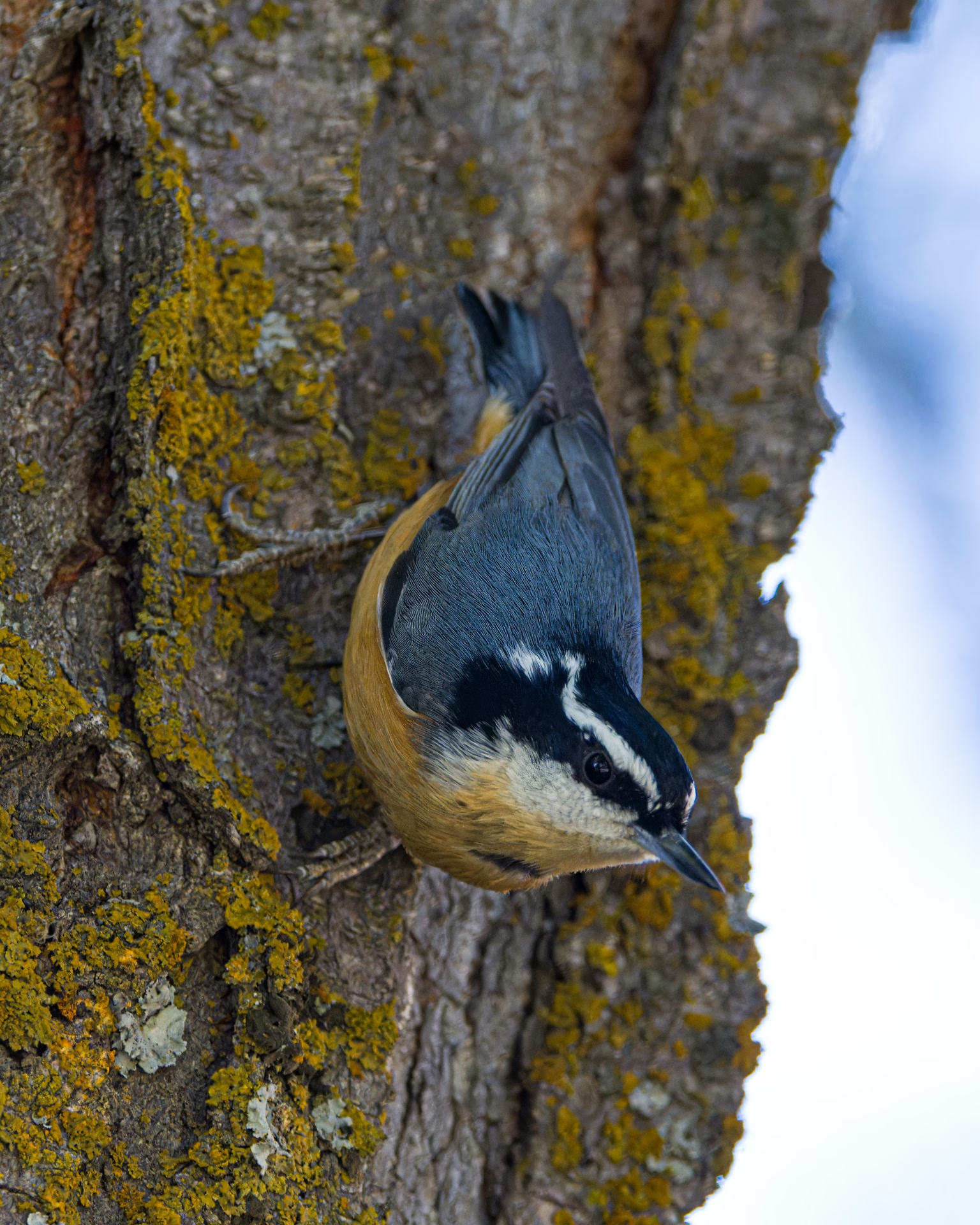
The Red-breasted Nuthatch is a small, compact bird with almost no neck, a very short tail, a blue-gray back, and rusty-cinnamon underparts. The face is the quickest clue: a dark cap and a bold black line through the eye, set off by a crisp white eyebrow.
I usually hear one before I find it. Its nasal yank-yank sounds like a tiny tin horn tooting somewhere up in the conifers, and once you learn it, you start hearing it everywhere.
Red-breasted Nuthatches rely heavily on conifer seeds, even stashing some to eat later. When a seed is too big to swallow, they jam it into the bark and hammer it open. In winters when mountain cone crops fail, many move down into the valleys, so a nuthatch at your feeder may be telling you a story about the mountains.
Come spring, they’re one of the few birds besides woodpeckers that dig their own nest holes, often smearing sticky conifer resin around the entrance for good measure.
A Piece of Bark That Moves
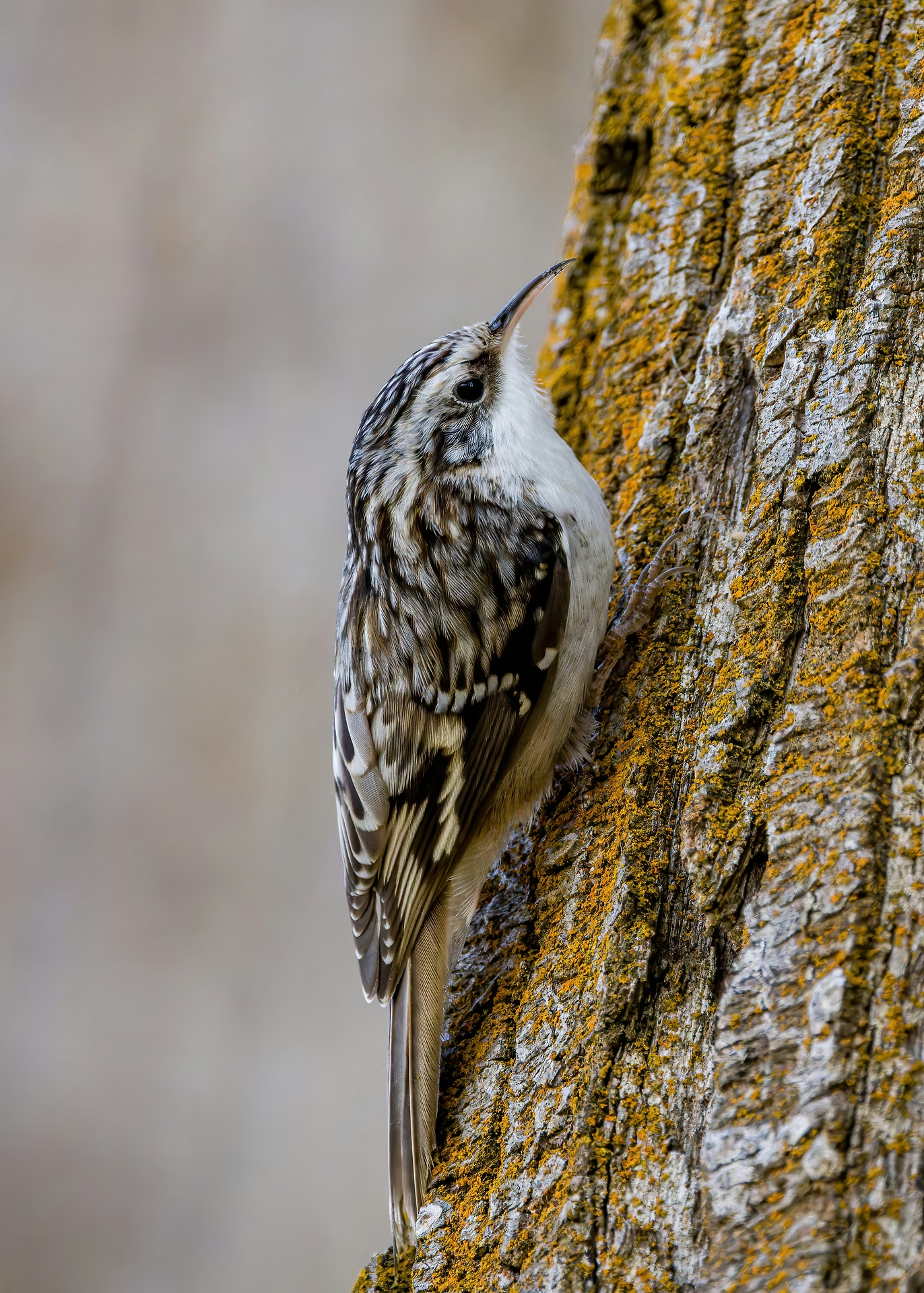
Back in Week 12, we met woodpeckers, birds that brace against a trunk with stiff tail feathers as they climb. The Brown Creeper uses the same trick in a much smaller package.
Streaky brown above and white below, with a thin, curved bill, it blends into a tree so well that it can look like the bark itself is moving. When it holds still, it practically disappears.
Where a nuthatch comes down, a creeper goes up. It spirals up the trunk, probing crevices for insect eggs and tiny spiders, then flutters down to the base of the next tree and starts all over again. For me, that’s the fun part: watching one inch its way around the tree, slip out of sight, and pop back out a little higher.
Creepers are easy to overlook until they call. Listen for a thin, high tsee. It’s faint, but it often gives the bird away long before your eyes find it. Even their nests stay hidden, tucked behind loose slabs of bark.
So if part of a tree seems to move, don’t look away. It may be climbing.
Bigger, Brighter, and Upside Down
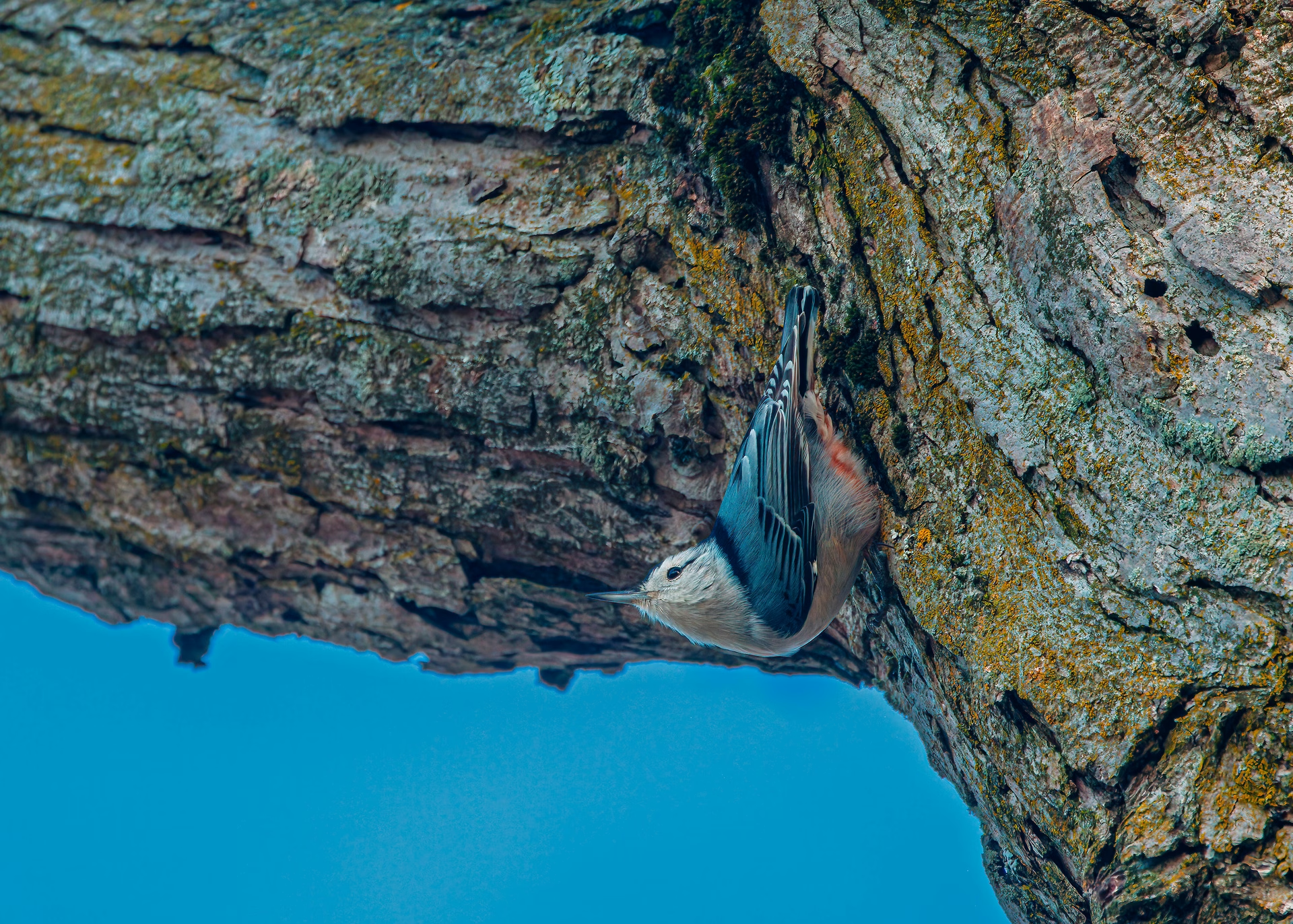
The White-breasted Nuthatch is the largest nuthatch, with a cleaner look than its red-breasted cousin: a bright white face with no eyeline, a dark cap, a blue-gray back, and a chestnut wash under the tail.
Like the rest of the family, it spends much of its time hanging sideways or upside down, probing the bark for insects. Listen for its soft ik and ik-up calls, often mixed with tapping as it works the bark.
My first one was hanging upside down along a massive tree in Toronto’s High Park, acting like it was the most normal thing in the world.
Here’s one more lesson this bird is good at teaching. If Merlin says it heard a White-breasted Nuthatch, treat that as a great reason to look hard and listen closely, not as a confirmed sighting. Merlin can hear things. Sometimes the best confirmation is a few more minutes with your own eyes and ears.
This week, find a big tree and watch the trunk. Which way is it going? Headfirst down? Spiraling up? Sometimes the way a bird moves tells you who it is before you ever see its face.
Utah Edition Endcap
Want to keep exploring? You can read more Guides or join the FeatherQuest updates to hear when new ones go live.