

Grebes & Loons
Feet in the back, dinner underwater, and a few birds that can run on water.
Table of Contents
How to Notice Grebes & Loons
Where to Find Them
Check ponds and reservoirs with cattails for Pied-billed Grebes, and big lakes like Utah Lake for Western and Clark’s. In fall, Eared Grebes pack Great Salt Lake. Common Loons pass through large reservoirs during migration.
What to Watch For
Watch the dive. Grebes and loons can slip under with barely a ripple and pop up somewhere else. Then check the bill: short and thick on a Pied-billed, thin and pointed on Eared and Horned, and long and sharp on Western, Clark’s, and the loons.
Listen Closely
Listen for the Common Loon’s haunting wail and laughing tremolo, especially early in the morning when migrants pass through. In cattail marshes, a hidden Pied-billed Grebe can let loose a surprisingly loud, hollow cow-cow-cow. In breeding season, Western Grebes call with two notes and Clark’s with one.
Explore Further
- ▶️ Western Grebe Courtship Dance (Mila Zinkova)
- Hear the Call of the Common Loon (Audubon / BirdNote)
- Pied-billed Grebe Guide (All About Birds)
The Little Submarine
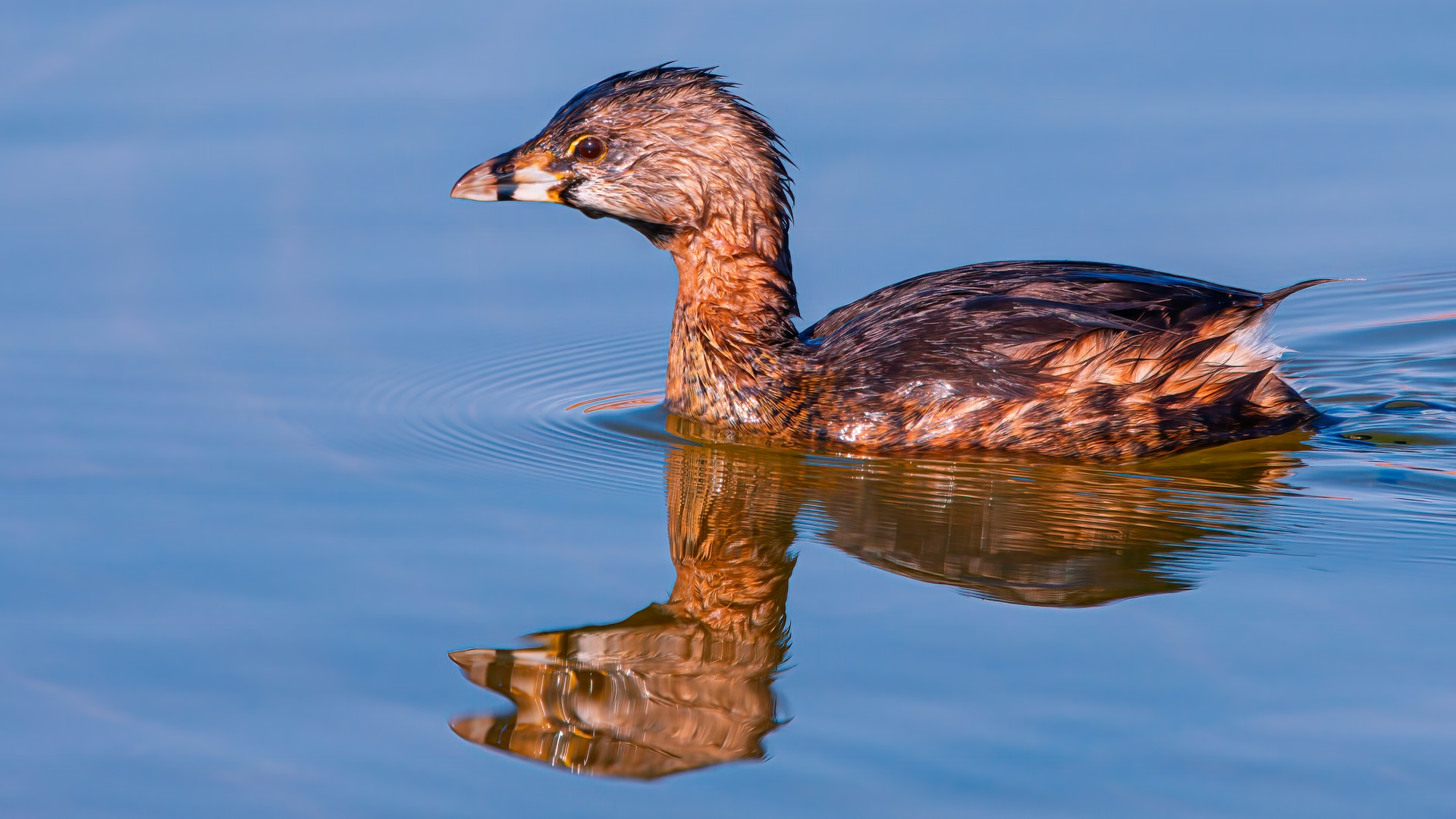
Along the edge of a cattail marsh, look for a small brown bird riding low on the water. Look away for a second, and it may be gone. The Pied-billed Grebe doesn’t even need to dive to disappear. By trapping water in its feathers, it can sink slowly until only its head shows, sometimes just its eyes and nostrils, crocodile-style.
When it pops back up, look at that bill: short, thick, and almost chicken-like. In breeding season it turns whitish with a bold black band, the “pied” in Pied-billed. Come spring, watch for chicks riding on a parent’s back.
Western or Clark’s?
Out on the big lakes, look for long-necked grebes in crisp black and white. Western and Clark’s Grebes were considered one species until 1985, and at a distance they can still look like one.
Start with the face. On a Western Grebe, the black cap comes down around the eye, so the red eye sits in black. On a Clark’s Grebe, the cap stops above the eye, so the eye sits in white. My Clark’s lifer was basically a dot in the scope, and that white around the eye was the first thing that stood out.
Then check the bill: usually duller greenish-yellow on Western and brighter orange-yellow on Clark’s. Light, season, and individual birds can all blur that difference, and the face pattern can be less clear-cut in winter. Clark’s also tends to look paler on the flanks. Put the face, bill, and overall look together rather than leaning on any one clue.
Hybrids and in-between birds turn up too. If the clues disagree, Western/Clark’s Grebe is an honest answer.
Thanks to Joseph Runs Through for the Clark’s half of this comparison.

Wait, Where Are Its Feet?
Watch a resting grebe long enough and you may see a foot pop up behind it. When I first saw this photo from a park near Syracuse, Utah, I honestly thought the foot was coming out of the bird’s butt!
Not quite, but close. Grebe legs sit so far back that the Pied-billed Grebe’s genus name, Podilymbus, traces back to Latin for “feet at the buttocks.” Now look at the toes. Instead of a duck’s broad webbing, each toe has its own lobes. Lifting a foot like this probably helps dry or warm it (Ron Dudley explains).
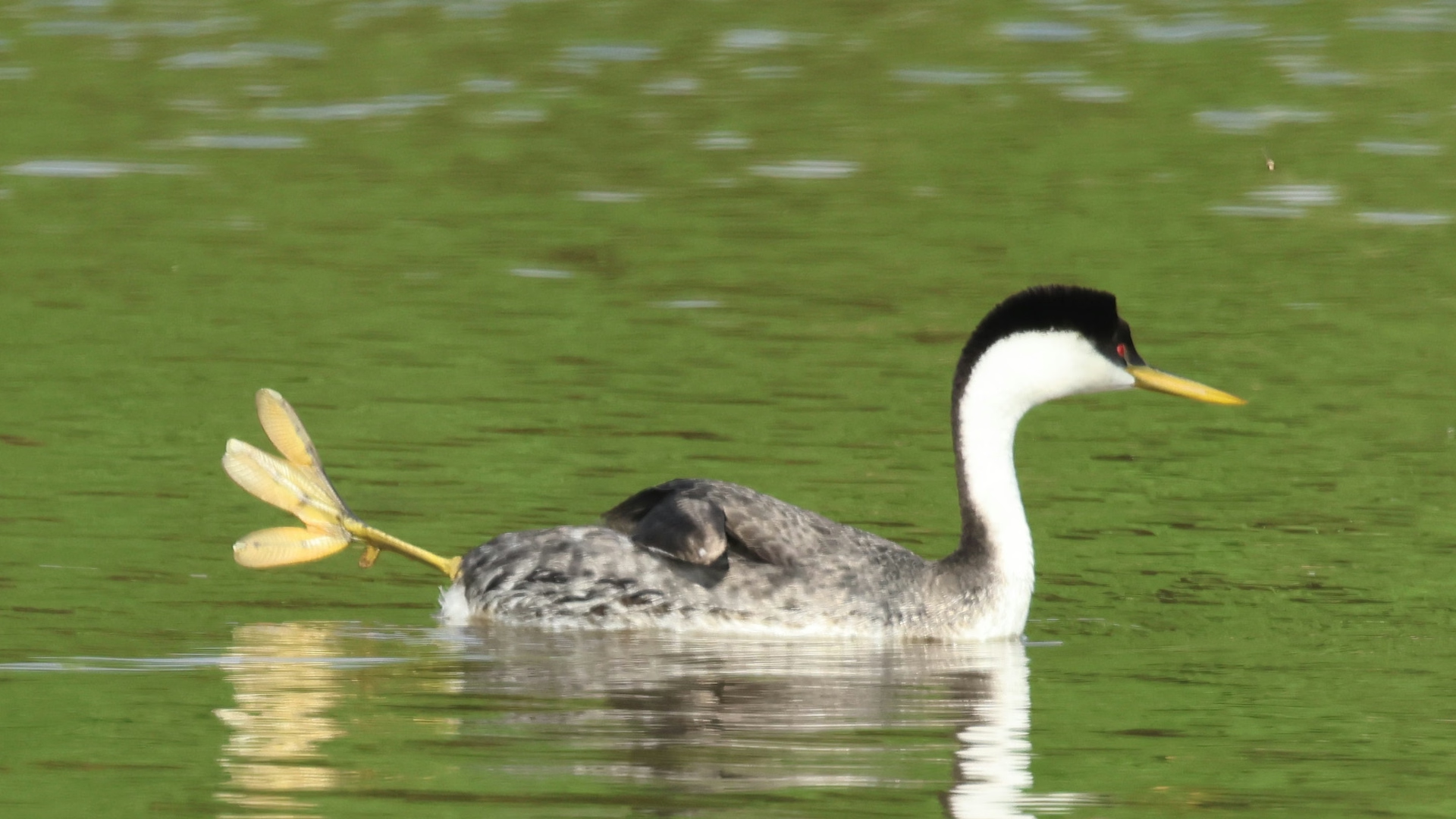
Those same feet power rushing, the courtship display where a pair of Western or Clark’s Grebes sprints side by side across the surface. They’re the largest animals known to run on water (2015 study). See it for yourself.
A Lake Full of Grebes
Scan Great Salt Lake in fall, and many of those dark dots are Eared Grebes. Utah DWR says the lake has hosted as many as 5 million at its peak, and fall surveys from 1997 to 2012 averaged about 1.4 million, roughly half the North American population. They fatten up on brine shrimp, and many can’t fly while they molt.
In winter gray, Eared is easy to mix up with Horned Grebe. Eared has a peaked head and a smudgy face. Horned has a flatter head and a clean white cheek.

Same Job, Different Family
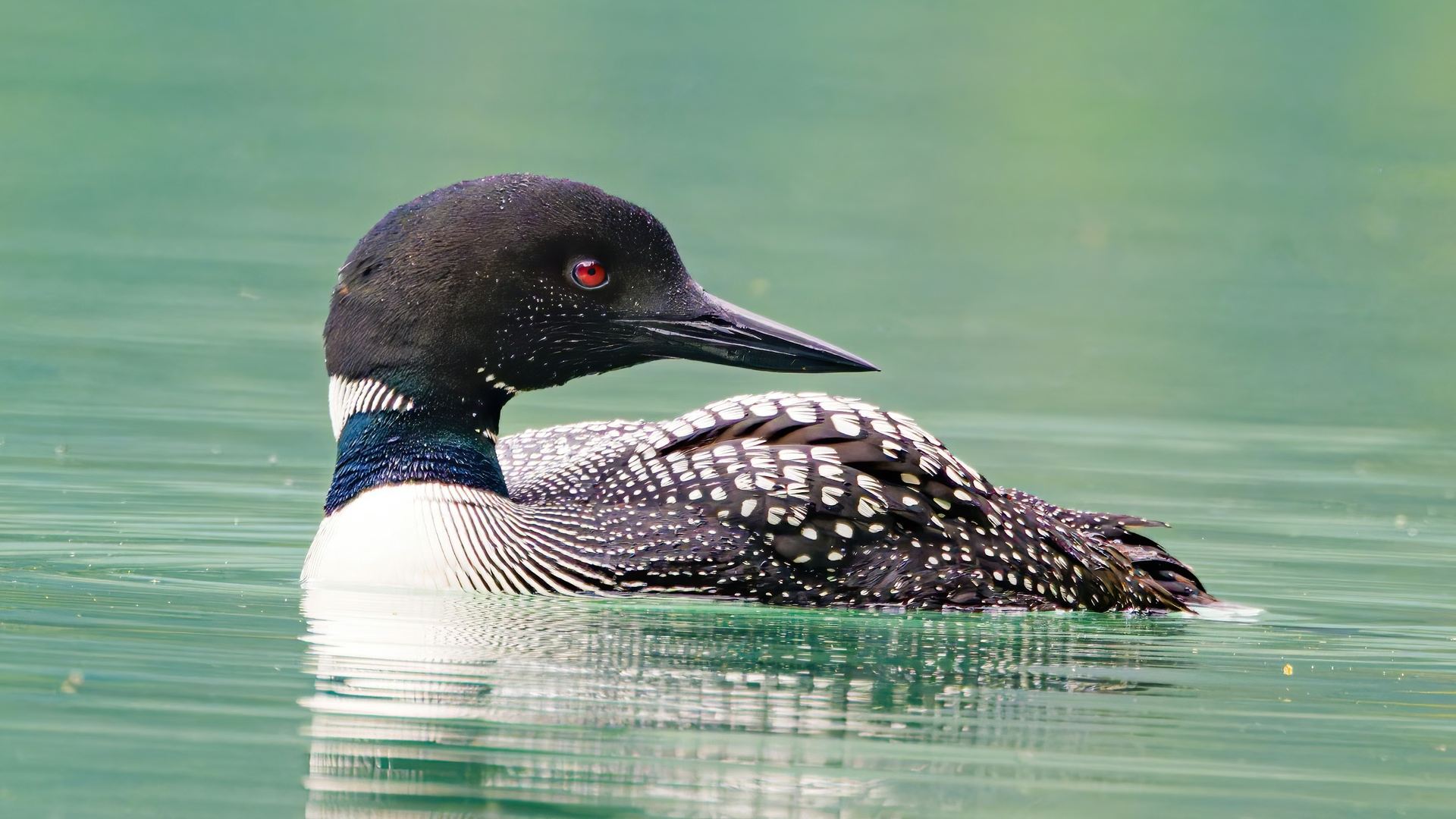
Look for a heavy, low-floating diver with a long, sharp bill. Common Loons look like they were built from the same plans as grebes, but they aren’t closely related. Grebes’ closest relatives turn out to be flamingos!
Many of a loon’s bones are relatively solid and dense compared with most flying birds’, which helps it stay down and chase fish underwater. The tradeoff is a long watery runway to take off, and on land a loon is nearly helpless. (Just ask the beached Pacific Loon from our Puerto Peñasco trip.)
In Utah, Deer Creek and other large reservoirs are worth scanning during migration. This time of year, skip the black-and-white tuxedo and look for a plain bird, gray above and white below.
This week, find a grebe and watch it dive. Guess where it will come up. You’ll probably be wrong. Keep looking anyway.
Utah Edition Endcap
Want to keep exploring? You can read more Guides or join the FeatherQuest updates to hear when new ones go live.