

Buteo Hawks
Broad wings, changing seasons, and a better way to recognize Utah’s soaring hawks.
How to Notice Buteo Hawks
Where to Find Them
Start with open country and look up. Buteos are often seen soaring above fields, foothills, deserts, and farmland or watching from exposed perches like power poles and fence posts. Red-tailed Hawks can turn up almost anywhere in Utah, while the other species you encounter depend much more on season and habitat.
What to Watch For
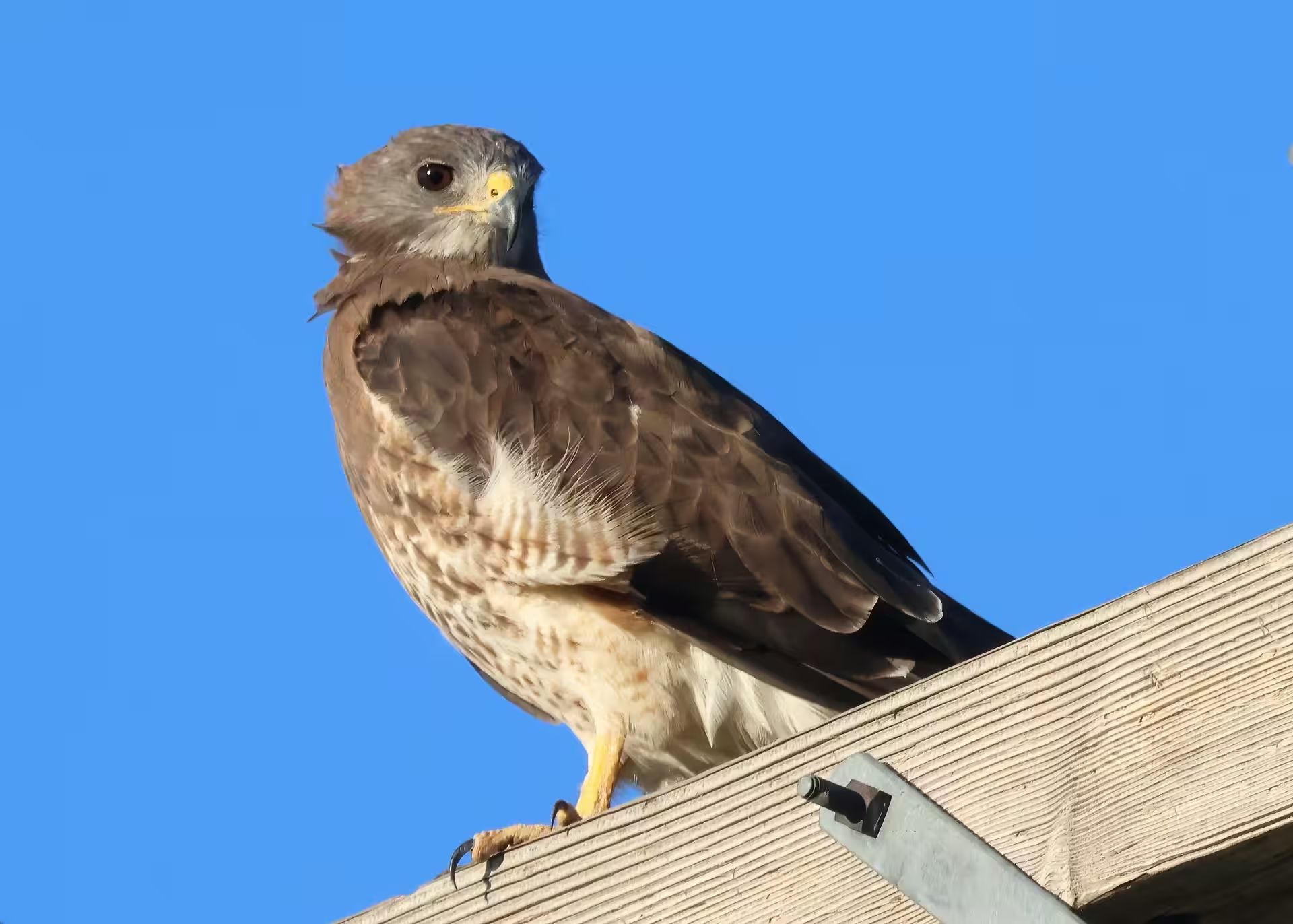
Start with shape instead of color. Buteos are generally stocky hawks with broad, rounded wings built for soaring. A classic adult Red-tailed Hawk may show its brick-red tail and a streaky belly band, but Red-tails come in enough different colors and ages that those clues will not always look exactly as expected.
Listen Closely
Listen for the Red-tailed Hawk’s long, raspy scream—keeeeer! It may already sound familiar. That dramatic call is so closely associated with birds of prey that movies often use a Red-tail’s voice for other hawks and even eagles. Swainson’s Hawks sound quite different, with a thinner, higher-pitched whistle.
Explore Further
- Red-tailed Hawk Guide (All About Birds)
- Swainson’s Hawk Guide (All About Birds)
- Rough-legged Hawk Guide (All About Birds)
The Hawk You Already Know
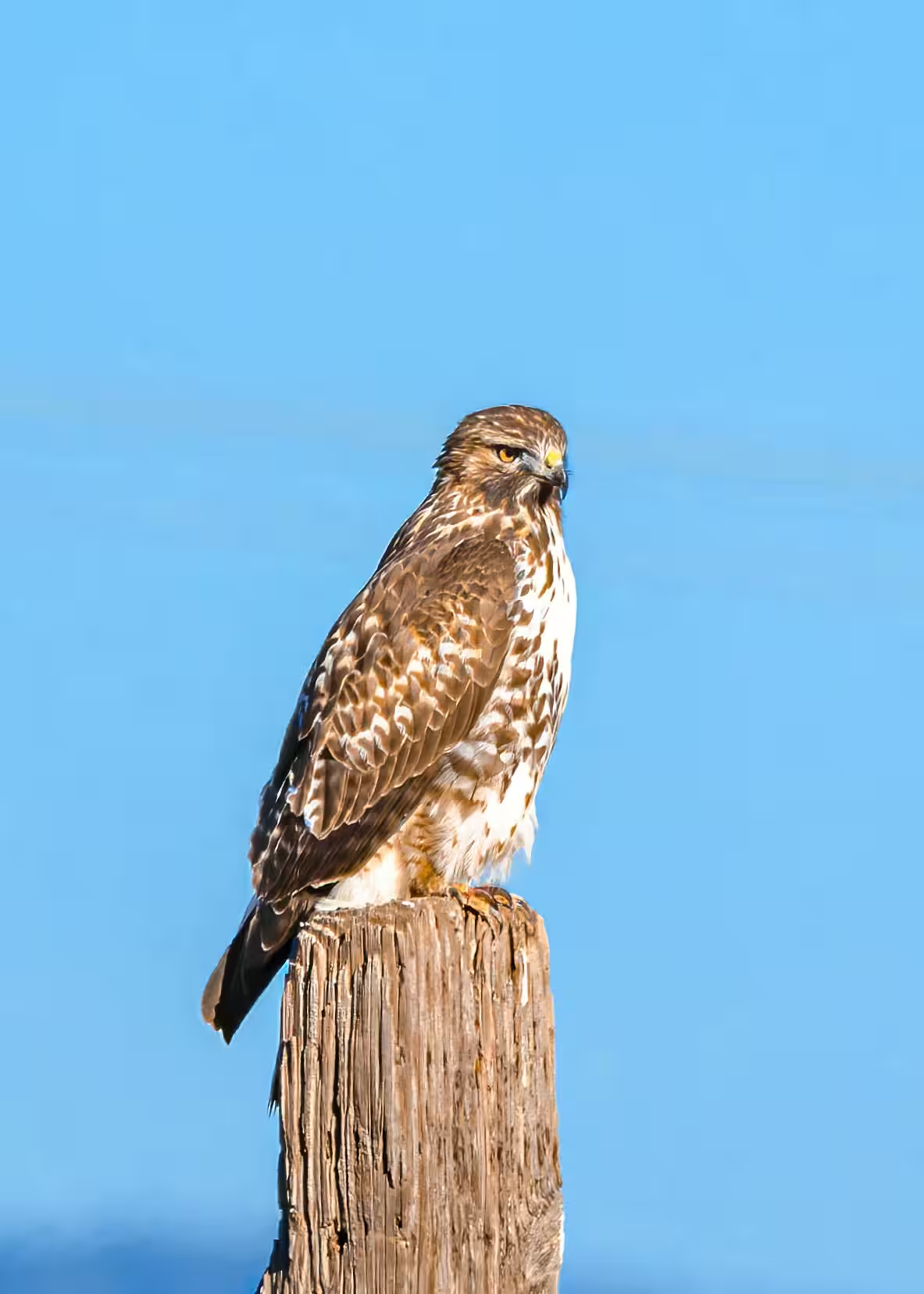
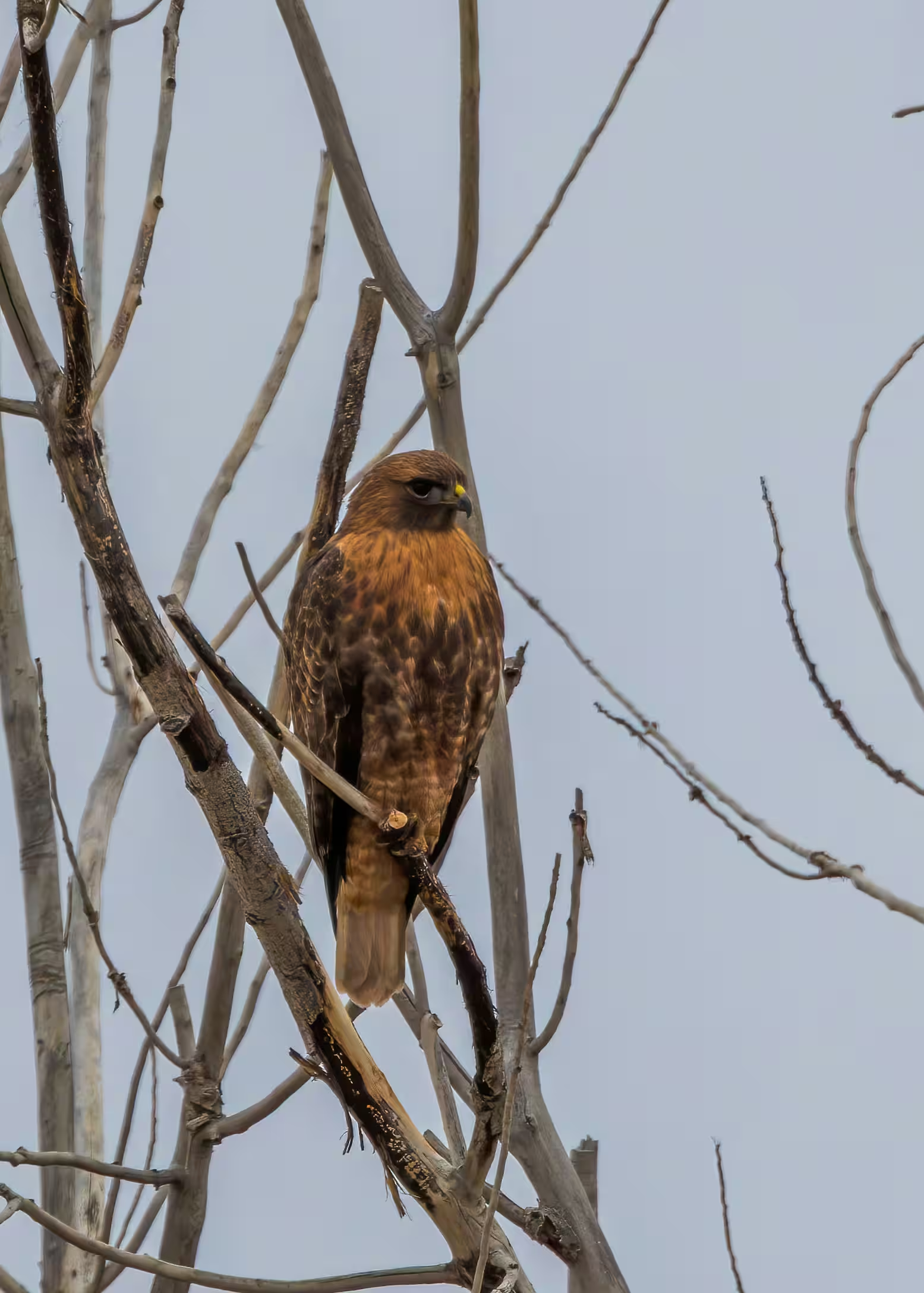
If you’ve seen a big hawk sitting on a Utah power pole, there’s a pretty good chance you’ve already met this week’s most familiar bird. Red-tailed Hawks are our year-round Buteo and can be found in nearly every kind of open habitat across the state.
The classic adult is famous for its brick-red tail, and many Red-tails show a streaky band across the belly. Those are excellent clues when they are obvious—but Red-tailed Hawks come in a remarkable variety of colors, ages, and molts.
That means a Red-tailed Hawk does not always look like the picture in your head. When a Utah Buteo has you stumped, Red-tailed is usually a very good place to start. Look at the bird’s overall structure first, then use plumage, habitat, and season to see whether the other clues agree.
The Hawks Change With the Seasons
Red-tailed Hawks give us a familiar baseline all year, but Utah’s other Buteos make the calendar much more interesting. Swainson’s Hawks spend the warmer months here before making an extraordinary migration south. By late summer and early fall, they begin disappearing from Utah as they head toward their wintering grounds.
Later in fall, another Buteo begins to take their place. Rough-legged Hawks breed far to the north and come to Utah for the winter. They often have a different feel from a Red-tail, including a smaller-looking bill with a noticeable yellow cere, and they are especially worth watching for over open fields and agricultural country.
Ferruginous Hawks also favor open country, while a few other Buteos are much less common Utah finds. You do not need to memorize all of them. The important lesson is that the hawk you expect in July may not be the hawk you expect in January.
Fall migration is a great time to go hawking. Check the power poles, scan open fields, and watch anything circling overhead. Most may be familiar—but migration gives something unexpected a chance to appear.
Can You Identify the Shape?
After 36 weeks, we can take a step back from individual field marks and ask a bigger question: before you identify the species, can you tell what kind of bird of prey you are looking at?
We have already met Accipiters, Falcons, Eagles, Vultures, and now Buteos—and we’ve certainly seen plenty of Ravens along the way.


The goal is not to identify every distant raptor instantly. It is to narrow the possibilities. Broad-winged and stocky? Long-tailed? Pointed-winged? Holding a V? Once you learn to notice the shape first, the colors and smaller field marks have much less work to do.
Even We Get Fooled
There is a bird hiding in the first edition of FeatherQuest that does not belong on the Buteo page.
The photo labeled Broad-winged Hawk came from another photographer already identified that way. I had never personally seen a Broad-winged Hawk, so I trusted the identification. My friend and hawk expert Joseph Runs Through later spotted the mistake: the bird is actually a Cooper’s Hawk.
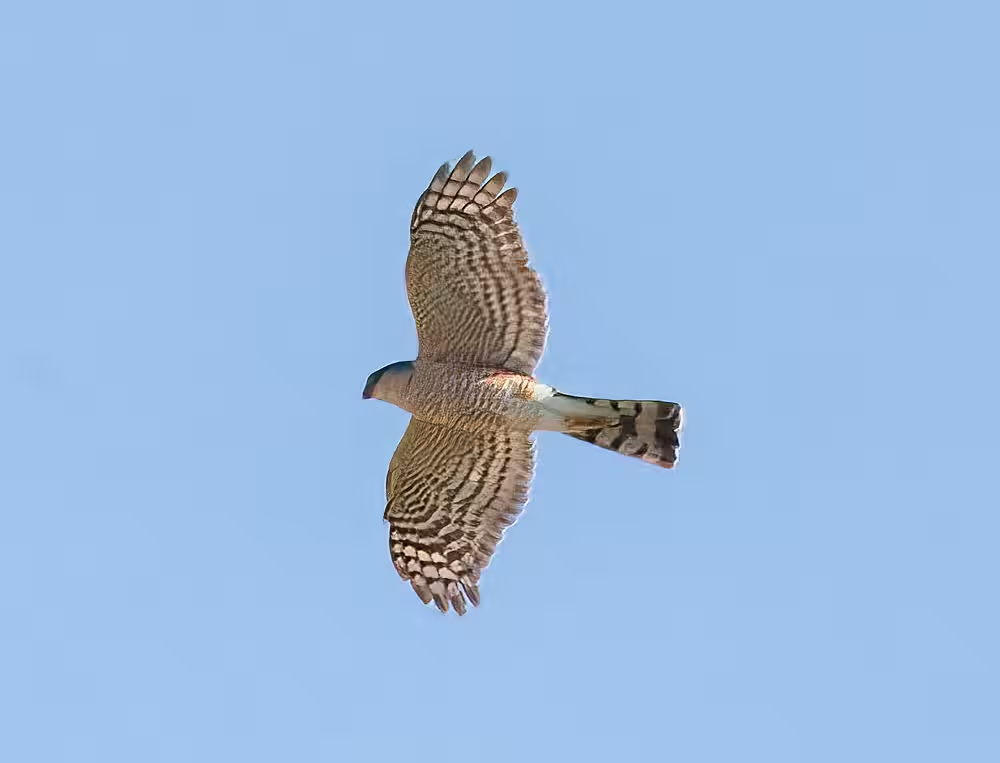
Once Joseph pointed it out, the clue was hard to miss. Look at that tail. Cooper’s Hawks are accipiters, built with long tails that help them maneuver through trees. Buteos have a very different soaring shape, with broader wings and generally stockier proportions.
Back in Week 2, we learned to recognize accipiters by that combination of speed and tail. Thirty-four weeks later, the lesson gives us enough information to catch our own mistake.
Bird identification is not about never getting fooled. It is about learning what to notice next time. Sometimes the best field mark is not a color at all.
Utah Edition Endcap
Want to keep exploring? You can read more Guides or join the FeatherQuest updates to hear when new ones go live.