Gallery: The Marsh Comes Alive
Birds, movement, water, reeds, and one very dramatic coot fight


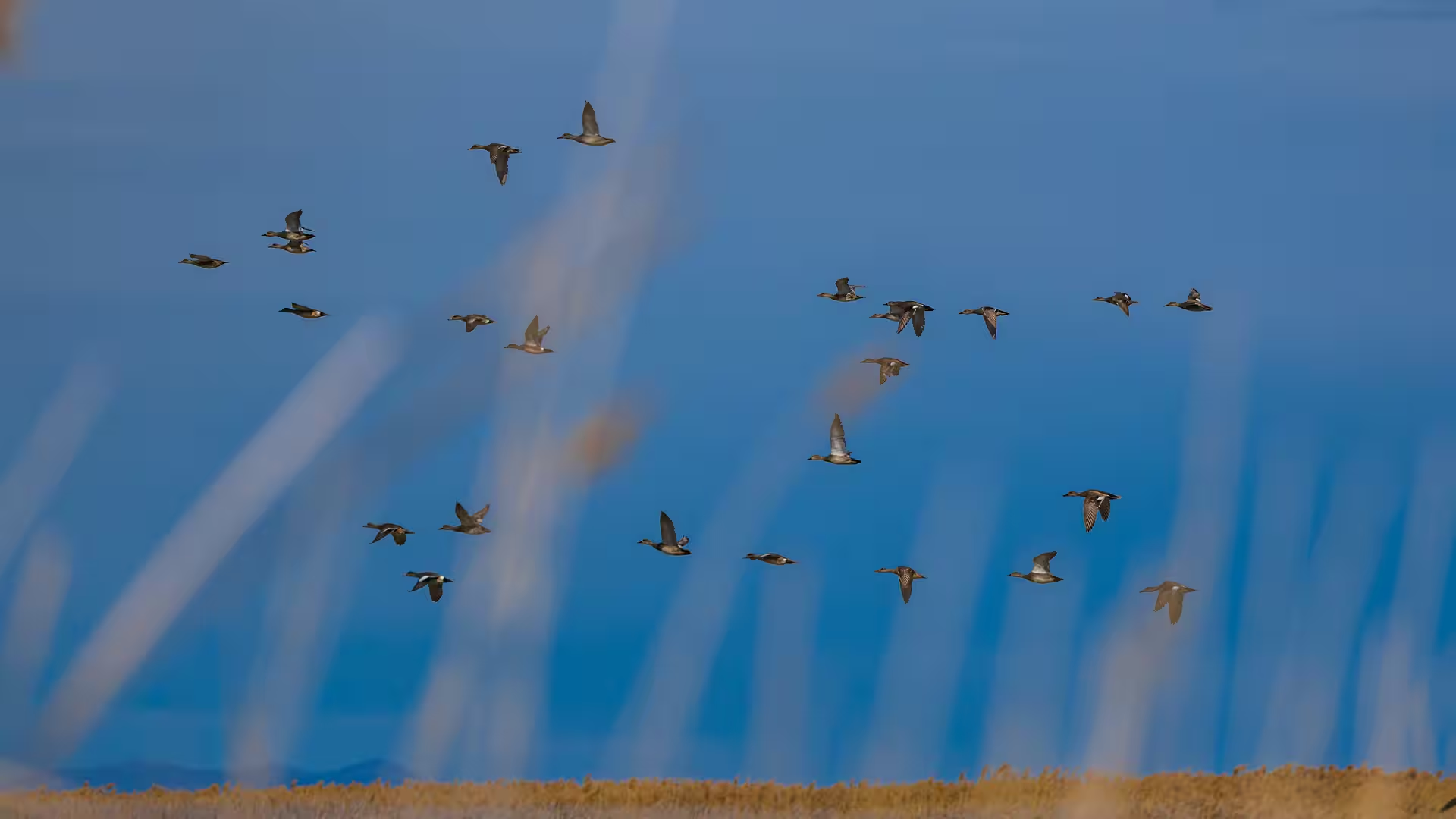


A conservation workday with Wasatch Wigeons, Parker Hannifin, mud boats, new friends, and birds hidden deep in the marsh
First volunteer workday with Wasatch Wigeons Phragmites removal in active wetland habitat Parker Hannifin service team coordinated by Avorie Voeck
A few months ago I interviewed Troy from Wasatch Wigeons while putting together an introduction to conservation.
One idea from that conversation stayed with me: conservation does not start with expertise. It starts with showing up.
The more time I spend photographing birds, the more I find myself thinking about the places that support them. Wetlands, reeds, water channels, nesting cover, food sources—everything that makes a bird sighting possible before the bird ever enters the frame.
Namify (my day job) gives employees a paid service day each year, and I loved having a chance to use mine for something connected to birds, habitat, and community. So when Troy had a weekday phragmites removal project that lined up with that opportunity, I put it on my calendar and made the drive.

The goal of the day was simple to explain and much harder to do: cut down invasive phragmites.
Phragmites can form dense walls of vegetation that crowd out native plants, reduce habitat variety, and make wetlands less useful for the birds and wildlife that depend on them.
Troy and the Wasatch Wigeons team helped spearhead the effort, bringing the experience, equipment, and conservation focus needed to turn a patch of marsh into an active restoration site.
From the outside, conservation can sound abstract. In the field, it looked like waders, brush cutters, sore hands, muddy footing, and people willing to spend a workday making habitat better.

One of my favorite parts of the day was seeing how many different people came together around the same purpose.
Alongside the Wasatch Wigeons volunteers, a team from Parker Hannifin came out for a service day. Their group was coordinated by Avorie Voeck, an Environmental Health and Safety Specialist who helped bring a dozen-or-so employees into the marsh to support the project.
It was great connecting with new people from a completely different professional world. Engineers, safety specialists, conservation volunteers, hunters, birders, and photographers were all standing in the same habitat working toward the same goal.
That may be one of conservation’s subtle strengths. It gives very different people a reason to work side by side.

Because of a timing mix-up, we had a little extra time before the larger volunteer group arrived.
That is when Bill—who I immediately started calling Captain Bill—offered to take me out for a quick photo-op tour through the waterways.
It was my first time riding in what I would describe as a mud boat: a small, flat-bottomed marsh boat built for moving through shallow water, narrow channels, and wetland edges.
We moved through the marsh chasing down and spotting birds in the waterways. Ducks flushed ahead of us, blackbirds worked the reeds, grebes floated in better light than I expected, and every turn made the wetland feel bigger and more alive.
Most birders experience marshes from trails, roads, boardwalks, or viewing platforms. This felt different. For a few minutes, I was not looking at the marsh from the edge. I was inside it.

Eventually the larger volunteer group arrived, and the day shifted from photo tour to workday.
We moved into the phragmites with brush cutters and started cutting.
It did not take long to realize how physical the work was. Cutting tall, dense reeds while standing in wetland terrain is tiring fast—especially without a harness carrying the weight of the tool.
My hands were aching by the end, and at some point I ran out of gas and shifted back into camera mode for the final stretch.
But I was glad I came. It is one thing to talk about conservation. It is another thing to feel it in your shoulders, hands, and boots.

The birds were never the main assignment for the day.
But they were the reminder.
Every coot fight, blackbird call, grebe portrait, and duck flushing through the channel made the purpose of the work easier to feel. This was not just about cutting plants. It was about improving the habitat that makes all of those moments possible.
That is one thing I keep learning through FeatherQuest: the deeper you go into birding, the harder it is to separate birds from place. The bird is the visible part. The habitat is the story underneath.


The more I reflect on the day, the more I realize the people were just as important as the birds.
Troy was the long arc coming around—the online connection, the FeatherQuest donation, the conservation interview, and now the chance to actually show up and help with the work.
Bill became Captain Bill, the mud boat guide who turned waiting time into one of the most memorable parts of the day and later shared photos and video of me in the field.
Avorie helped coordinate the Parker Hannifin service group and was a fun connection to make, especially with her environmental health and safety background and her larger dreams of flying and Alaska.
That may be one of my favorite parts of these quests. Birds bring people into the same place, but the stories are what turn strangers into future friends.
I came to help with habitat work. I left with sore hands, new friends, a first mud boat ride, bird photos I did not expect, and a much better understanding of what conservation actually looks like when people show up.
The birds were the reward. The work was the point. And maybe that is the part I want to remember most: birding often starts with noticing what is beautiful. Conservation begins when you decide that beauty is worth helping.
