A Little Seattle Magic
A wizardly university, a spontaneous ferry, and the little adventures we found everywhere we looked
Quest Overview
Kevin's graduation at a suspiciously wizardly UW A spontaneous ferry adventure to Kingston A kingfisher that sparked connections all the way home
Table of Contents
This Wasn't a Birding Trip
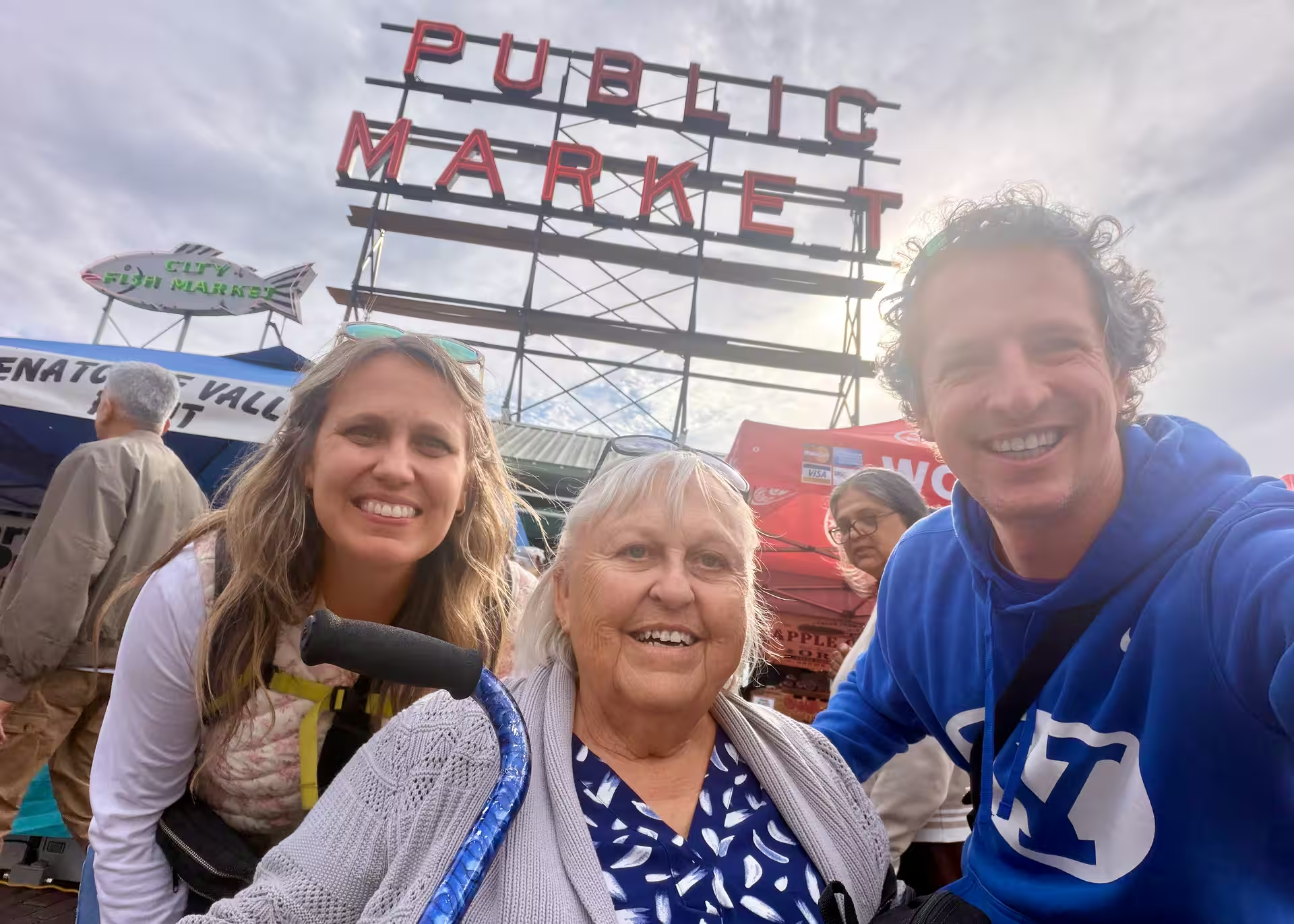
The reason for this trip had nothing to do with birds. We came to Seattle to celebrate my brother-in-law Kevin's graduation from Pacific Coast Banking School at the University of Washington.
That distinction matters because FeatherQuest has increasingly become less about building trips around birding and more about noticing how easily birding can fit into the trips we are already taking. Bring the camera. Leave a little room in the schedule. Pay attention. Adventure has a way of growing from there.
This trip would prove that point better than almost any dedicated birding trip could. I came home with no lifers, a few photo upgrades, and a ridiculous number of little stories.
The W Stands for Wizarding School
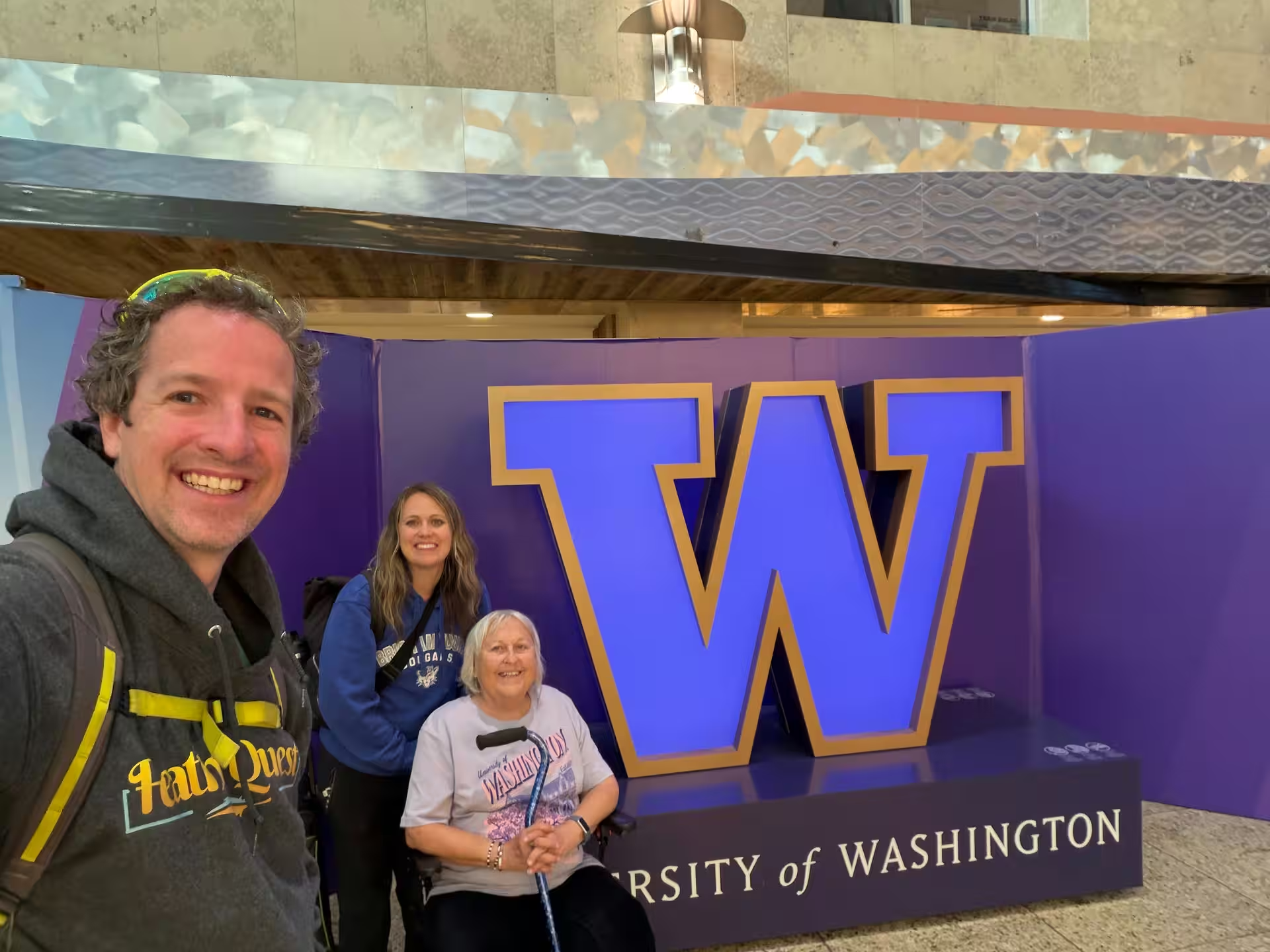
Touring the University of Washington introduced a completely different mystery. We had been told the W stood for Washington. After seeing the campus, I am no longer convinced.
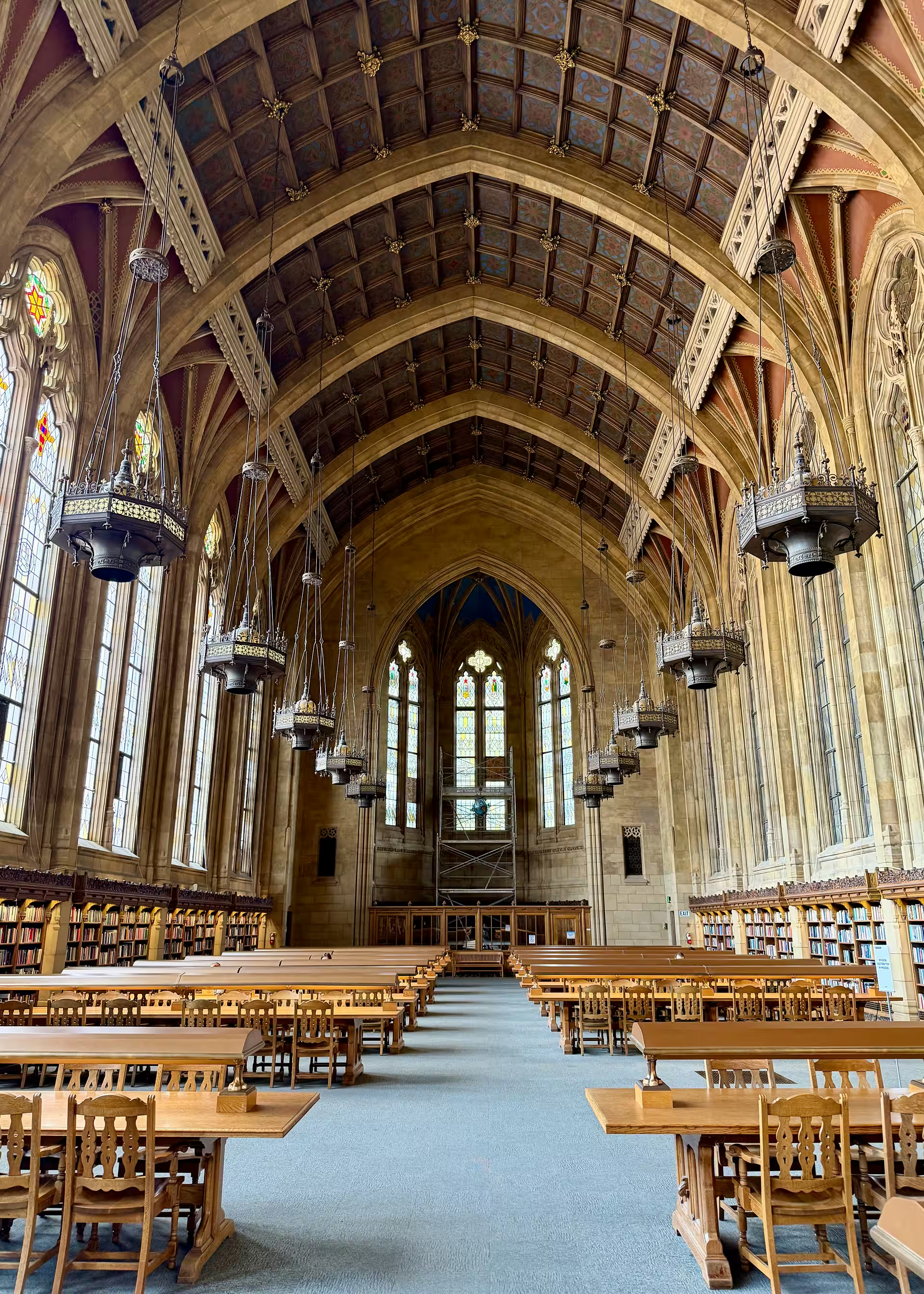
Suzzallo Library looks like someone dropped Hogwarts into Seattle. Gothic arches, towering windows, carved stone, enormous reading rooms—the whole campus gives off serious wizarding-school energy.
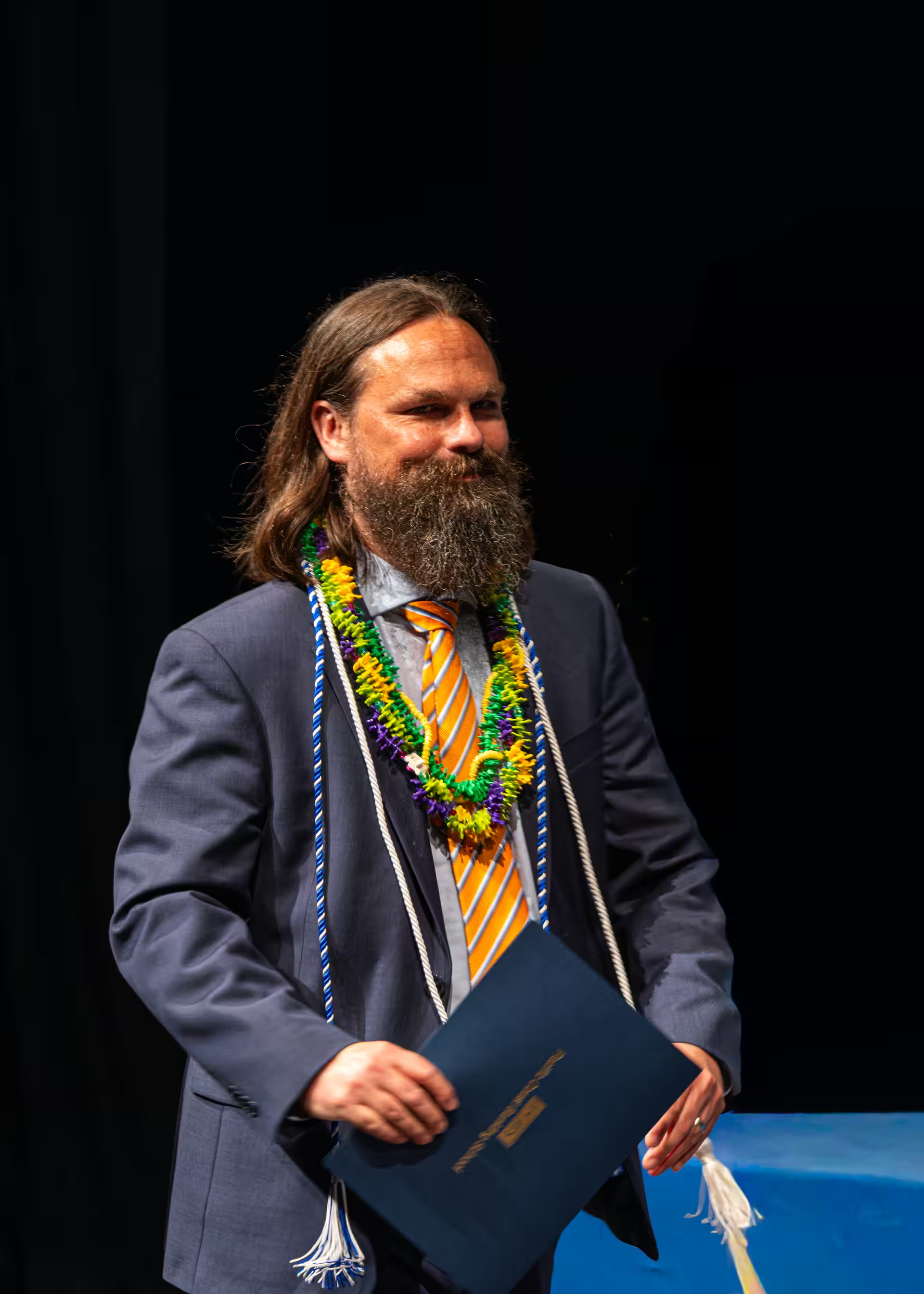
Then Kevin showed up with the beard and graduation regalia and basically completed the evidence. Pacific Coast Banking School may simply be the financial division of America's Hogwarts.
Seeing Seattle Differently
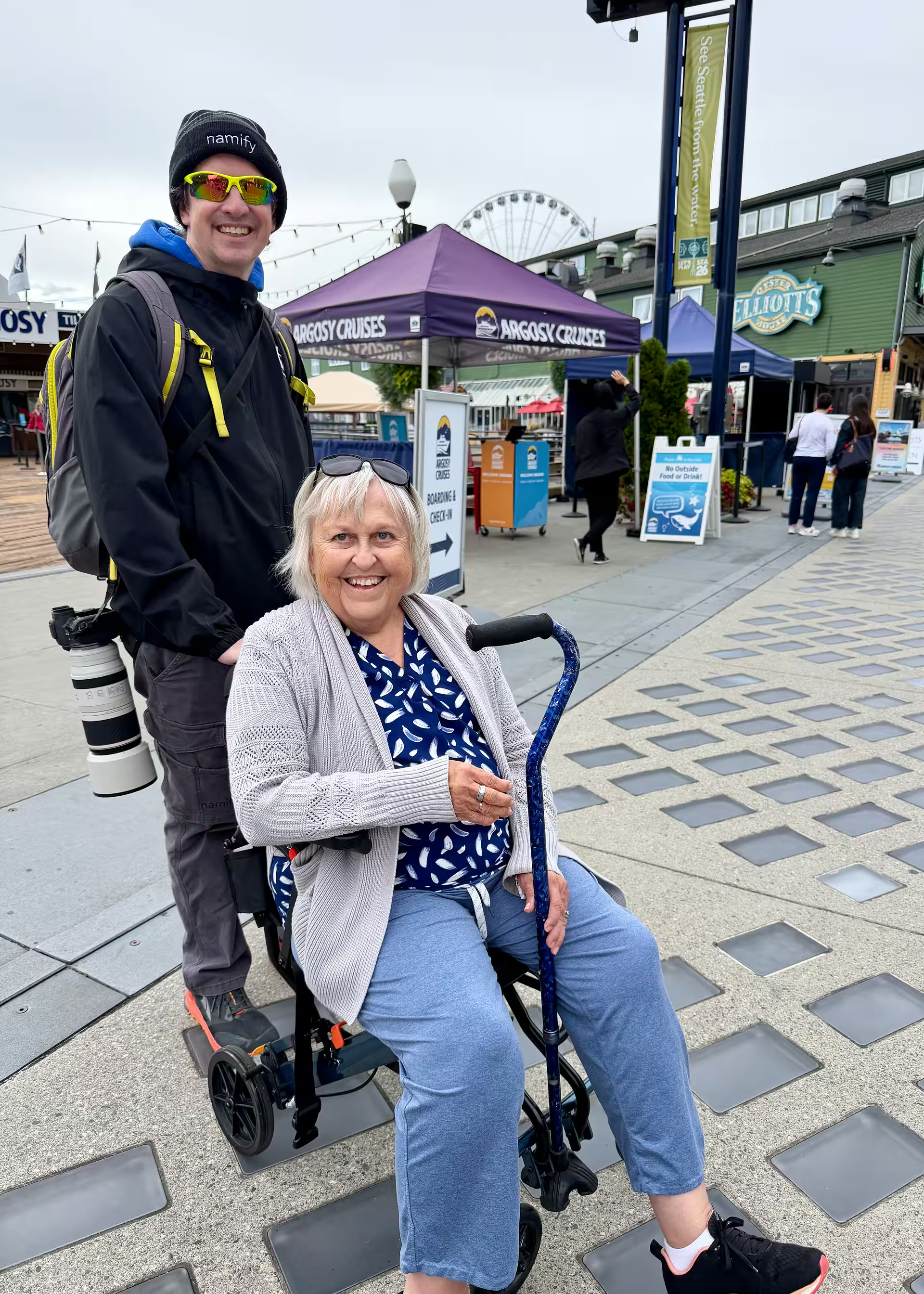
Stacy’s mom needed to be there for Kevin’s graduation. She uses a wheelchair, which added another layer to nearly every decision we made. It was challenging, but completely worth it—and one reason we skipped the rental car and leaned on Seattle's public transportation.
A few days pushing a wheelchair changed the way I looked at a city. A staircase that I would normally climb without thinking suddenly looked like a wall. Even a curb could become daunting. I found myself constantly scanning for curb cuts, ramp angles, elevators, doorway widths, and surfaces that a wheelchair could actually handle.
It gave me a much greater appreciation for the enormous collective effort behind accessibility. Ramps, level train platforms, elevators, wider entrances, accessible bathrooms, and employees who know how to help are easy to overlook until you depend on the entire chain working.
We also had one scary moment that showed just how quickly a tiny obstacle can become serious. Everyone was okay, but it drove the lesson home: something I would barely notice on foot could suddenly carry real consequences.
For our trip, Seattle’s accessible infrastructure worked remarkably well. The Link's level boarding made the wheelchair surprisingly easy, and because so much accessible infrastructure existed, she did not just attend the graduation—she explored UW, went to a Mariners game, rode a ferry across Puget Sound, and became part of the whole adventure.
That may be what I appreciated most. Accessibility did not become the story of the trip. Accessibility is what allowed all the other stories to happen.
A Night at T-Mobile Park
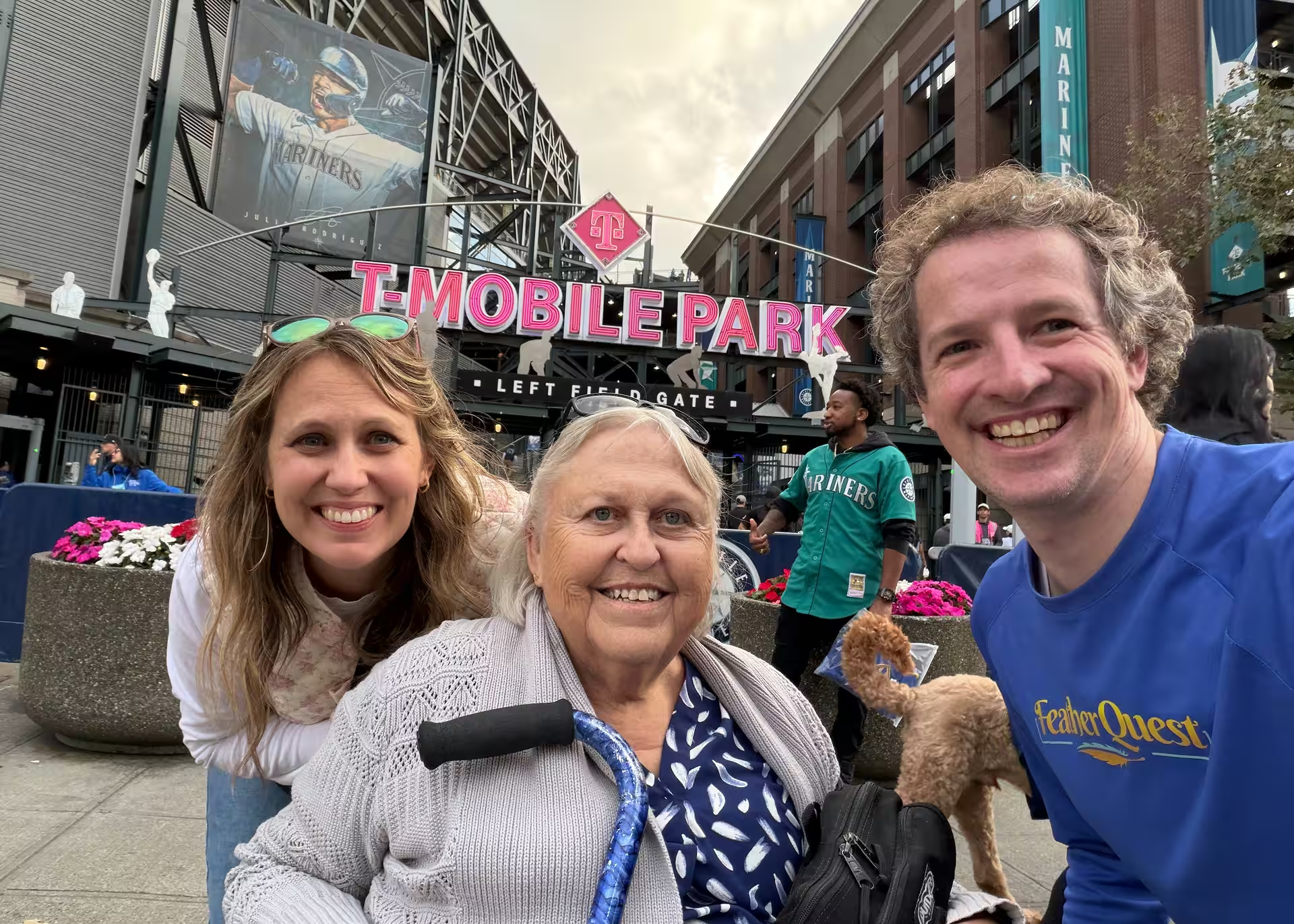
Seattle also meant a Mariners game at T-Mobile Park. My birding camera created an immediate logistical problem: an R5 Mark II with the RF 100–500 is not exactly subtle stadium gear. We checked the camera bag with an event-day locker vendor outside the stadium, along with a second bag containing water and, importantly, Mom's plums.
The camera survived. The plums survived. Civilization continued.
Inside, we sampled the stadium food. The value hot dogs did their job. The pretzel did not earn a recommendation. Crab wonton nachos were much more interesting—fun and unique, though I still prefer my crab soaked in butter with a side of tortilla chips.
The most memorable part of the game was happening in left field. Randy Arozarena kept ending up with retired balls and tossing them into the crowd. A section of fans with Mexican flags was especially invested in him, and at one point he deliberately made sure a kid got a ball. It was one of those little player-fan interactions that makes being at the stadium different from watching a game on television.
When the Whale Boat Was Full
Saturday was supposed to become our bigger open adventure day. We discovered that whale-watching boats left right from Edmonds, only a few miles from our hotel, and the idea seemed perfect. Unfortunately, by the time we decided to do it, Labor Day weekend had done its work. There was no room for us.
That was especially painful because I also learned I had missed the final dedicated puffin cruise of the season by two days. Sometimes timing has a sense of humor.
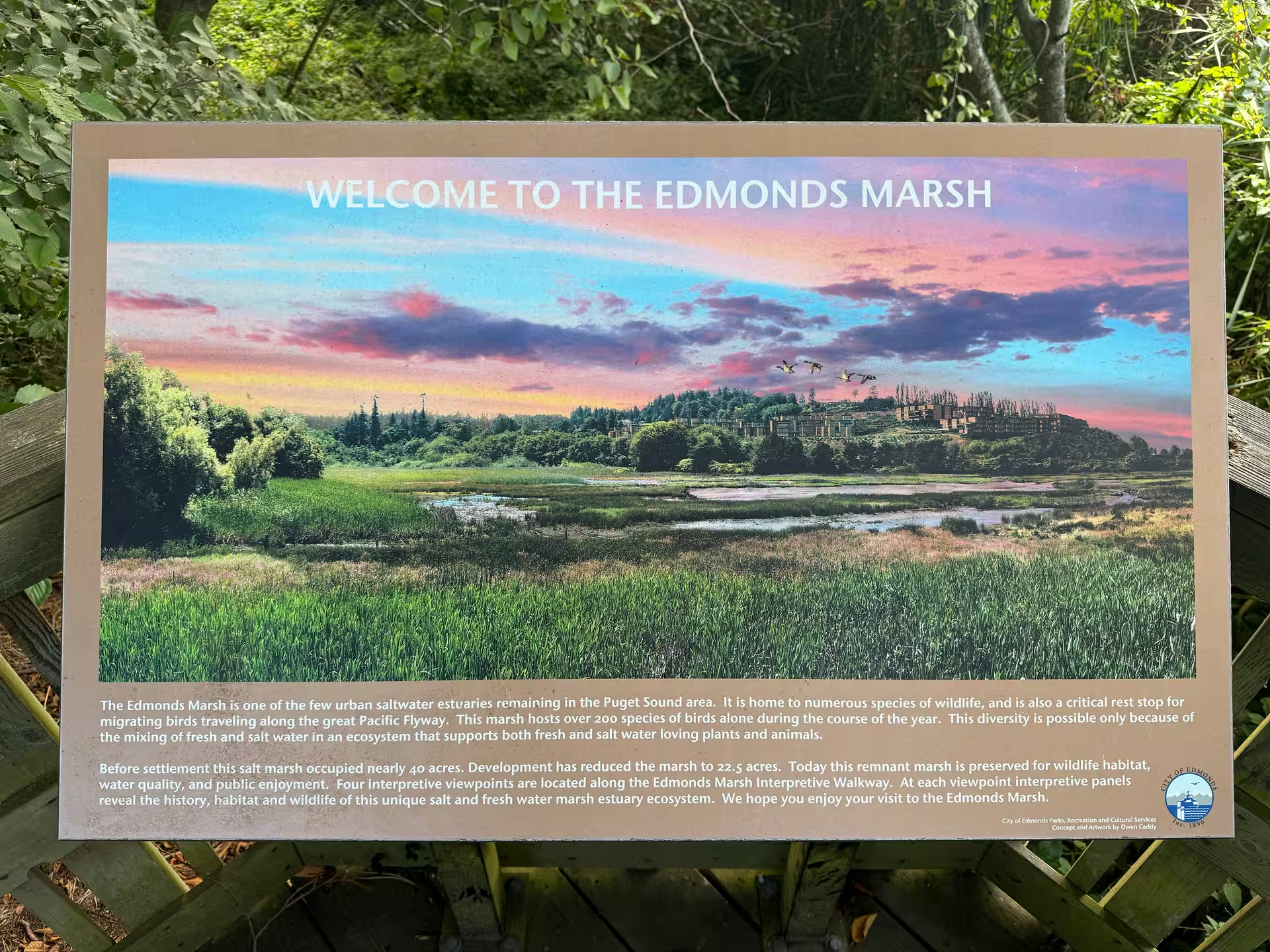
So we went to Edmonds Marsh instead. The marsh was small, we arrived later than ideal, and Seattle had decided to provide one of its allegedly rare sunny days. The light was harsh and bird activity was limited. Rather than force it, we kept moving toward the waterfront.
That decision changed the day.
Familiar Birds, Different World
There were no lifers on this trip, but familiar birds kept doing things that felt unfamiliar.
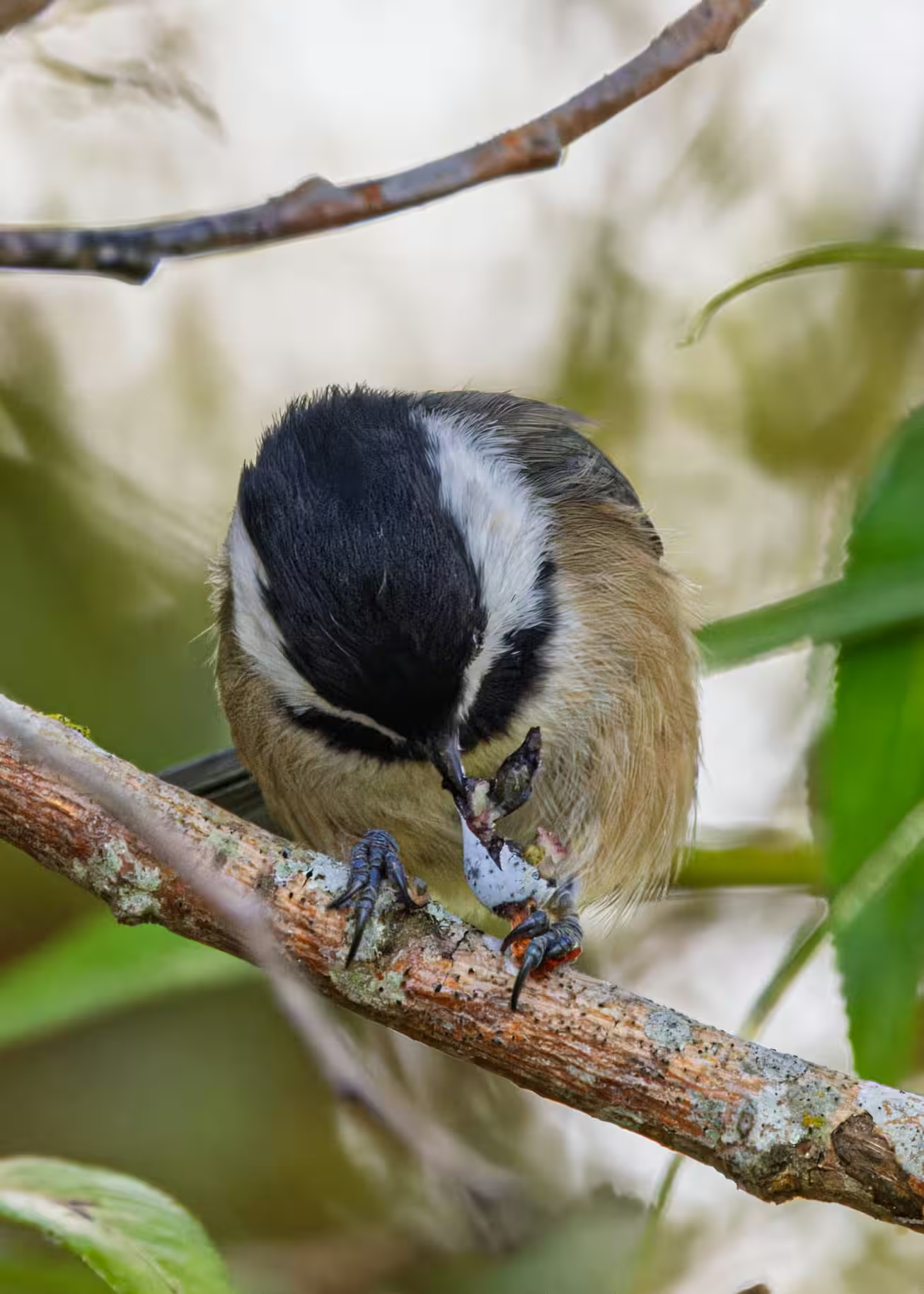
A Black-capped Chickadee pinned some kind of tiny hard-shelled aquatic snack beneath its feet and methodically dismantled it. I am used to seeing chickadees work seeds and insects at home. Watching one apparently dig into local seafood was new.
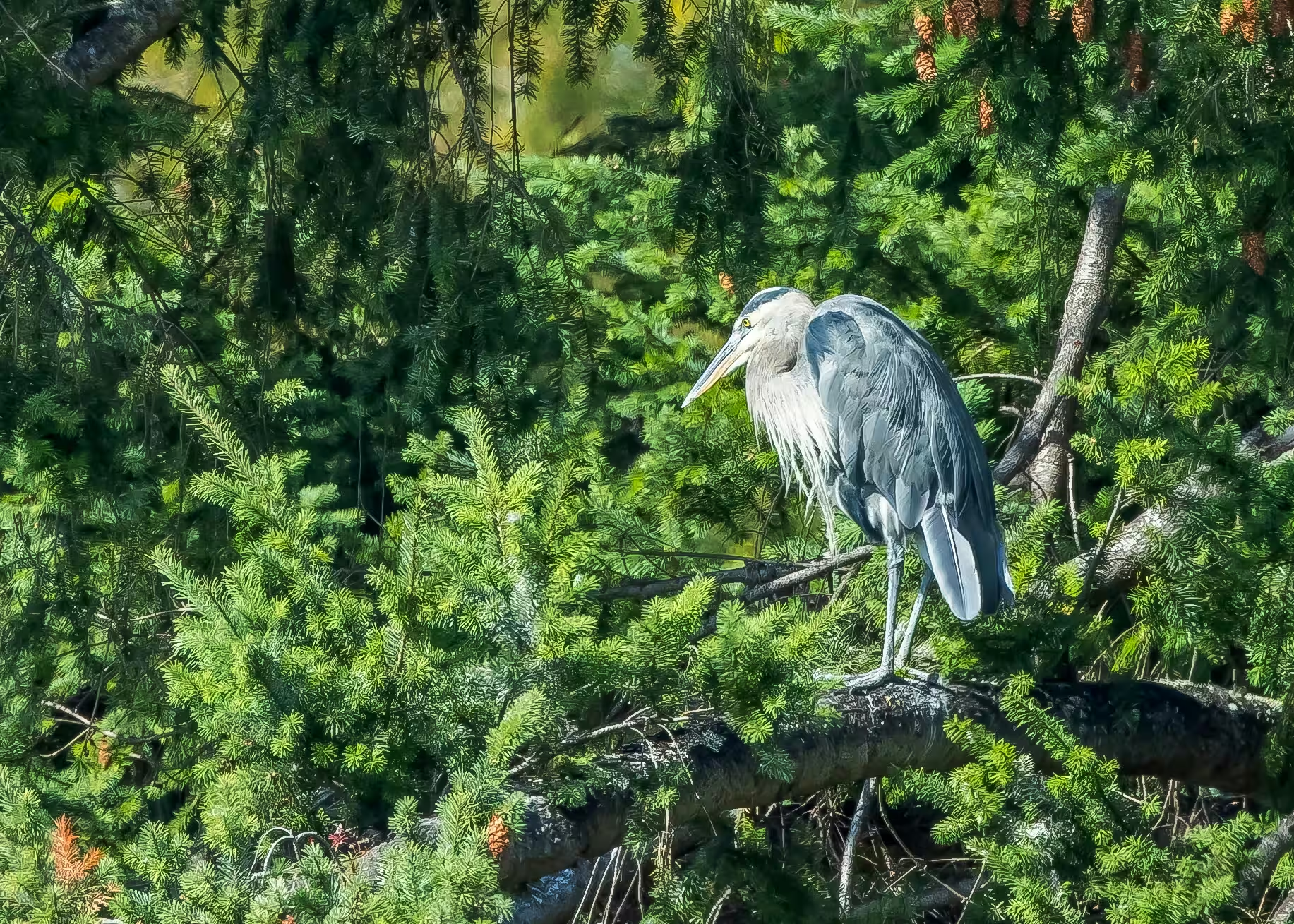
A Great Blue Heron sat deep in a conifer. I have seen them in cottonwoods before, but the evergreen setting looked strange enough that Kevin stopped and asked, 'Wait, they go in trees?'
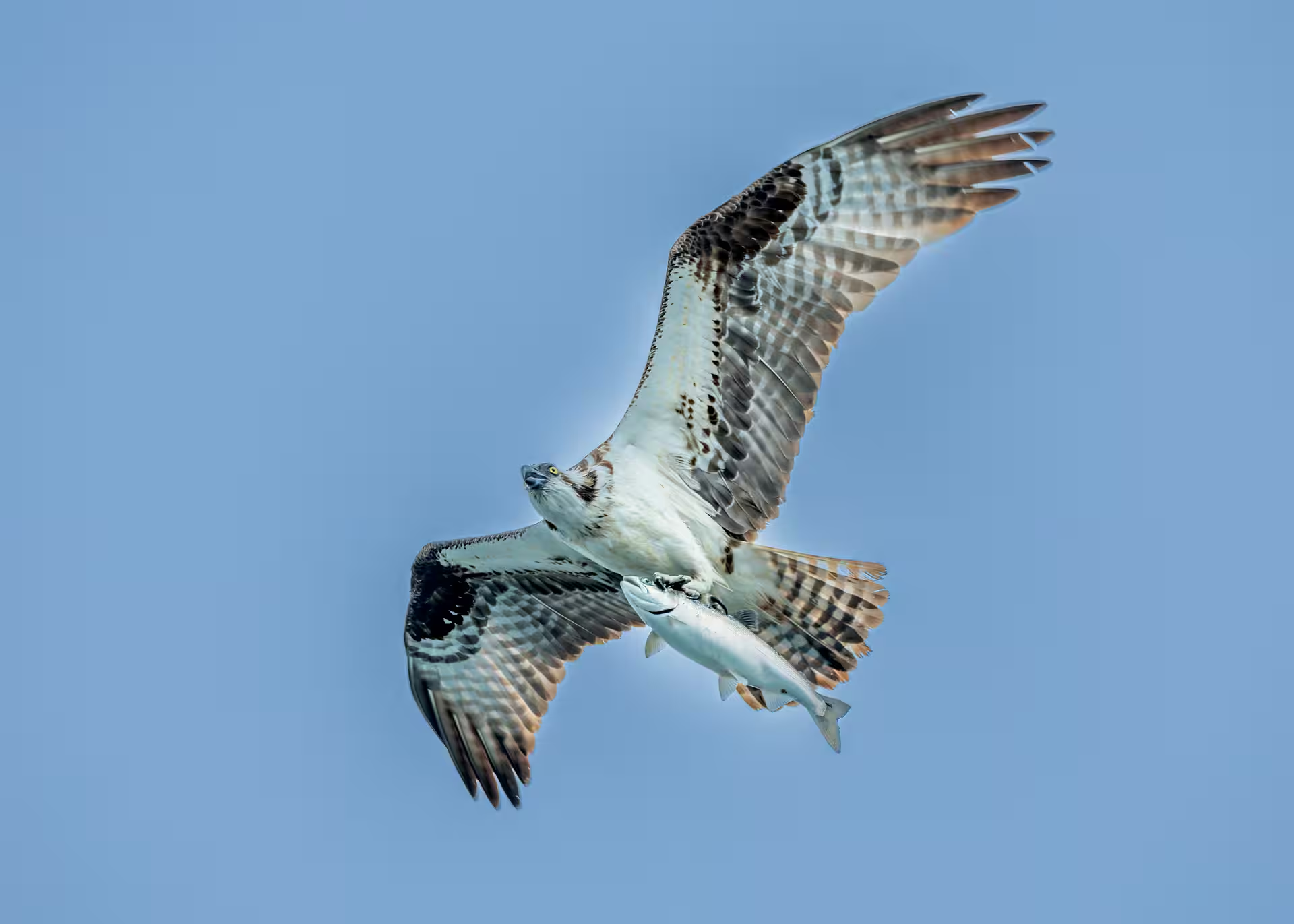
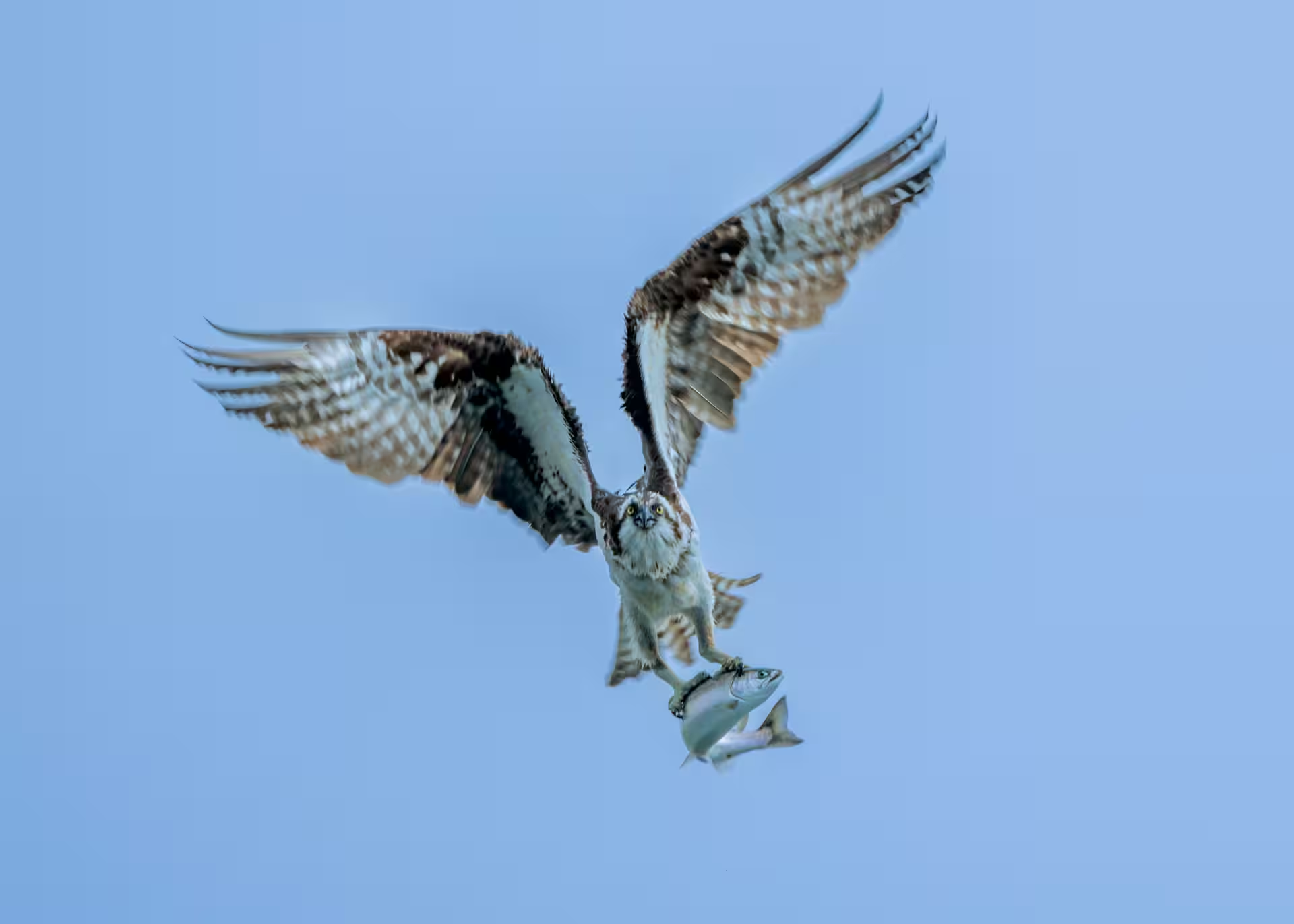
Then an Osprey flew past carrying an enormous fish while I was photographing a jellyfish in the dark water below. My camera was still at 1/640 second and exposed for the bay, so everything about my settings was wrong. I fired anyway.
The files gave me enough pixels to rescue the moment. The wings will never be perfectly sharp, but the bird looked straight at me, the fish was spectacular, and the story mattered more than the technical score. Same familiar bird—just a considerably bigger lunch.
The Waterfront Started Delivering
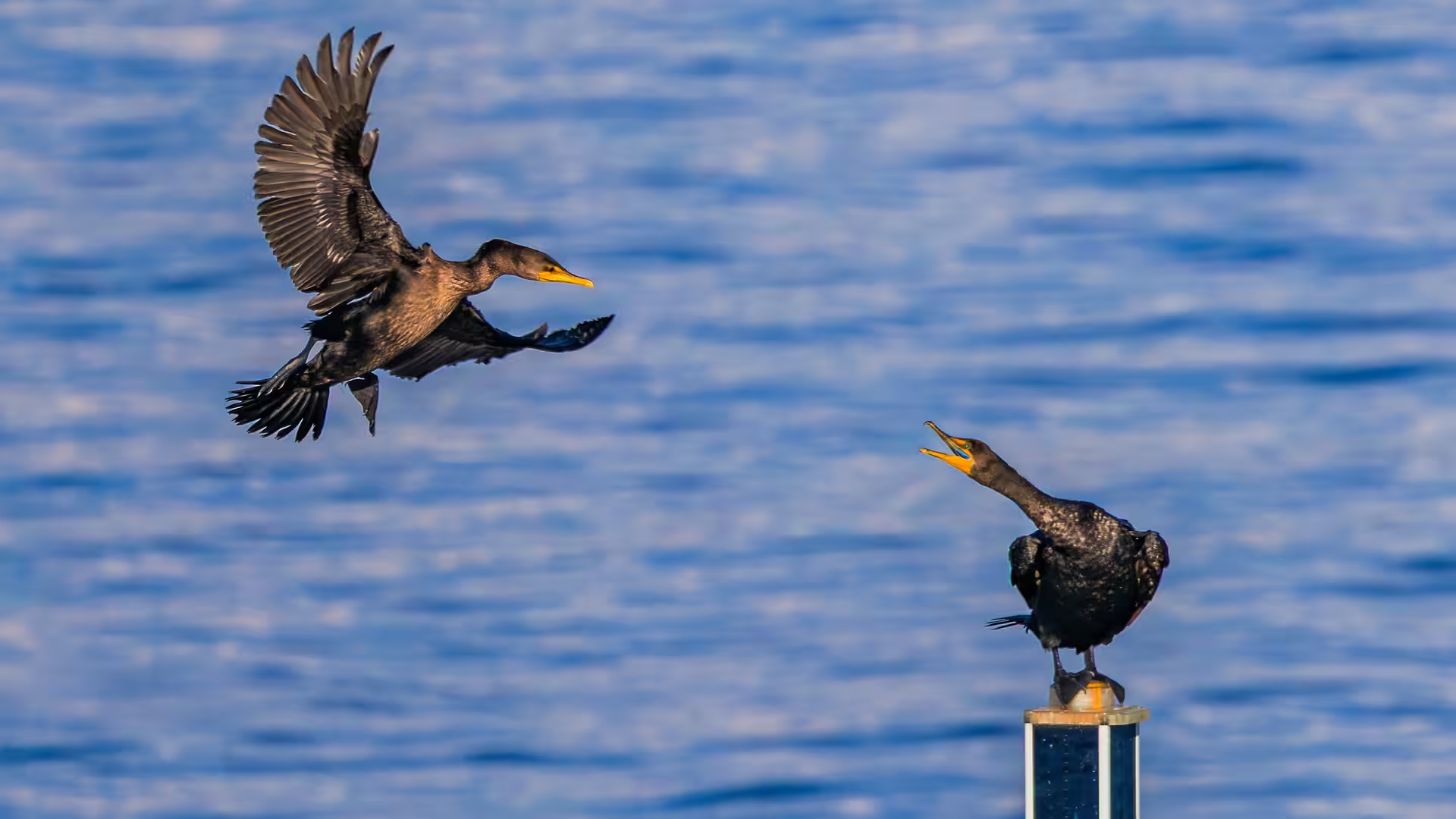
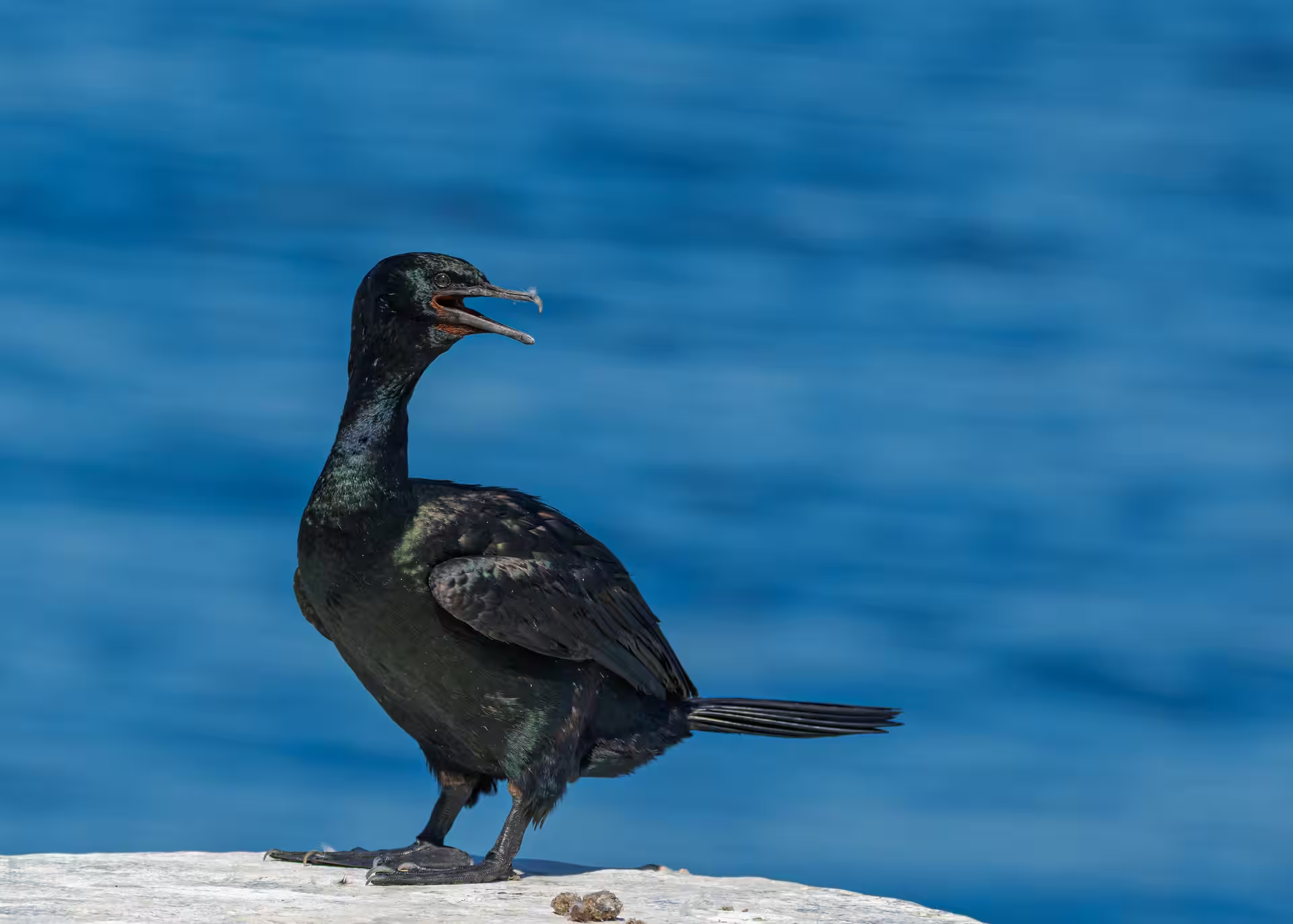
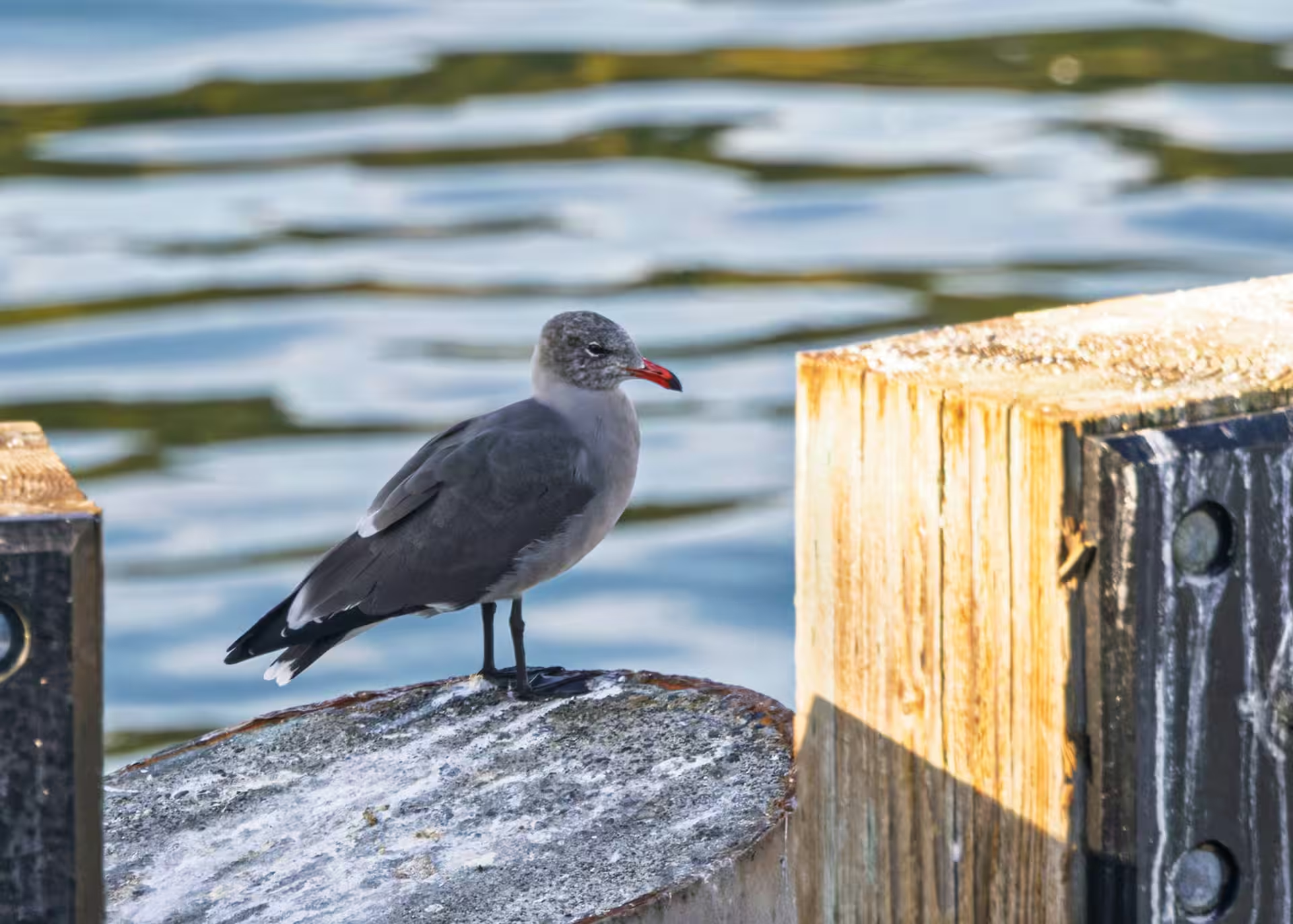
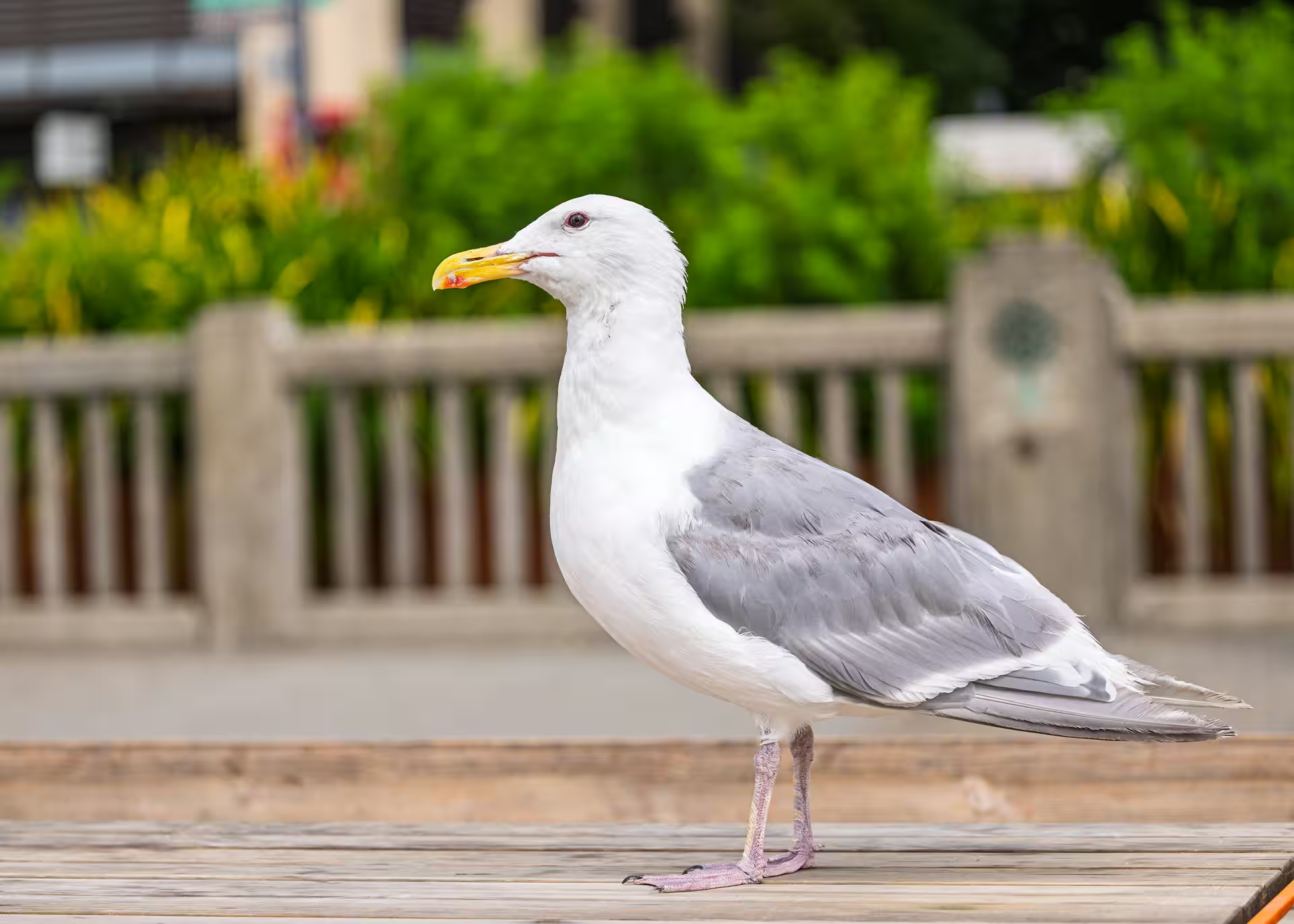
The Port of Edmonds was alive with weekend fishermen, gulls, cormorants, and Ospreys. At first I thought I was mostly looking at a pile of Double-crested Cormorants. Back home on the computer, the flock became much more interesting.
Frame by frame, a few smaller birds started standing out. The big orange facial patch of a Double-crested could disappear surprisingly well in shadow, so the absence of orange was not enough. Structure told the better story: a more compact head, noticeably thinner bill, smaller body, and only a tiny dark reddish area near the gape. Pelagic Cormorants had been hiding in the group.

The gulls offered the same lesson. Around Puget Sound, Glaucous-winged and Western Gulls hybridize so extensively that many birds fall somewhere between the two—the familiar "Olympic Gull" problem. Between those gulls and the mixed cormorant flocks, Seattle kept reminding me that identification is often less about finding one perfect field mark and more about learning the whole range of shapes and variation.
Photography turned out to be one of the best ways to learn it. In the field my brain saw gulls and cormorants. At full resolution, differences in bill shape, head structure, facial skin, mantle color, and overall proportions became much easier to study—and gave me a better idea of what to look for next time.
So We Took the Ferry
Standing at the Edmonds waterfront, the ferry became the obvious question: where does it go? Kingston. We had no real plan once we got there, but we could walk on, cruise across Puget Sound, wander around for a few hours, and come back. With the whale boat unavailable, that sounded good enough.
While boarding I spotted a Great Blue Heron below us and squeezed the 100–500 through a narrow opening between the windows to get a photograph. A guy nearby noticed what I was doing and later found me on the ferry because he wanted to see what I had been photographing. It was not a great heron photo, but it started a great little conversation.
The ferry added its own entertainment. Car alarms kept going off on the vehicle deck as motion and tilt sensors apparently objected to being transported across Puget Sound. Then, as we got off in Kingston, someone looked at the way I was carrying the camera and called out, 'Dude, that camera holder is sick.' The camera was already doing more than recording the trip. People noticed when I noticed something.
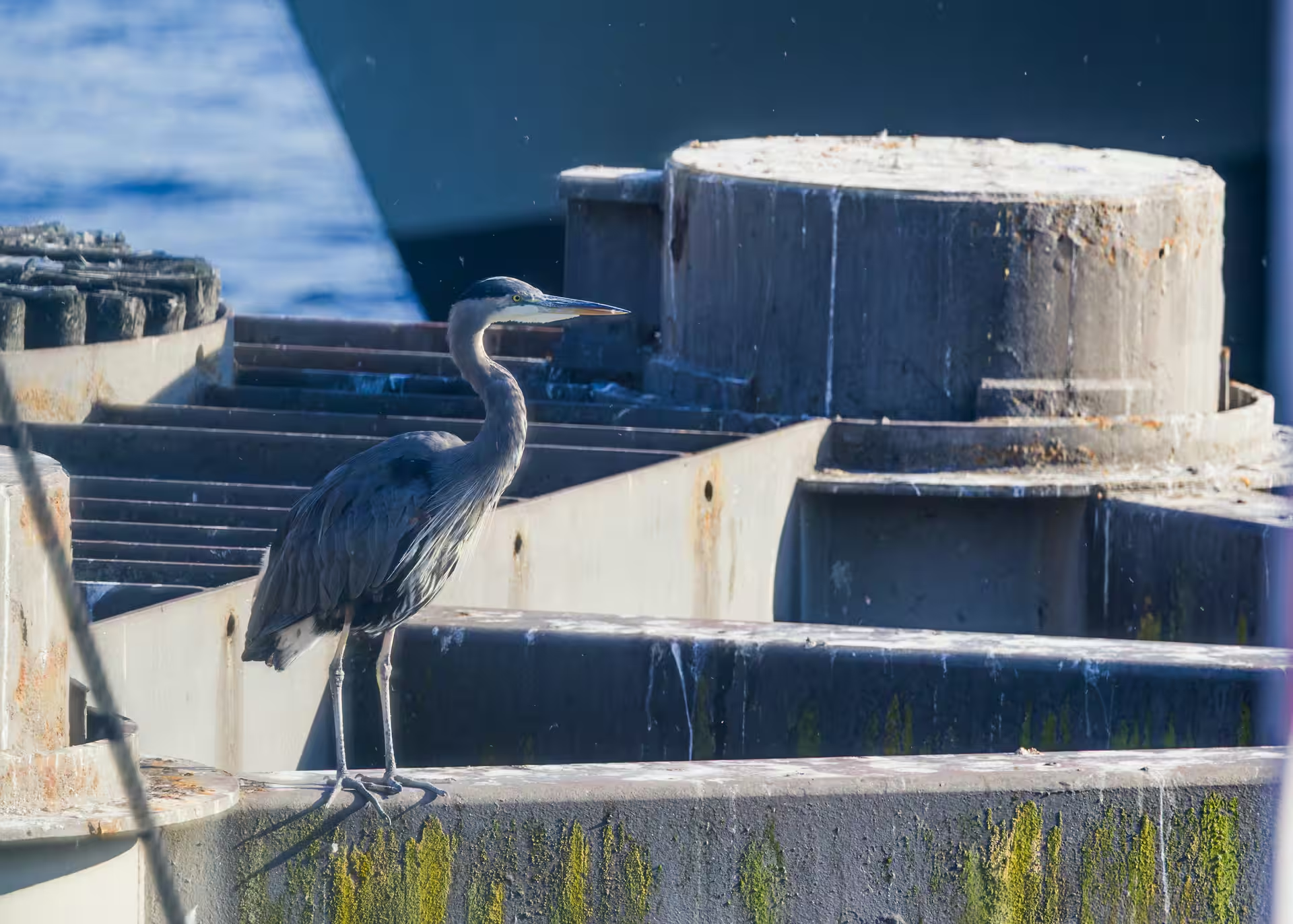
Once in Kingston, we noticed seemingly half the people walking around with boxes from Sourdough Willy’s. That felt like enough market research for us, so we ordered a pizza. While we waited, I grabbed an empanada from Argensol for an appetizer. It was excellent—the best empanada I have had stateside—and I made a mental note to come back someday for the choripán.
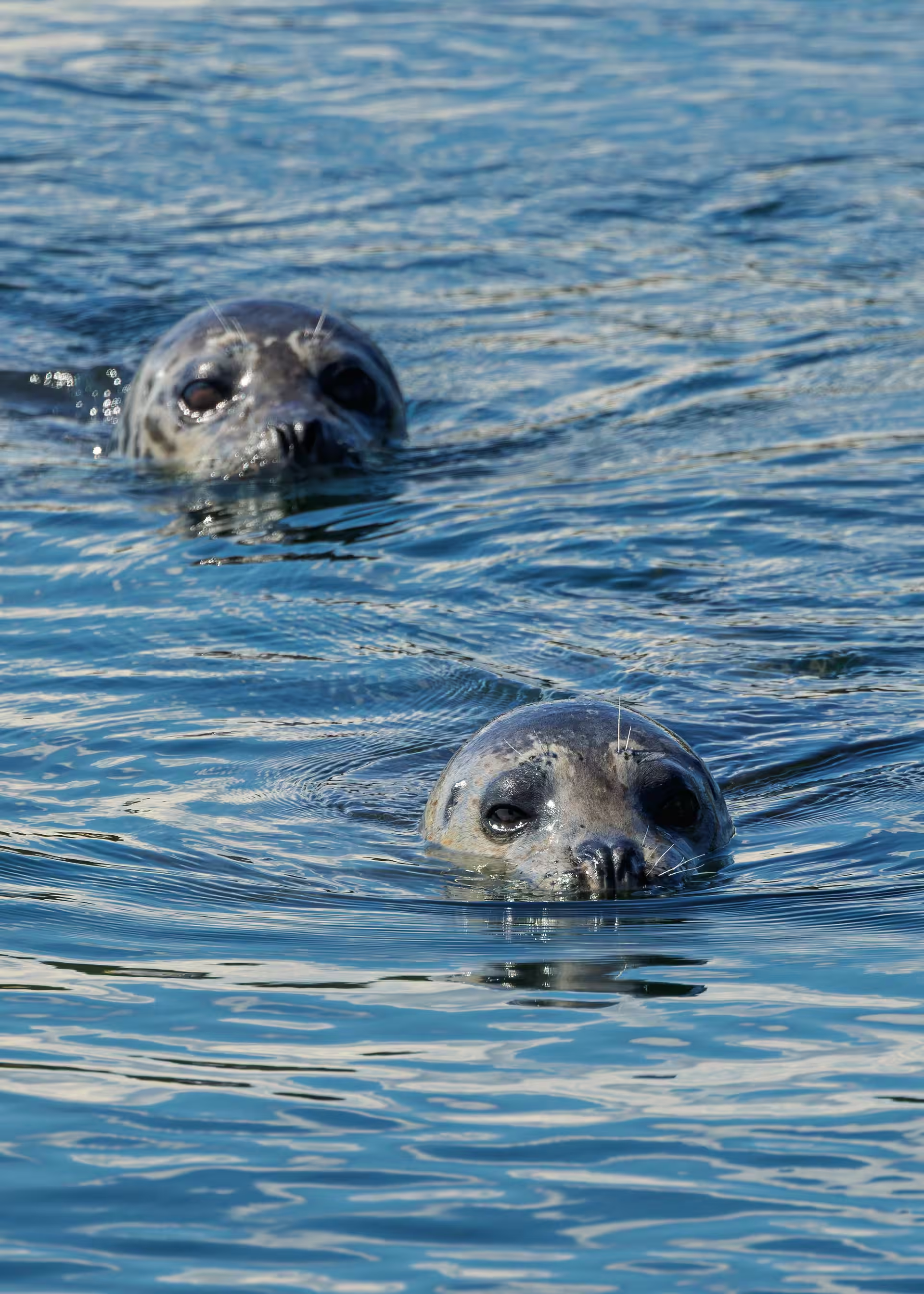
Then, because standing around waiting for food is apparently impossible when I have a camera, I wandered toward the harbor. Two seals popped up in the water. I photographed them, then moved farther down to the public boat ramp hoping they might surface again at a closer, more level angle.
They did not. Something better happened instead.
Then I Heard a Kingfisher
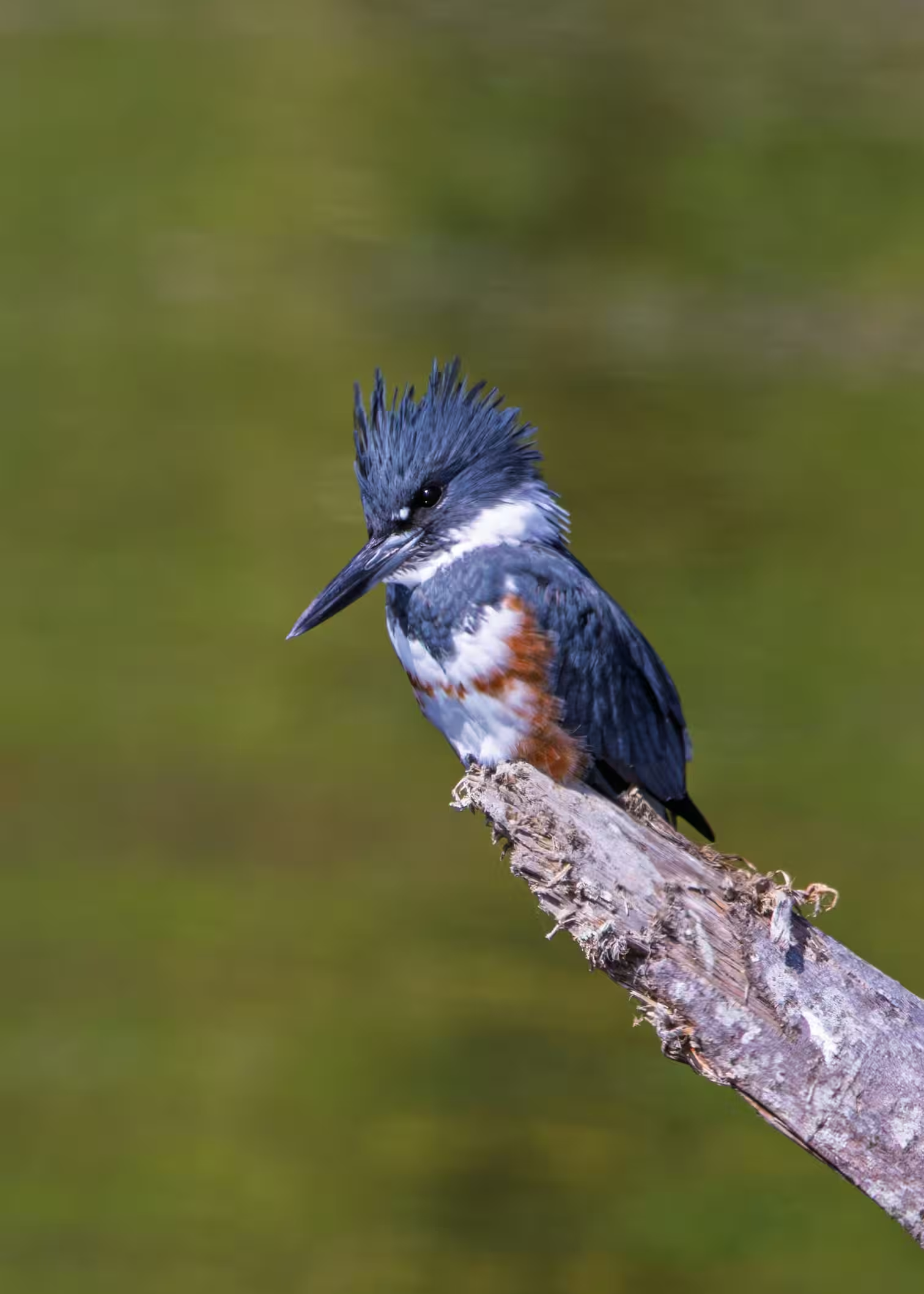
While I waited for the seals to reappear, I heard a Belted Kingfisher over my shoulder. One bird was hanging around the boats far out in the marina. Then I heard a second one going nuts, watched it disappear behind a hill, and naturally went looking for it.
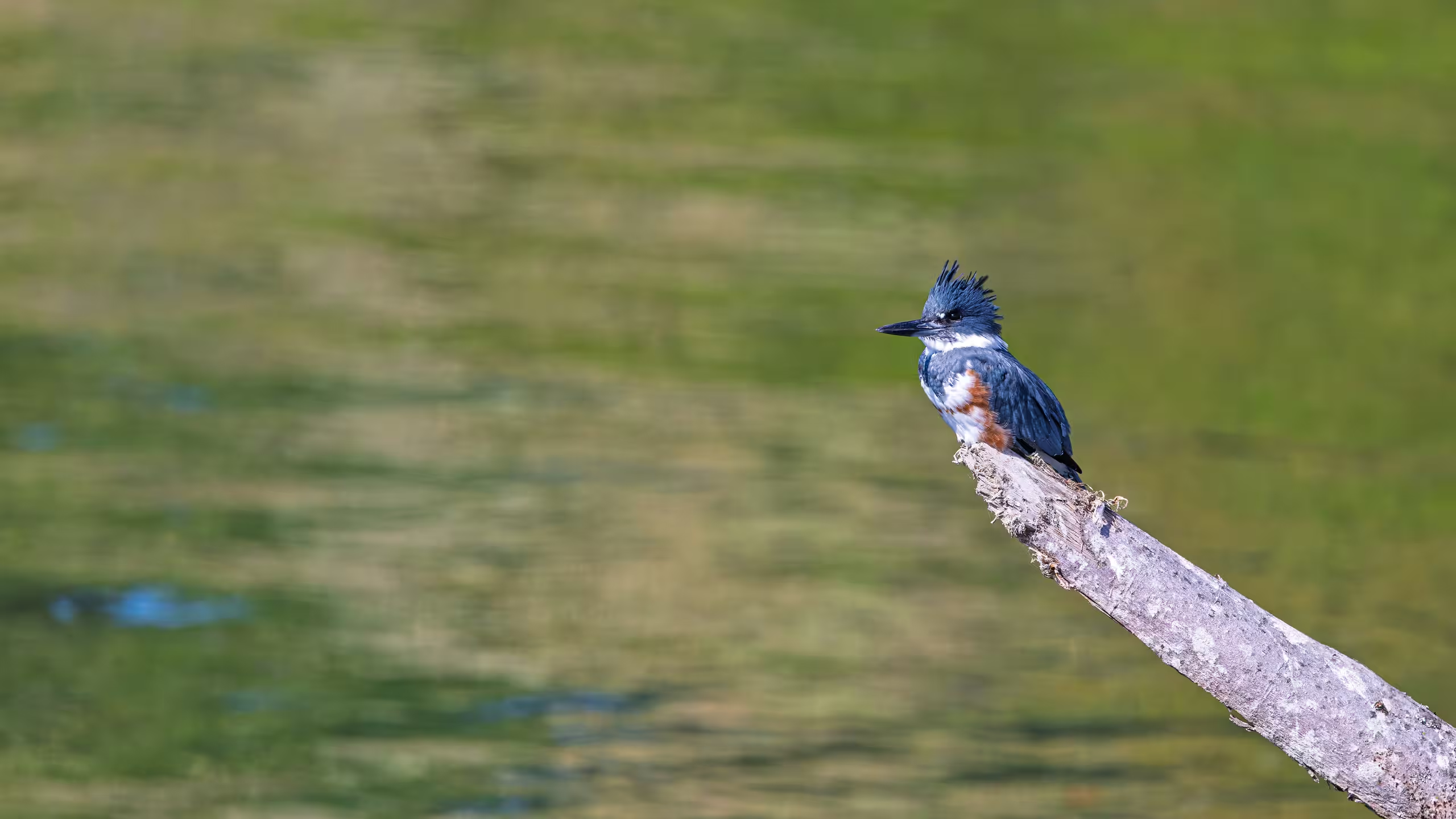
When I got high enough to see around the hill, there she was: a female Belted Kingfisher sitting almost perfectly on an open branch, crest fully raised, with clean green backgrounds behind her. Not a lifer—just a familiar bird finally giving me the photograph I had been waiting for.
When I got back with the pizza and told everyone what I had found, Stacy said she really wanted to see one. She had apparently been with me for previous kingfisher sightings without ever actually getting eyes on the bird herself, so after we ate we went back.
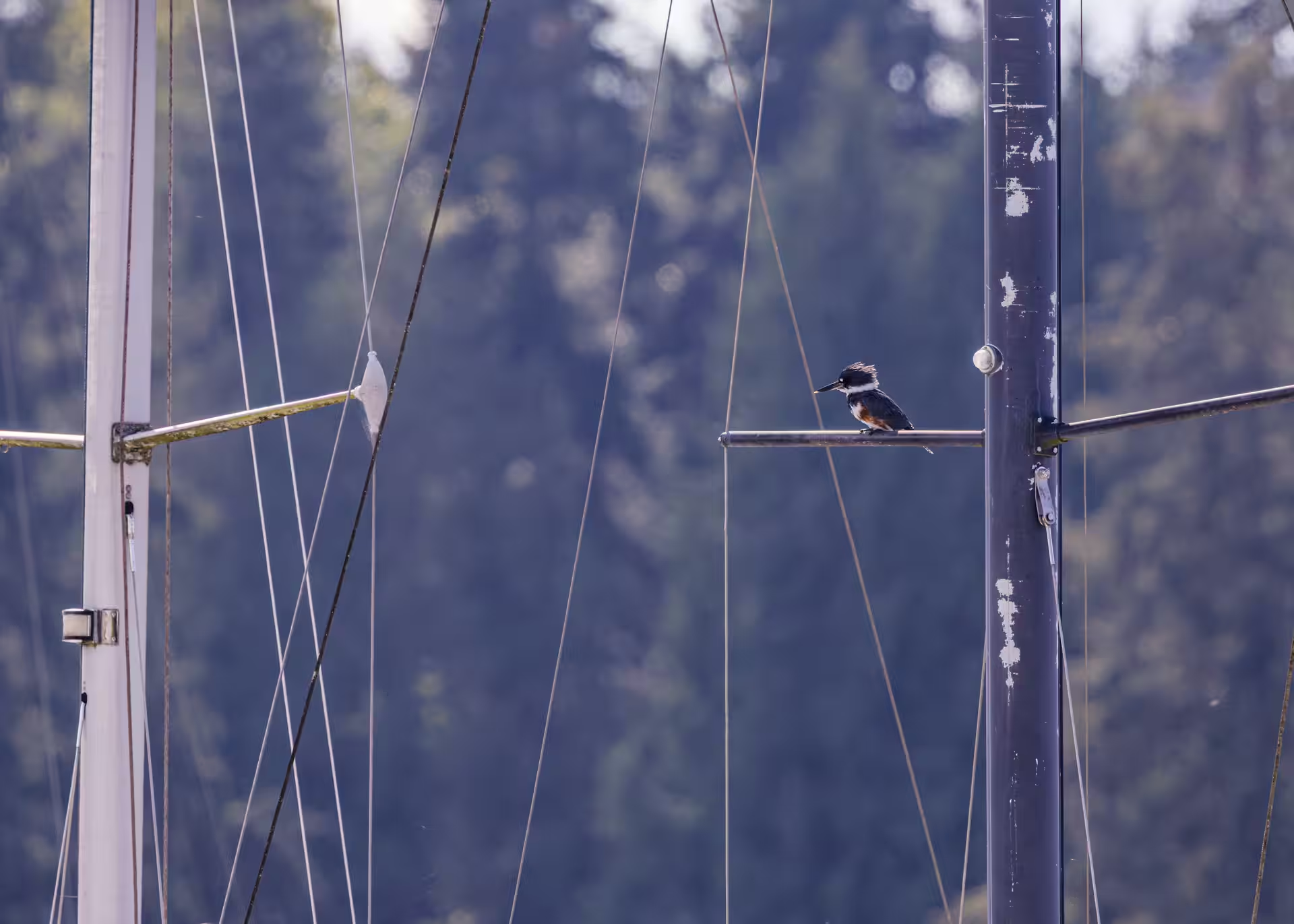
The perfect bird was gone, but the distant kingfisher among the boats was still there. It was far away, into the sun, surrounded by rigging, and sitting on an artificial perch. Photographically it was worse in every possible way. But Stacy could see it.
I already had the photograph I wanted. We went back because she wanted the experience. The best photograph and the photograph that matters do not always have to be the same one.
The Whole Adventure
There was no target bird on this trip. We came because Kevin was graduating. But the graduation, the baseball game, public transit, pizza, ferries, family, birds, and all the little stories we collected along the way were never separate adventures. Together, they were the Quest.
The whale boat was full, so we took a ferry. The marsh was quiet, so we kept walking. The seals did not come closer, so I wandered farther down the harbor and heard a kingfisher. Birding has a funny way of encouraging you to keep looking, keep exploring, and notice things you might otherwise walk right past.
That continued all the way home. I was editing photos on the flight when a flight attendant noticed my screen. She was a birder, and the guy sitting in front of us overheard the conversation and immediately started unloading an absurd amount of bird knowledge.
It turned out he had roughly two decades of professional wildlife and avian biology experience, including endangered-species work, bird surveys and banding, and California Condor and Whooping Crane reintroduction. When he asked if I could send him one of the photos, I handed him the copy of FeatherQuest I had brought instead. He gave me his email and eventually said, 'Well, now you have a friend in Oregon.'
I probably could have handed out three books organically on this trip—to the biologist, the flight attendant, and the photographer in Kingston. Maybe carrying a few copies is not really carrying inventory. Maybe it is carrying a much better business card.
Maybe that is the clearest version of FeatherQuest I have found yet. Birding does not have to be the reason for the trip. It can simply become part of how you experience it—opening up little detours, discoveries, conversations, and stories along the way.
You do not need a lifer—or even a birding trip—to have a FeatherQuest. The Quest can simply be the whole adventure.
No lifers. A few photo upgrades. Lots of adventure.