Quest for the Phalarope
I went to Antelope Island for one book-worthy Wilson’s Phalarope photo. The lake had other plans.
Quest Overview
Searching for a book-worthy Wilson’s Phalarope photo for the Utah section of FeatherQuest USA Watching Wilson’s and Red-necked Phalaropes move across the lake in distant flocks Pushing through giant orb-weaver webs to reach the southeast side of the marina
Table of Contents
One Photo for Utah
I came to Antelope Island with a very specific target: Wilson’s Phalarope. Not because I needed to see one. I had seen them before. I needed a photograph worthy of the Utah section of the next FeatherQuest USA book.
That distinction matters. A distant bird can satisfy a checklist. A book photograph has to do more. It needs light, detail, behavior, and enough presence to make someone stop on the page and look twice.
FeatherQuest USA is growing toward a much bigger idea — birds, places, and eventually photographers helping tell the story of all 48 contiguous states. For this evening, though, the vision was much smaller: one Utah bird, one photograph, one quest.
South for the Light
With the sun dropping toward the west, I started on the southeast side of the marina. The decision was mostly photographic. If I could reach the shoreline from that side, I could keep the evening light behind me instead of aiming back into the setting sun from the northwest.
There was a real trail near the concrete bridge, so I kept going even when the sagebrush turned into an orb-weaver obstacle course. Web after web stretched across the route. Some were so substantial that whole bird feathers had been caught in them and hung suspended in the silk.
I made it through the bridge section. Farther south was different. Once the vegetation became dense and every possible opening seemed webbed over, there was no sensible route left to force. That attempt was over.

There They Were
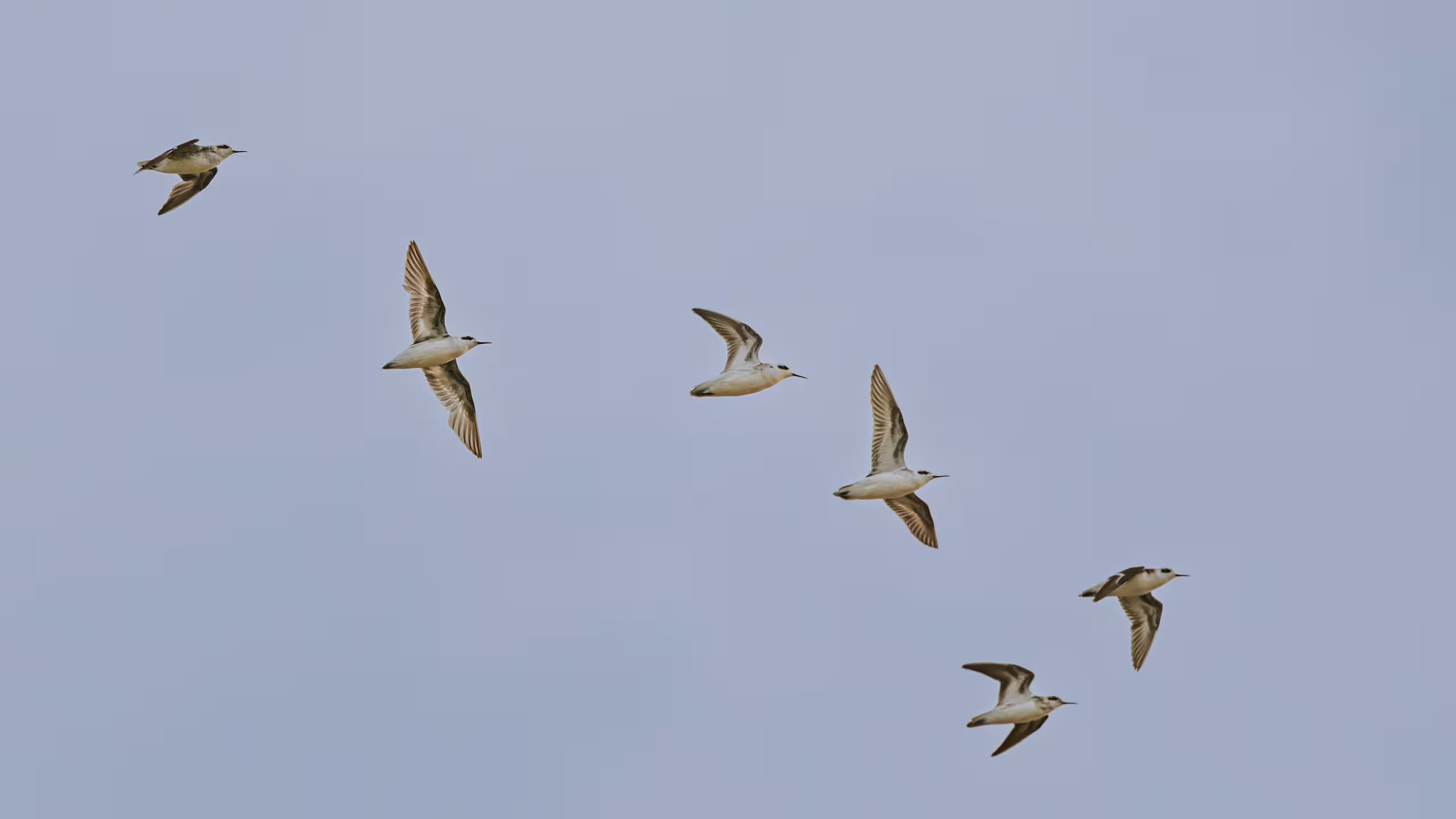
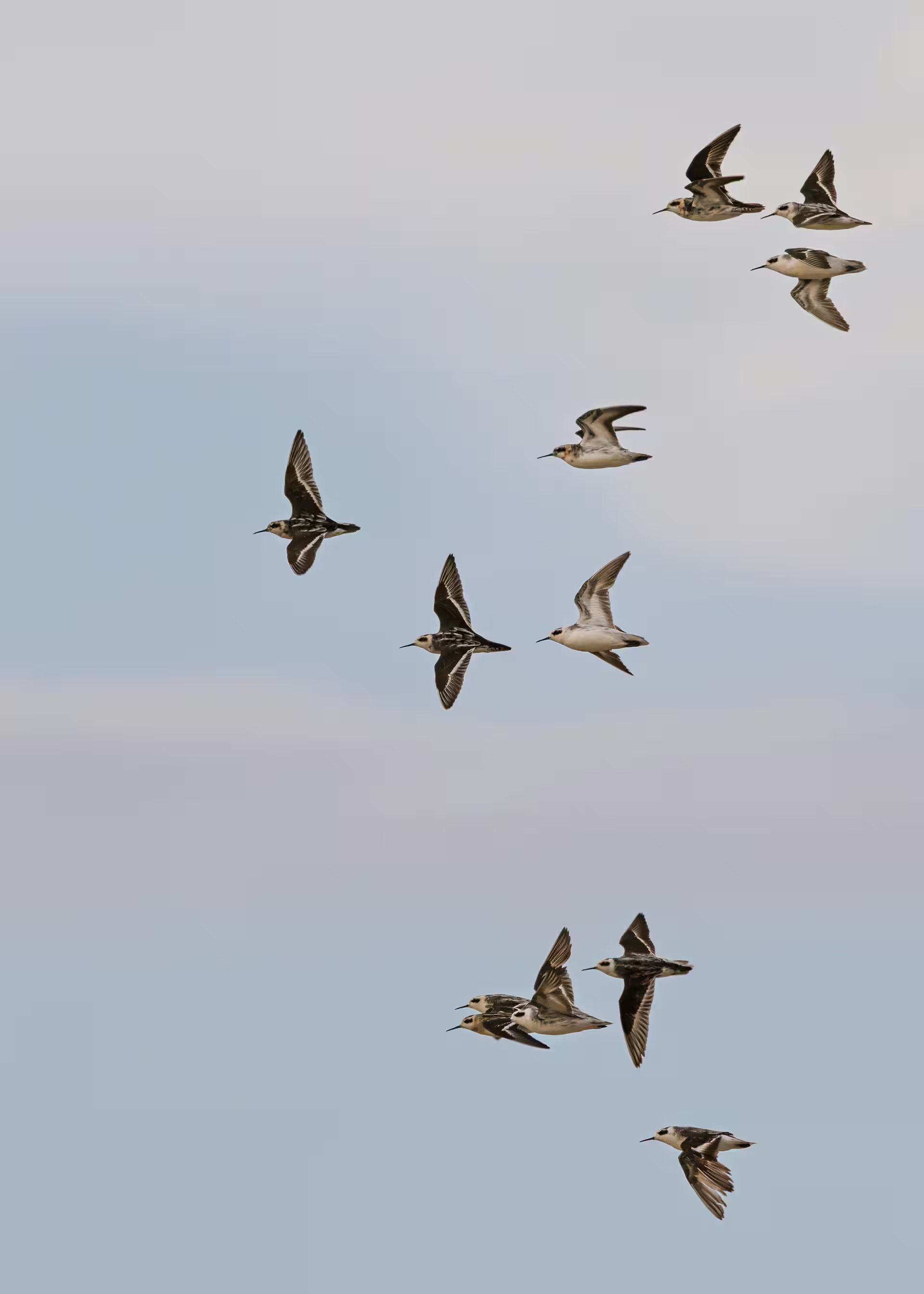
Between the south and north sides, the Wilson's and Red-necked phalaropes finally started moving. They came by in droves, small flocks crossing the open sky far beyond the shoreline. I tracked them, fired bursts, and came home with documentation I genuinely like.
But they were high, distant, and moving fast. Clouds kept softening the light. The photos proved I had found the birds I came for, but they were not the close, clean Phalarope portrait I had imagined for the book.
One Last Shot at the North Shore
The north side looked like the obvious last attempt. There were no dense shrubs between me and the lake, just an open expanse leading toward the distant water and the phalaropes beyond it. The tradeoff was the light: now I would be walking toward the setting sun. At that point, access mattered more.
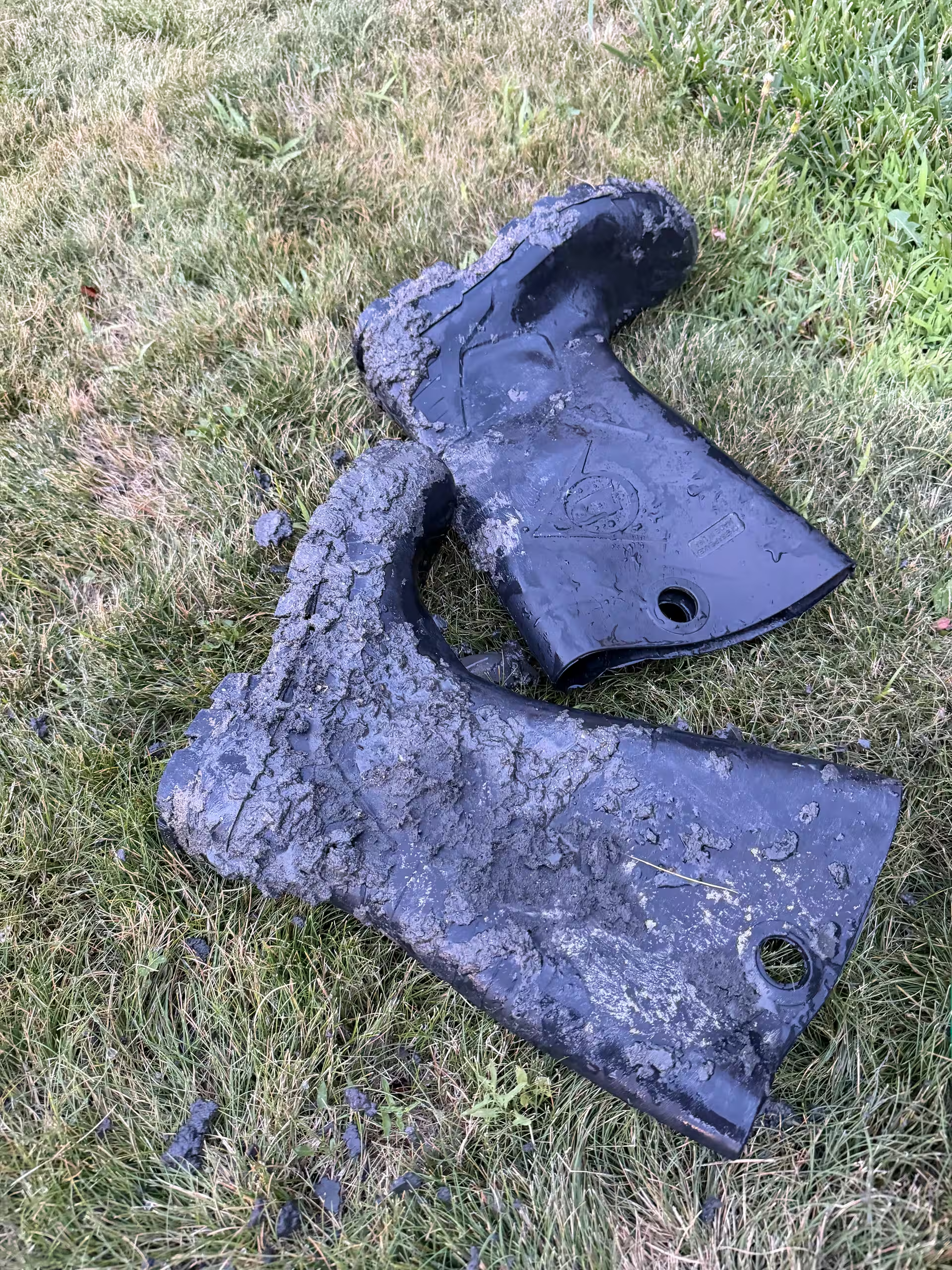
I had muck boots, so I started out. Then my right foot sank nearly to the top of the boot and locked in place. My left foot went in too. I sat down hard, planted my left hand in the mud, and somehow my camera hand did exactly what every wildlife photographer’s instincts apparently demand — it went straight up. Save the camera first. Figure out the human later.
I worked my right foot loose with my left hand and scooted backward until the ground became solid again. That was enough. Whatever photograph existed farther out on the lake was not worth finding out how much deeper that mud became.
Cleanup became its own little field operation. I had packed a long-sleeve shirt in case the bugs got bad, so I swapped shirts and my shirt became a rag. My pants happened to be zip-off hiking pants, which meant the muddy lower legs came off, the worst of the mess got wiped away, and I continued the evening in shorts.
The Lake Between Us
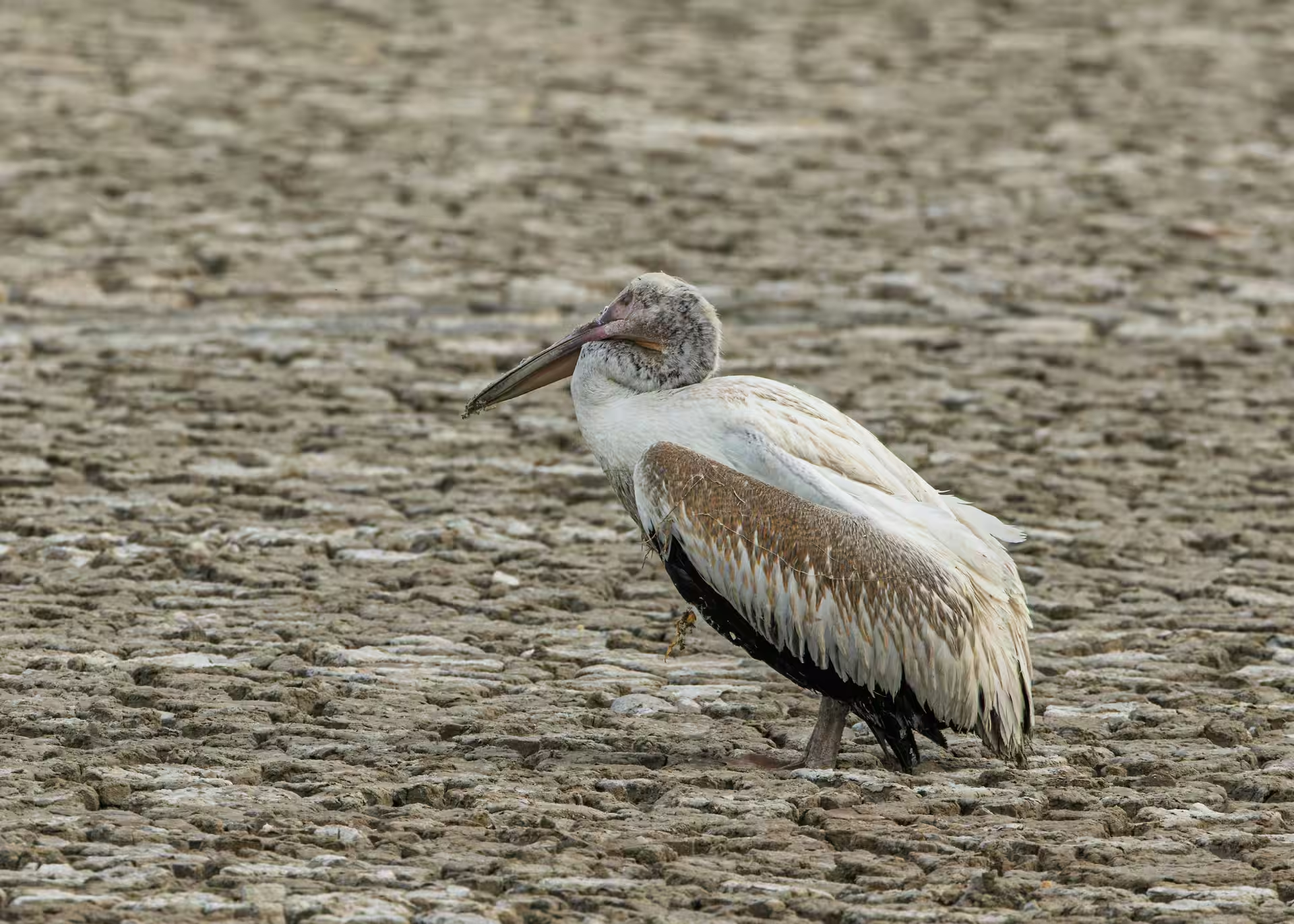
Satellite images can show how far the Great Salt Lake has retreated. Standing on the exposed lakebed makes the scale feel completely different. The water looked close until I tried to reach it. What appeared to be open ground became a broad barrier of sticky mud between the firm shoreline and the birds.
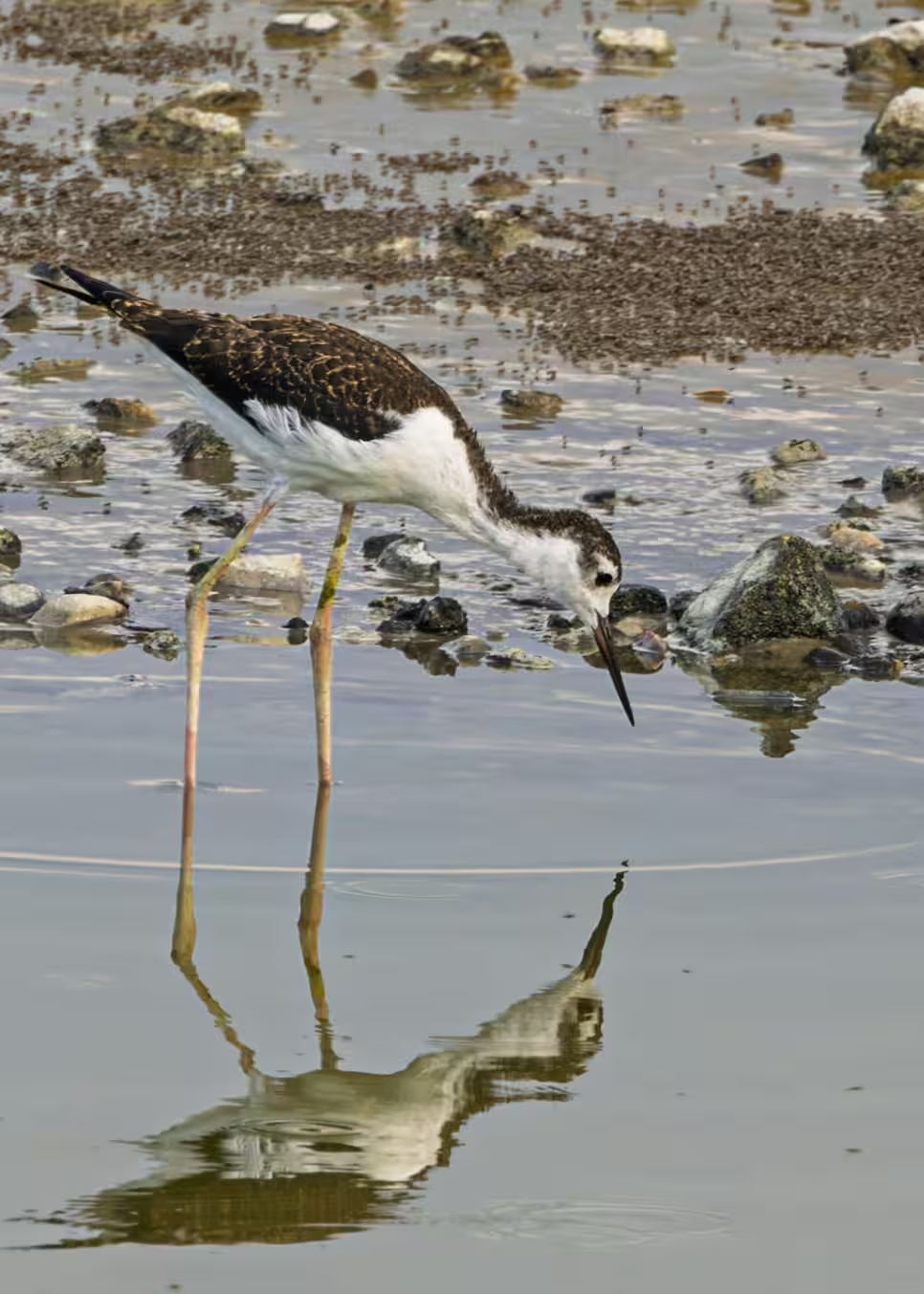
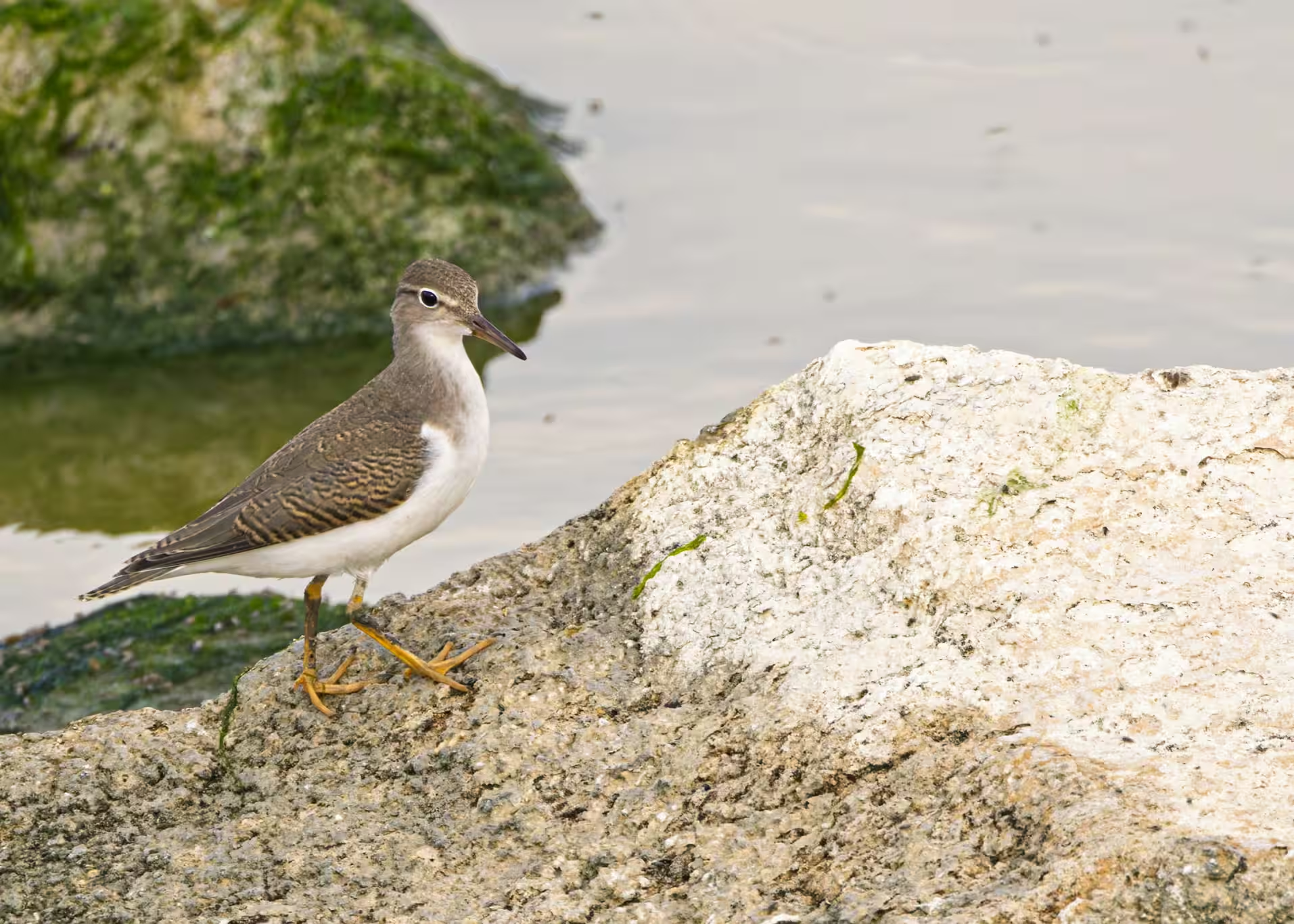
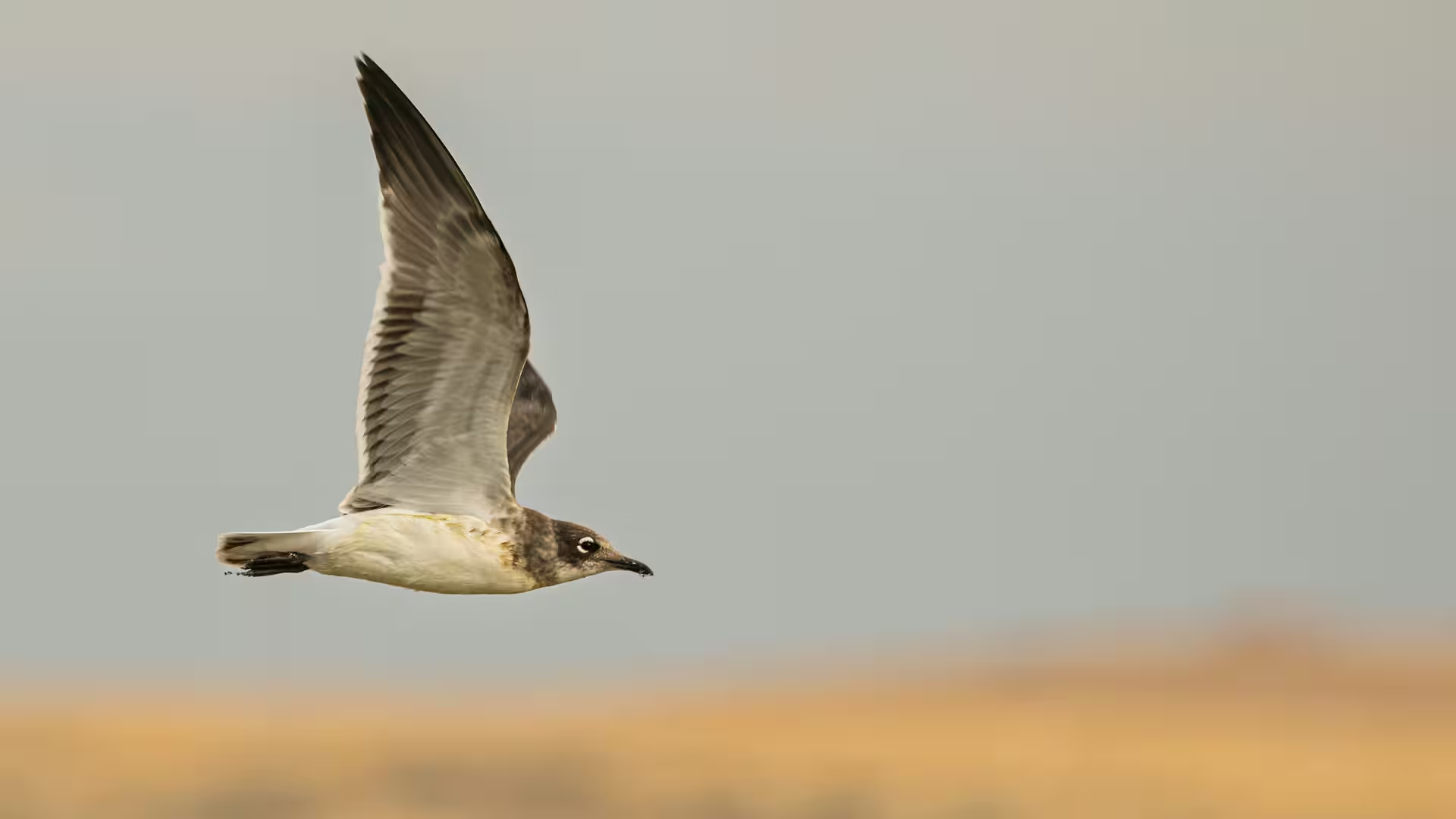
The irony is that the exposed flats can be spectacular shorebird habitat. Avocets, stilts, gulls, phalaropes, and other migrants were everywhere. For the birds, the changing edge can create feeding opportunities. For a photographer trying to approach safely from solid ground, it can put the action frustratingly far away.
One American White Pelican resting alone on the cracked lakebed stayed with me. I could not tell that anything catastrophic was wrong with the bird; some vegetation or debris appeared caught in the wing feathers. What struck me most was not the pelican itself. It was how much dry lakebed surrounded it.
One More Try
After the spiders, the mud, the distant flight shots, and the disappearing light, it would have been easy to call it. The Wilson’s Phalarope photograph was not happening that evening.
But I knew people regularly found Burrowing Owls on Antelope Island, and somehow I had never seen one there. So rather than head straight home, I decided to try my luck one more time.
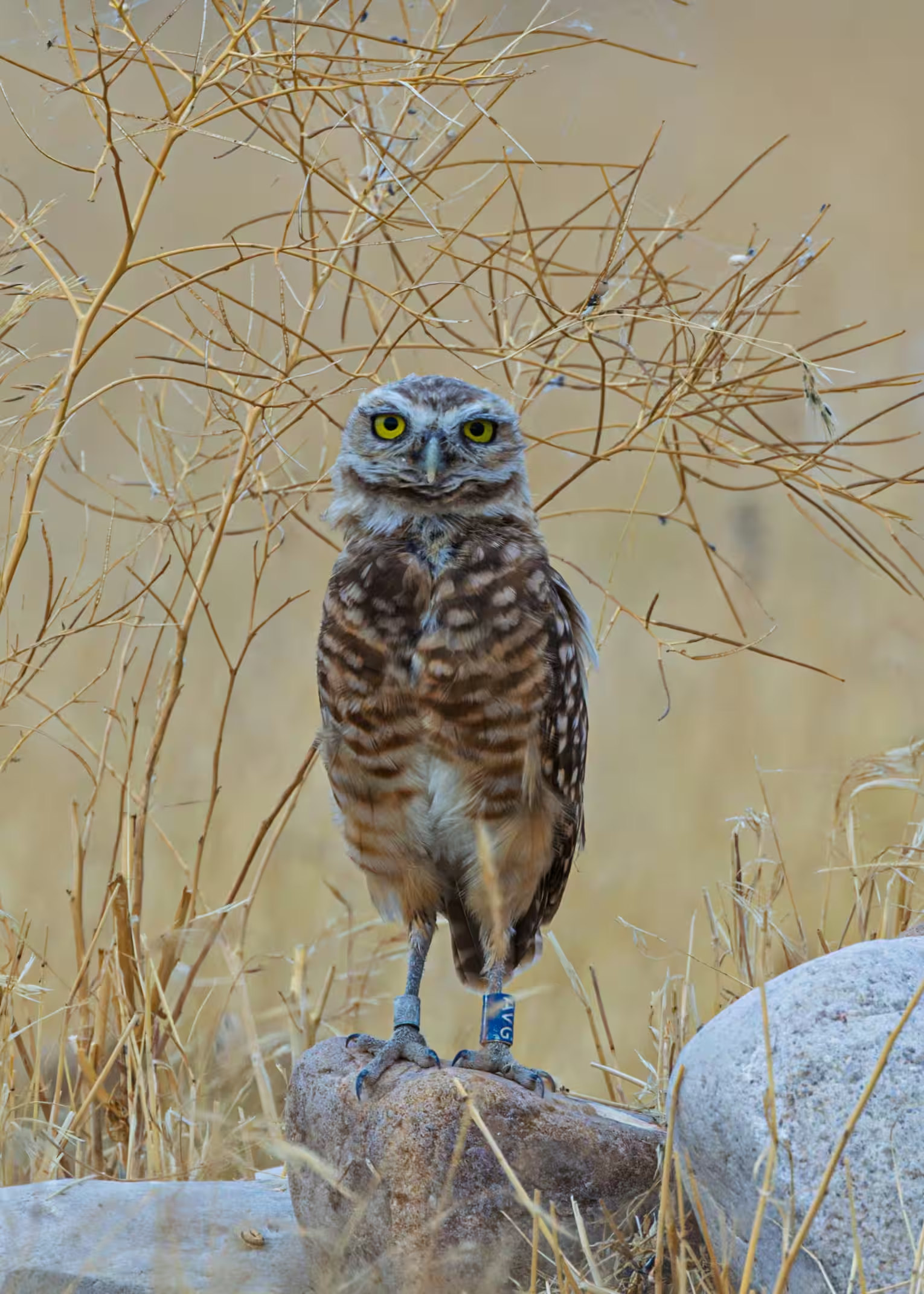
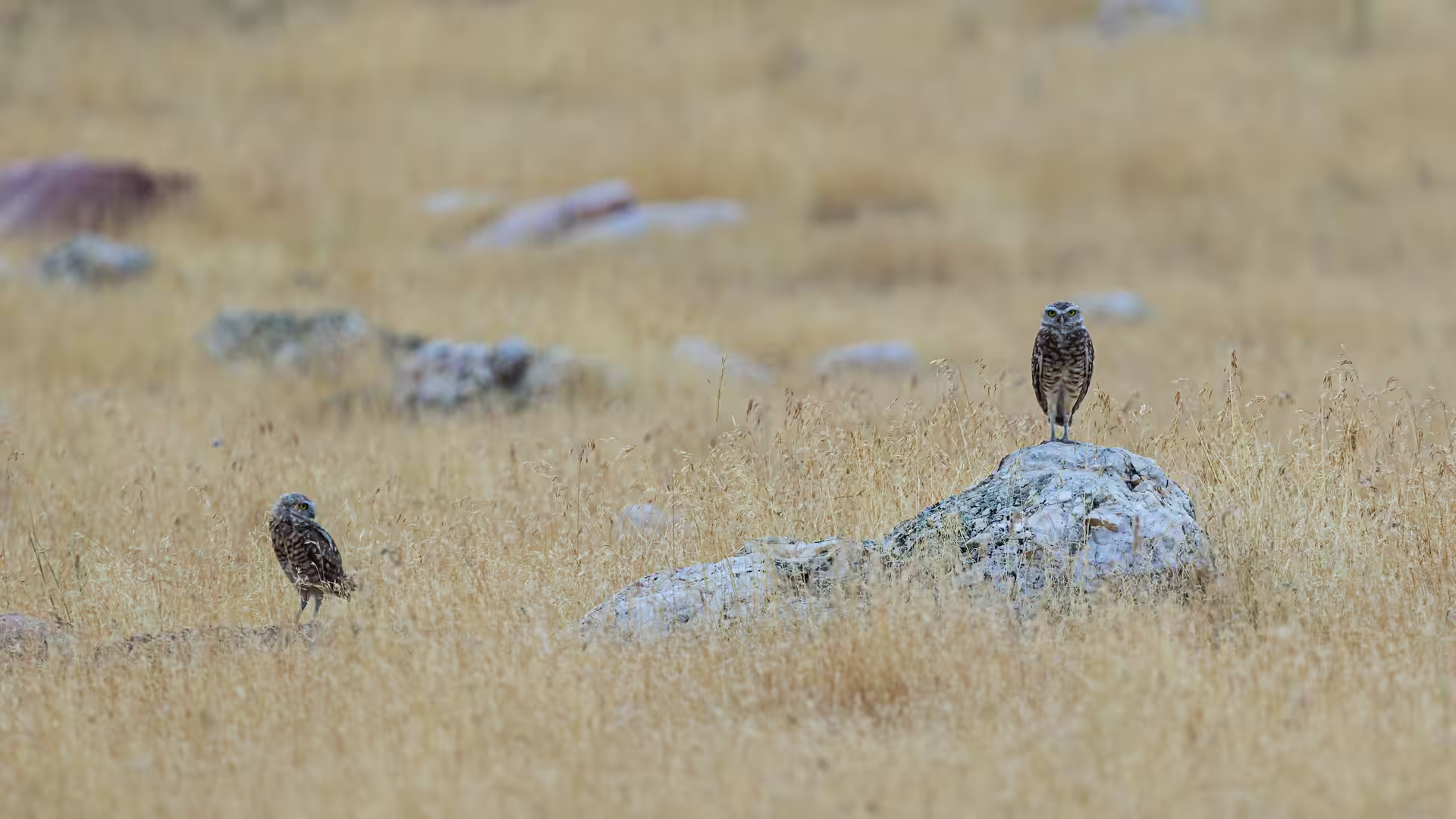
I barely had to search. Near the visitor center, split across both sides of the road, were five Burrowing Owls. The first two were farther from the roadside, but when I turned around I noticed three more much closer on the opposite side. I kept my distance, watched their behavior, and let the 500mm do the work.
At one point an owl gave that strange little side-to-side bob that makes them look equal parts curious and annoyed. It was a useful reminder that getting closer is always tempting, but the photograph is never worth pushing a bird past its comfort zone.
Life Bird #600
The Burrowing Owl was a lifer. Better yet, once the checklist settled into place, eBird logged it as world life bird #600.
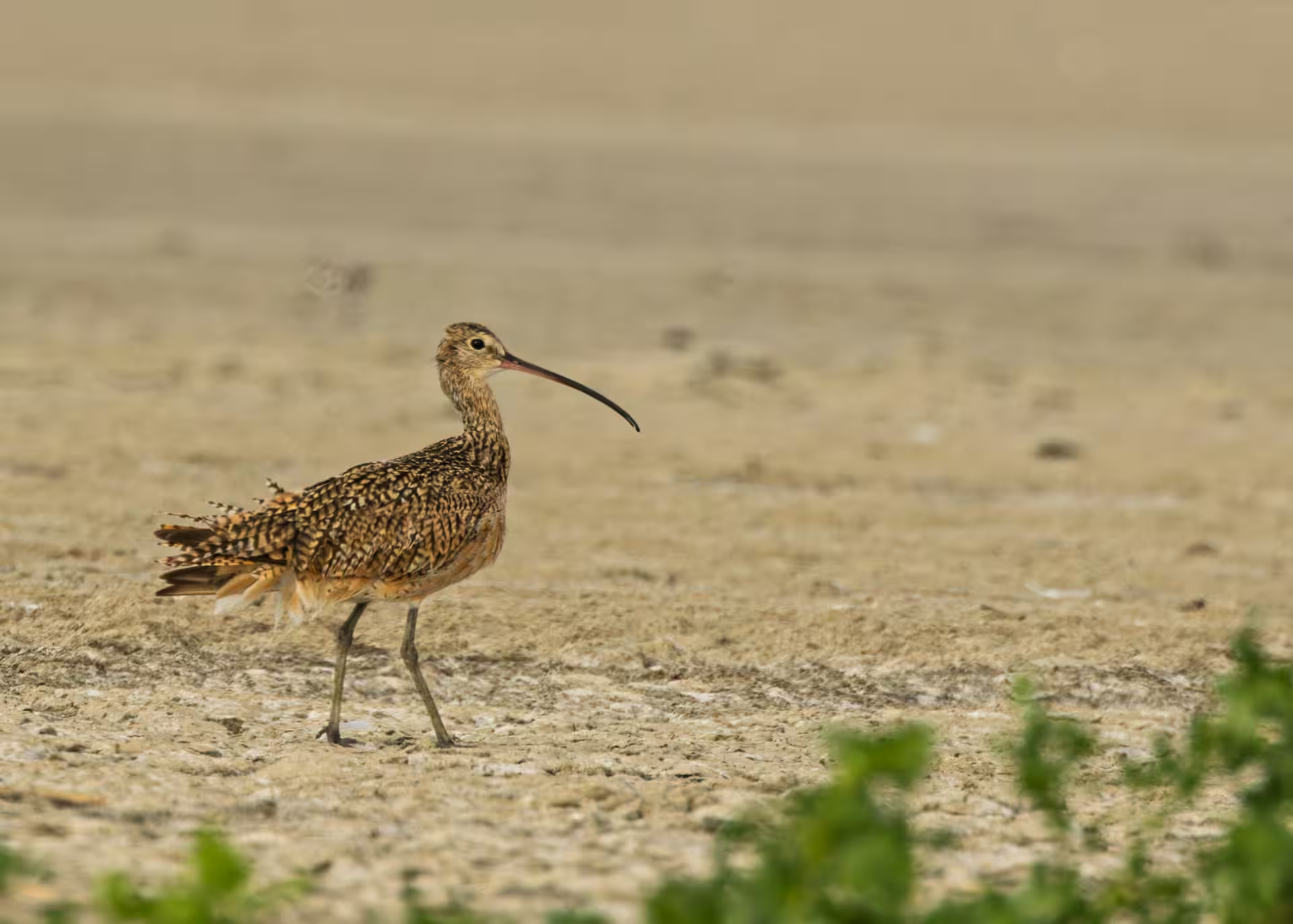
A Long-billed Curlew from the same outing became #601. Technically, birds on the same checklist can make milestone bookkeeping a little funny, but the owl was the first of the two I identified in the field and the bird eBird placed at 600. More importantly, it was the moment that felt like 600.
That is the one I will remember: not a bird I planned to chase, but five little owls waiting near the road after I had already accepted that the original mission was over.
The Shorebird Lesson Came Later
The learning didn't end when I left Antelope Island. Going frame by frame through the photos became one of the most valuable shorebird review sessions I've had. Birds that seemed nearly impossible to separate in the field started falling into place once I slowed down and focused on structure instead of a single field mark.
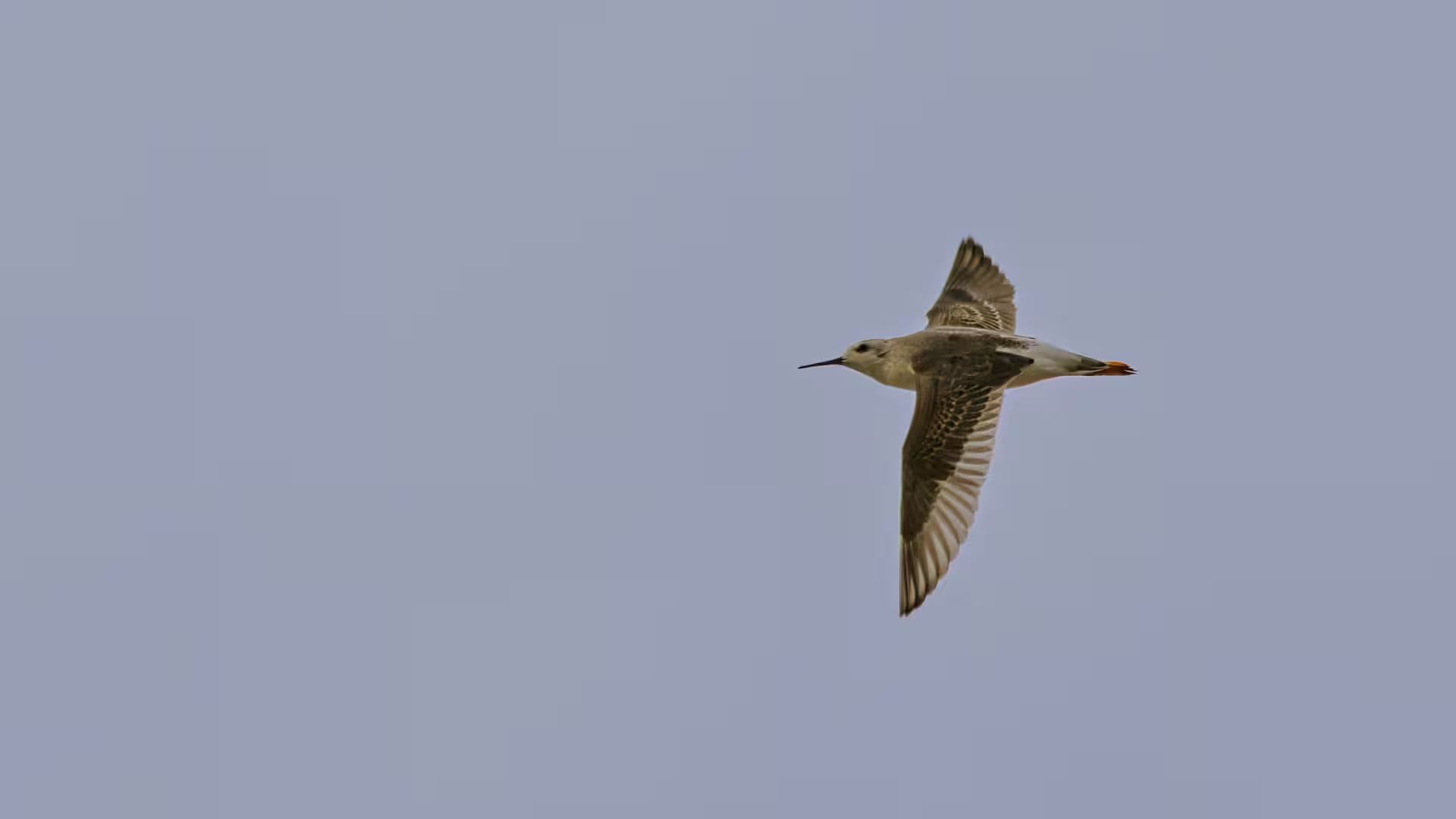
The biggest breakthrough was finally building a mental picture of Wilson's versus Red-necked Phalaropes in late summer. Wilson's showed a noticeably longer, more needle-like bill and a larger overall impression, while Red-necked appeared smaller with a shorter, finer bill, a darker eye patch, and a bold white wing stripe in flight. Those subtle differences became much easier to recognize after reviewing dozens of images side by side.
The Long-billed Curlew offered a lesson of its own. Its impossibly long, down-curved bill stood out immediately once I knew what to look for, turning an uncertain roadside sighting into life bird #601.
I don't think I'll ever stop bringing home shorebird mysteries. But after this trip, I know what to look for a little better than I did before. And if I miss something in the field, I can always count on the camera to help teach me once I get home.
The Quest Is Still Open
Antelope Island may still be one of the best places in Utah to find phalaropes during migration. I am less convinced it is the best place to photograph them right now. With the shoreline so far out, managed wetlands and places with firm edges closer to feeding birds may give me a better chance at the image I need.
So the Wilson’s Phalarope remains unfinished. That is okay. I found the bird. I photographed the bird. I learned more about it. I just did not make the photograph that belongs in the book.
The funny thing is that the failed part of the mission is exactly what made the day memorable. If I had walked down, made the perfect frame, and driven home, I would have a photograph. Instead I got a quest.
Every quest needs a target. The best ones leave room for discovery.
More from the Quest