

Kingfishers & Roadrunners
One dives for fish. The other races through the desert. Meet two remarkable hunters.
Table of Contents
How to Notice Kingfishers & Roadrunners
Where to Find Them
For Belted Kingfishers, check Utah rivers, streams, ponds, and reservoirs, especially where branches overlook the water. Greater Roadrunners are a very different search: look in the warm, brushy desert country of southern Utah, sometimes right along quiet roads.
What to Watch For
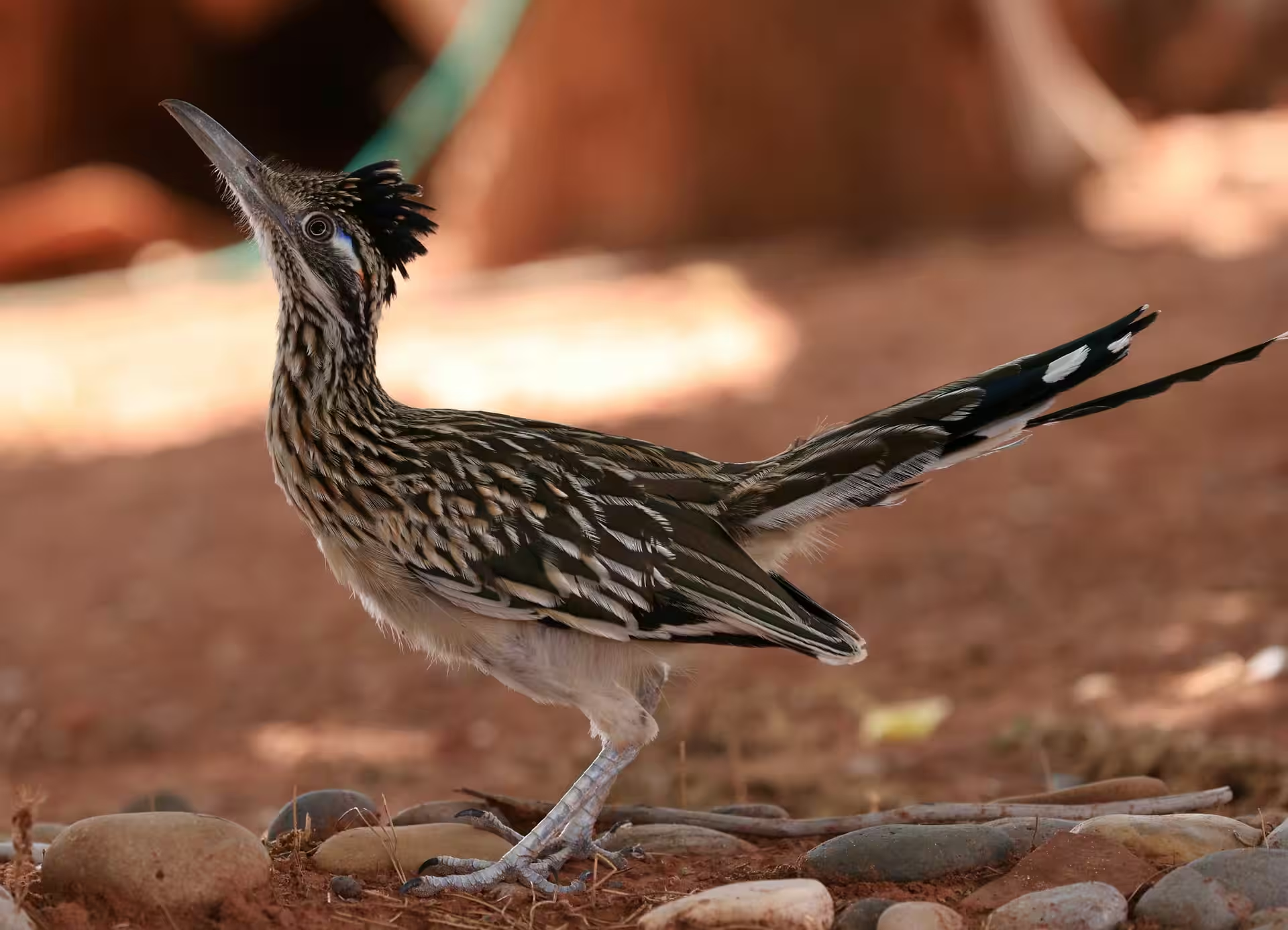
A kingfisher has a shaggy crest, a big straight bill, and a habit of diving after fish. Look for the extra rusty belly band on females. Roadrunners are long-tailed, ground-loving birds with a raised crest and powerful legs. Watch how they pause, scan, and dash after prey.
Listen Closely
A kingfisher’s loud, rattling call may be your first clue as it flies along a river. Roadrunners sound nothing like their cartoon counterpart: listen for low, descending coos, sharp calls, and occasional bill-clattering.
Explore Further
- Belted Kingfisher Guide (All About Birds)
- Greater Roadrunner Guide (All About Birds)
- Belted Kingfisher Male & Female (All About Birds)
The Kingfisher’s Colorful Secret
You might hear a Belted Kingfisher before you ever see one. Its loud, rattling call carries over the water as it patrols the shoreline, often stopping on an exposed branch to watch for fish. That big head, messy crest, and dagger-like bill give it a look all its own.
Here’s the surprise: the female is more colorful than the male. Both have a blue-gray band across the chest, but females wear an extra rusty-orange band across the belly and rusty sides. It’s the opposite of what we’re used to seeing with many birds—and one of the easiest ways to tell these two apart.
Fishing is just as impressive. A kingfisher may plunge directly from its perch or hover above the water before diving after a fish or crayfish. Back on its perch, it can smack its catch against the branch before swallowing it headfirst.
And despite spending so much time around water, kingfishers nest underground. A pair digs a tunnel several feet into a dirt bank, usually near water, ending in a small nesting chamber. They even bring up pellets of indigestible fish bones and scales—rather like an owl.

Born to Run? Not Quite!
If a baby quail can run almost as soon as it hatches, surely a Greater Roadrunner can too. Right? Surprisingly, no! Quail chicks are up and moving quickly, but roadrunner chicks hatch with their eyes closed and depend on their parents for food and care while they grow in the nest.
The adults more than make up for that slow start. Greater Roadrunners can sprint at around 20 miles per hour, using their long legs and tail to chase and maneuver after lizards, insects, small mammals, and even snakes. They can fly, but on the ground is where they really shine.
Here’s another surprise: roadrunners are cuckoos! They’re part of the same bird family as the cuckoos you might know from wooded habitats. Their two-forward, two-backward toes leave distinctive X-shaped tracks, although those tracks don’t always tell you which direction the bird was heading.
They’re fearless hunters, sometimes tackling prey as formidable as a rattlesnake. But if you’re expecting the cartoon’s familiar “meep meep,” listen again. Real roadrunners give low, descending coos, sharper calls, and clattering sounds made with their bills. In southern Utah, catching even a glimpse of one dashing through the brush is a treat.
Utah Edition Endcap
Want to keep exploring? You can read more Guides or join the FeatherQuest updates to hear when new ones go live.