
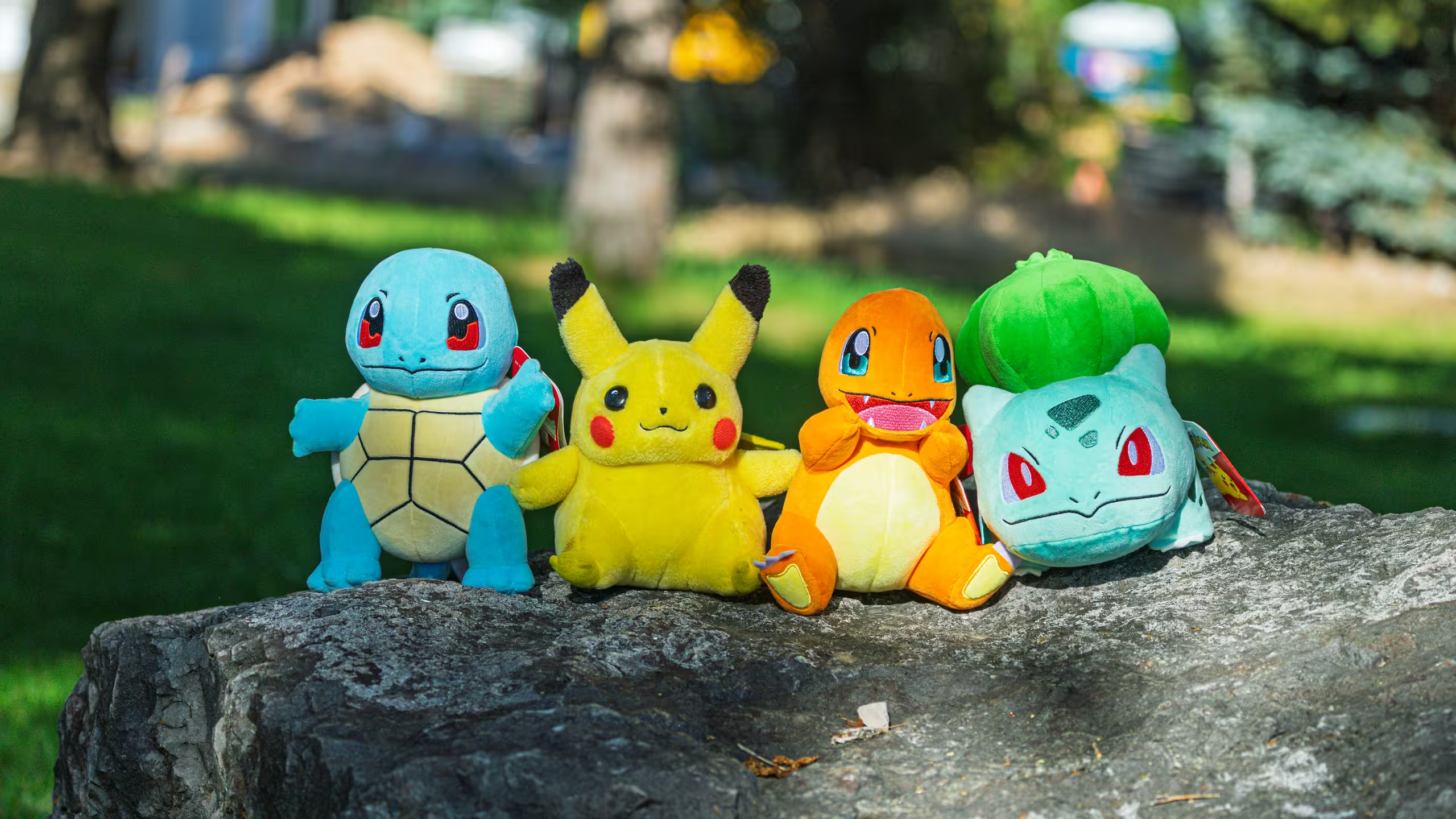
Birding Is Pokémon in Real Life
How Video Games, Pokémon Snap, and an Early Internet Community Led to FeatherQuest
Table of Contents
This Connection Was Always There
For years I joked that birding is basically Pokémon in real life.
At first, it felt like a funny comparison. You go outside. You look for creatures. You learn their names. You keep lists. You chase rare sightings. You get excited when something unexpected appears.
But the more I thought about it, the less it felt like a joke.
Pokémon was inspired in part by creator Satoshi Tajiri’s childhood love of collecting insects. That idea — exploring the world, finding living things, learning their patterns, and sharing discoveries with friends — sits remarkably close to the heart of birding.
FeatherQuest did not begin as a Pokémon project. But looking back, the thread is impossible to miss.
A Kid In Mexico With Dial-Up Internet
During my junior year of high school, from 1999 to 2000, I lived in Mexico City. It was a strange and formative time. I was away from a lot of familiar things, and the internet became one of the places where I felt connected.
This was before YouTube tutorials, social media feeds, Discord servers, and algorithmic recommendations. If you wanted to figure something out, you experimented. You searched. You joined forums. You talked to people on AOL or MSN Messenger.
One of the places I found was The PokéMasters, one of the large Pokémon fan communities of that era. I knew people there by names like Kevin, Dodrio, and Lady Vulpix. To most of the world those were just usernames. To me, for that season of life, they were part of my community.
I eventually contributed under the name Farfetch’d, helping review Pokémon teams for Dodrio’s Nest and a recurring feature called Team of the Day™.

Farfetch’d And His Twigs
I had almost forgotten how involved I was until I started digging through archived pages.
Then I found it: Farfetch’d Presents: The Team of the Day™. Submitted teams. Move sets. Type advantages. Weakness tables. Critical comments. Typos everywhere.
It was unfiltered, unpolished, and very much written by a teenager who had strong opinions about Mewtwo, Exeggutor, Tauros, and Pokémon Stadium.
But underneath the rough edges, I recognized something familiar. I was analyzing systems, evaluating tradeoffs, explaining patterns, challenging assumptions, and trying to help people improve.
That same part of my brain would later show up in software, business systems, SEO, photography, and eventually FeatherQuest.

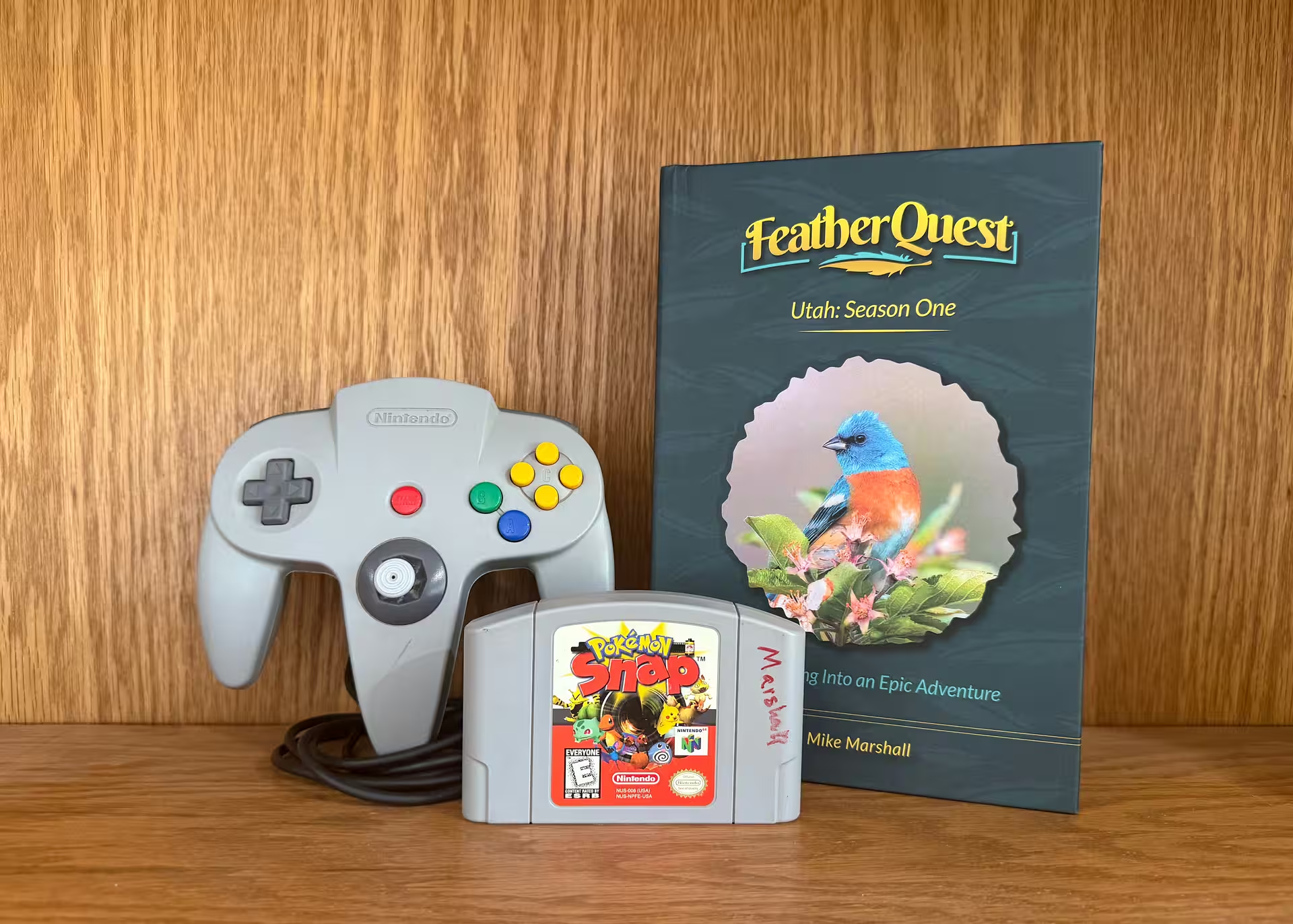
Pokémon Snap Taught Me To Look
The Pokémon game that connects most directly to birding is not Red, Blue, Gold, or Silver.
It is Pokémon Snap.
Pokémon Snap was not about battling. It was about observing. You moved through habitats, watched behavior, anticipated movement, triggered interactions, and tried to capture the right moment before it disappeared.
That is wildlife photography.
The game scored photos based on size, pose, technique, and bonus interactions. But the most memorable images were not always the highest-scoring ones. A full-frame subject might score well, but a wider photo could tell a better story.
That lesson still applies every time I photograph birds. Sometimes filling the frame loses the thing that made the moment special.

The Shot That Got Away
When I entered Nintendo’s Pokémon Snap Take Your Best Shot contest, I chose the perfect Mew photo. It was the logical choice. It had the score. It proved mastery — and it got me into the finalist pool.
Then the contest shifted. Finalists were asked to submit essays explaining their entries, and suddenly the story behind the photo mattered just as much as the image itself. I worked hard to trim mine down to the requirements, because at sixteen this felt like a genuine opportunity.
But there was another photo I kept thinking about: Pikachu riding Articuno. The Mew shot demonstrated skill. The Articuno shot told a story.
To create that moment, you had to trigger a whole sequence of events: save Pikachu, wake Articuno, turn around at the right time, and be ready when Pikachu appeared riding a legendary bird through the sky.
The game did not score it as highly because Pikachu was small in the frame. But if you zoomed in enough to make Pikachu big, you lost Articuno — and Articuno was the story.
The contest became controversial afterward. Many finalists had achieved the same perfect Mew score, so the essays carried real weight. When the winning essay briefly appeared online, people in the Pokémon communities I followed questioned whether it followed the same length restrictions we had been given. The essay disappeared quickly, but the frustration lingered.
At the time, I mostly saw it as unfair. Looking back, I see the deeper lesson: the photo that got me into the finals was technically perfect, but the photo I still remembered years later was the one with the better story.

Then Life Moved On
After high school, life moved quickly.
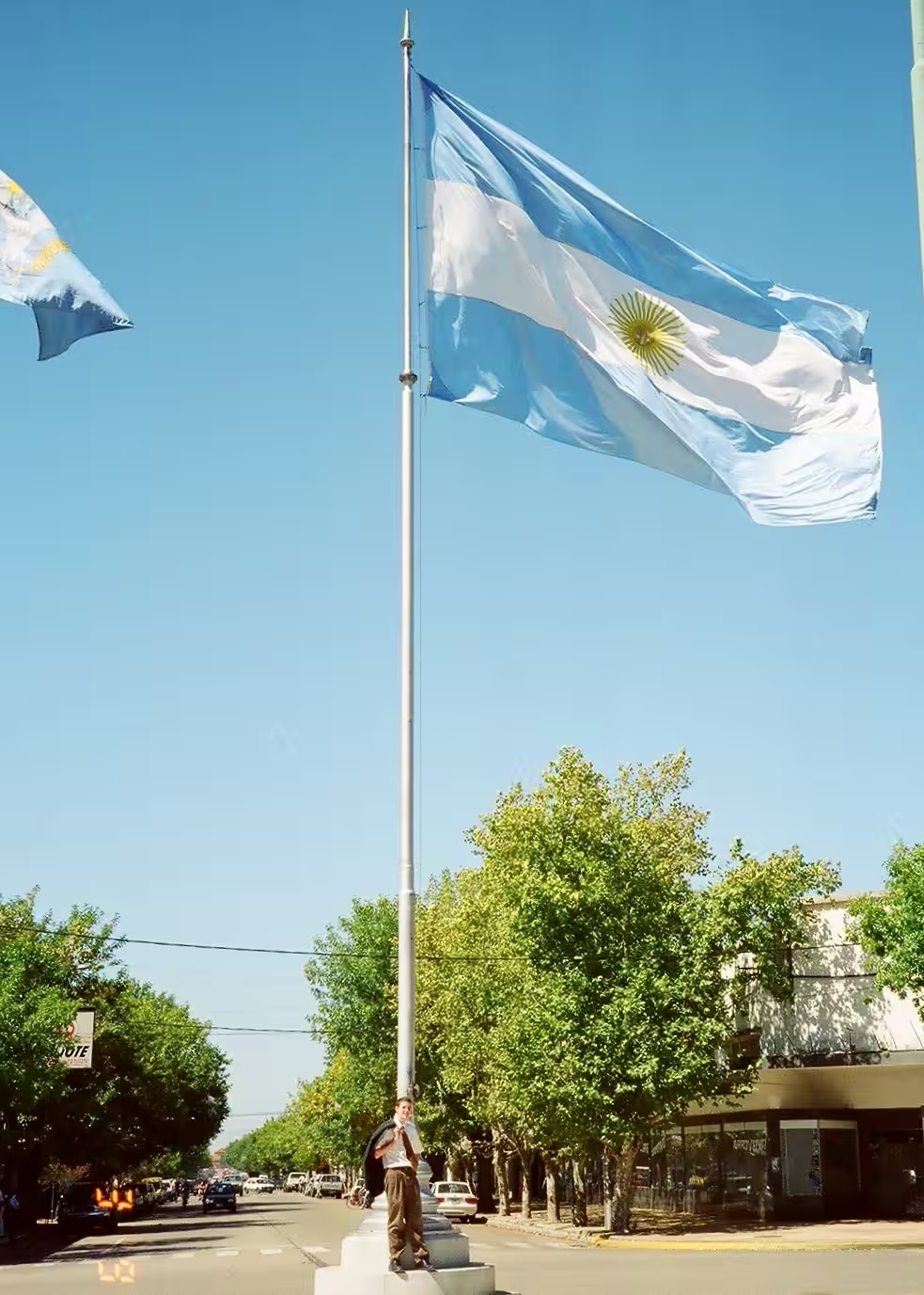
I served a mission in Argentina from 2002 to 2004. I came home, went to BYU, got married, started building a career, and eventually became a father.
Pokémon faded into the background. I may have borrowed a Game Boy Advance and played Ruby for a while, but it was not the same. The world had changed. I had changed.
But the underlying interests did not disappear. I still loved systems. I still loved discovery. I still loved learning how things worked.
Those instincts simply found new places to live.
Pokémon Came Back Through My Kids
Years later, Pokémon returned through my kids.
That is one of the strange gifts of parenting. Things you loved as a child can come back, but from a different angle. You are no longer just playing. You are sharing.
Then Pokémon Go arrived and moved the idea outside. Suddenly millions of people were walking through parks, exploring neighborhoods, visiting landmarks, checking maps, chasing rare encounters, and collecting discoveries in the real world.
At one point, our family even showed up as extras for one of DevinSupertramp’s Pokémon parkour videos. It was ridiculous and fun — exactly the kind of real-world Pokémon energy that made that season so memorable.
Looking back, that whole chapter feels like a bridge. Pokémon had started as something I played on a screen, then became something I shared with my kids, and eventually became something that pulled us outside into parks, trails, and shared adventures.
Pokémon Go was not birding, but it helped reconnect the idea of discovery with the physical world. The game board was no longer just a screen. It was the neighborhood, the park, the trail, the world outside the front door.

I Finally Got A Real Pokédex
Shortly after moving we started noticing birds around our home in Mapleton, Utah, the feeling was familiar.
There were creatures everywhere. I did not know their names. I did not know their sounds. I did not know where they came from or where they were going.
Then I discovered Merlin.
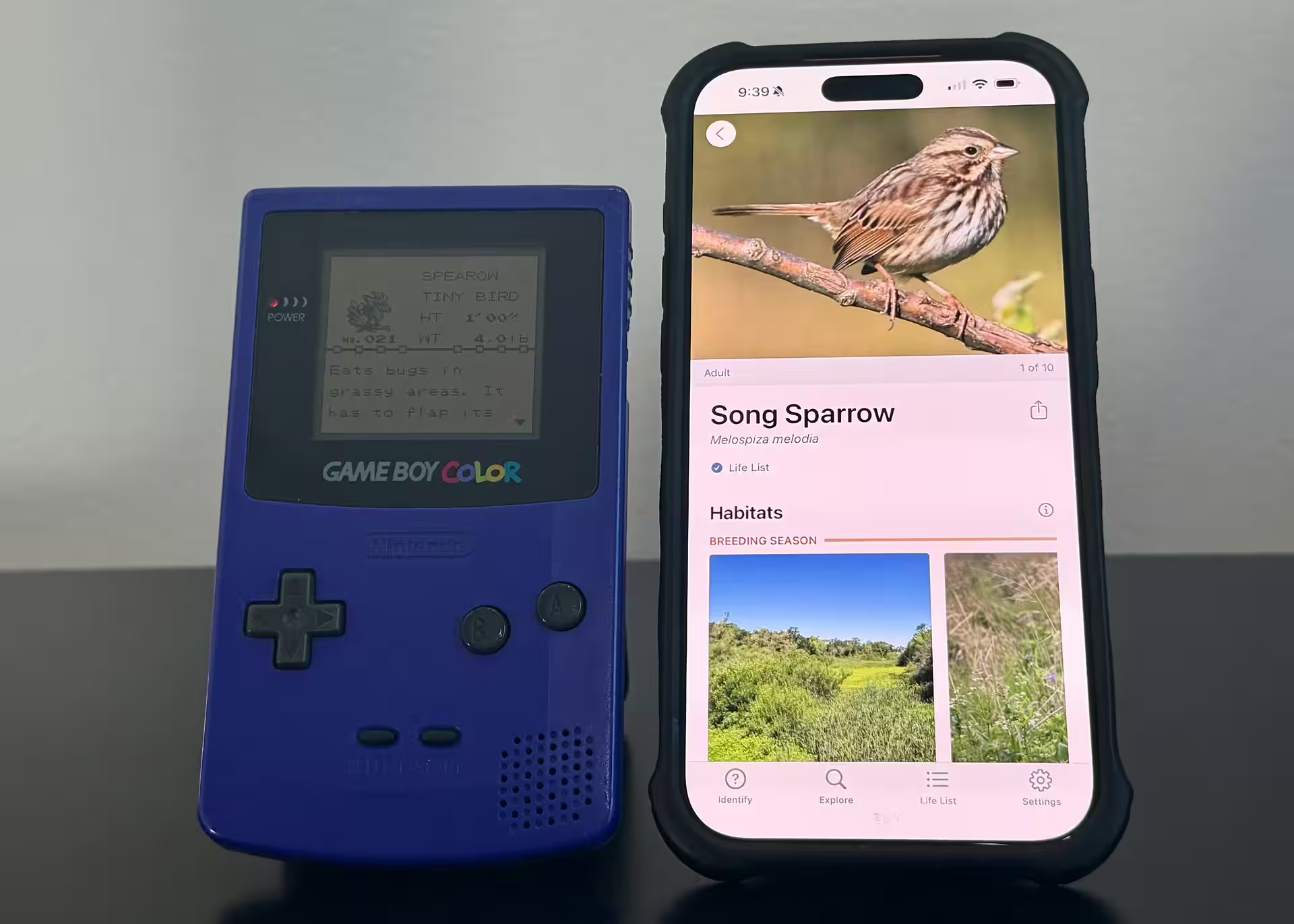
Suddenly I had something in my pocket that could help identify birds by sound or photo. It felt like a real-world Pokédex. Pair that with a camera and eBird, and the world started opening up.
Birding became a mix of technology, exploration, photography, collection, and curiosity. In other words, it felt surprisingly familiar.
The Bird That Made Me Stop
One of my first unforgettable birding moments came near the reservoir by our home.
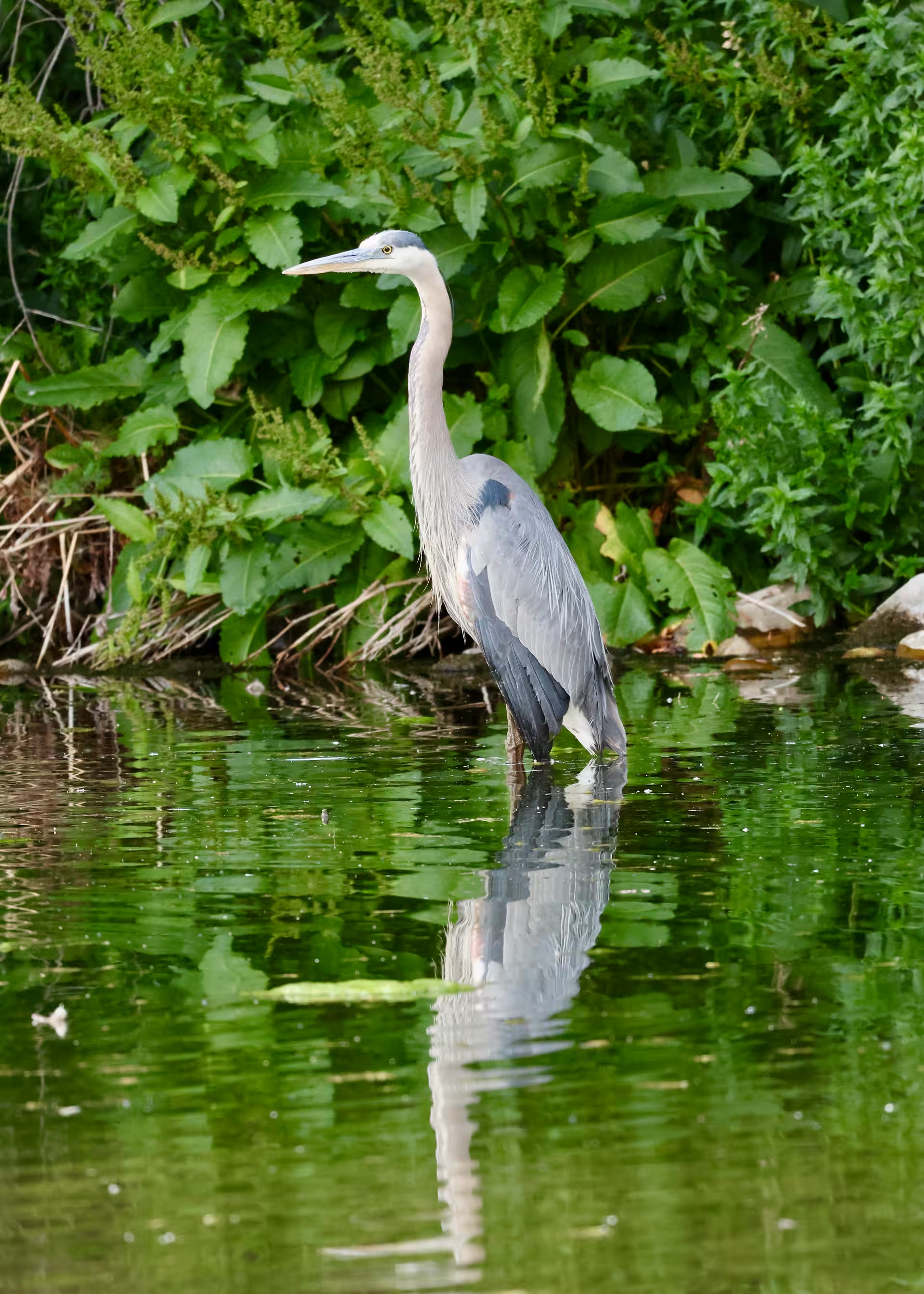
I saw a huge bird standing in the water and remember thinking: what in the world is that thing?
It was a Great Blue Heron.
I had lived most of my life without really noticing birds like that. When I shared the photo, other people had the same reaction: I didn’t know we had birds like that here.
That was the moment when the comparison became obvious. The creatures were real. The encounters were real. The adventure was real.
Birding Is Pokémon In Real Life
Pokédex → Merlin & eBird
Birding has its own tools for identifying, recording, and learning about the creatures around us.
Common, Rare, New
Some creatures are common, some are rare, and some are simply new to you. Pokémon and Birding have all three kinds of discovery.
Pokémon Snap → Photography
The joy of timing, framing, behavior, and story becomes even better when the subject is real.
Regions → Habitats
Different places reveal different species. Wetlands, canyons, forests, deserts, and backyards all have their own casts.
Community → Community
Pokémon and birding both attract enthusiastic, passionate people who are often eager to share what they know.
Fantasy → Real Life
Many Pokémon borrow from real animals and birds — from owls and ducks to herons, cranes, and birds of prey.
Why FeatherQuest Exists
FeatherQuest grew out of that realization.
Birding can feel overwhelming at first. There are hundreds of species, unfamiliar names, subtle field marks, and experienced birders who seem to identify everything instantly.
But the beginning does not need to be complicated.
You can start with curiosity. You can start with a sound you do not recognize. You can start with one bird in your backyard. You can start with the simple realization that there is more life around you than you noticed yesterday.
FeatherQuest exists to make that doorway easier to enter. It is built around adventure, discovery, photography, family, community, and the belief that noticing is the first step.

The Same Quest, But Real
At sixteen, I spent hours trying to photograph a virtual Mew.
Years later, I found myself standing in canyons, wetlands, forests, and backyards trying to photograph Canyon Wrens, American Dippers, Summer Tanagers, White-throated Swifts, and Mountain Bluebirds.
The technology changed. The creatures changed. The stakes changed.
But the adventure was strangely familiar.
I was still exploring. Still observing. Still trying to understand behavior. Still chasing moments that disappeared if I was not ready.
I was not really collecting Pokémon.
I was learning how to notice things.
Maybe that is the real evolution: the kid chasing Pokémon did not disappear. He just leveled up into a birder with a camera, a field guide, and a much bigger world to explore.

Try It In Real Life
If you grew up loving Pokémon, video games, field guides, collecting, exploration, or hidden worlds, birding may feel more familiar than you expect.
You do not need to know every bird. You do not need expensive gear. You do not need to become an expert overnight.
In fact, not knowing can be part of the magic. The wonder comes from stepping outside, finding something unfamiliar, and letting curiosity pull you into the adventure of birding.
Start with one bird.
Look closer. Listen longer. Ask what it is. Notice what it is doing.
That small moment of curiosity is the beginning of the real-world quest.
FeatherQuest exists to make that first step easier — to help families, beginners, photographers, and curious people turn ordinary walks into little adventures of discovery.