

New Zealand — Across Water & Wonder
The expedition that inspired FeatherQuest.
Table of Contents
Before You Begin
Some journeys are remembered as itineraries.
This wasn't one of them.
New Zealand became a collection of moments that never quite faded: kayaking beneath waterfalls in Milford Sound, stepping onto predator-free islands where birds no longer feared people, waiting for penguins to come ashore at dusk, wandering forests filled with birds found nowhere else on Earth, and realizing the landscapes that inspired Middle-earth were somehow even more breathtaking in person.
Years later, when FeatherQuest began taking shape, this was the expedition I kept coming back to. It was the first trip where birding became something larger than a checklist. It became exploration, storytelling, photography, wildlife, and the realization that the world was still full of places capable of surprising me.
Rather than compress an unforgettable experience into a single article, this expedition is told through ten standalone stories. Each chapter captures a different place, lesson, or adventure. Together, they tell the journey that helped inspire FeatherQuest.

Explore the Expedition
Arrival in Aotearoa
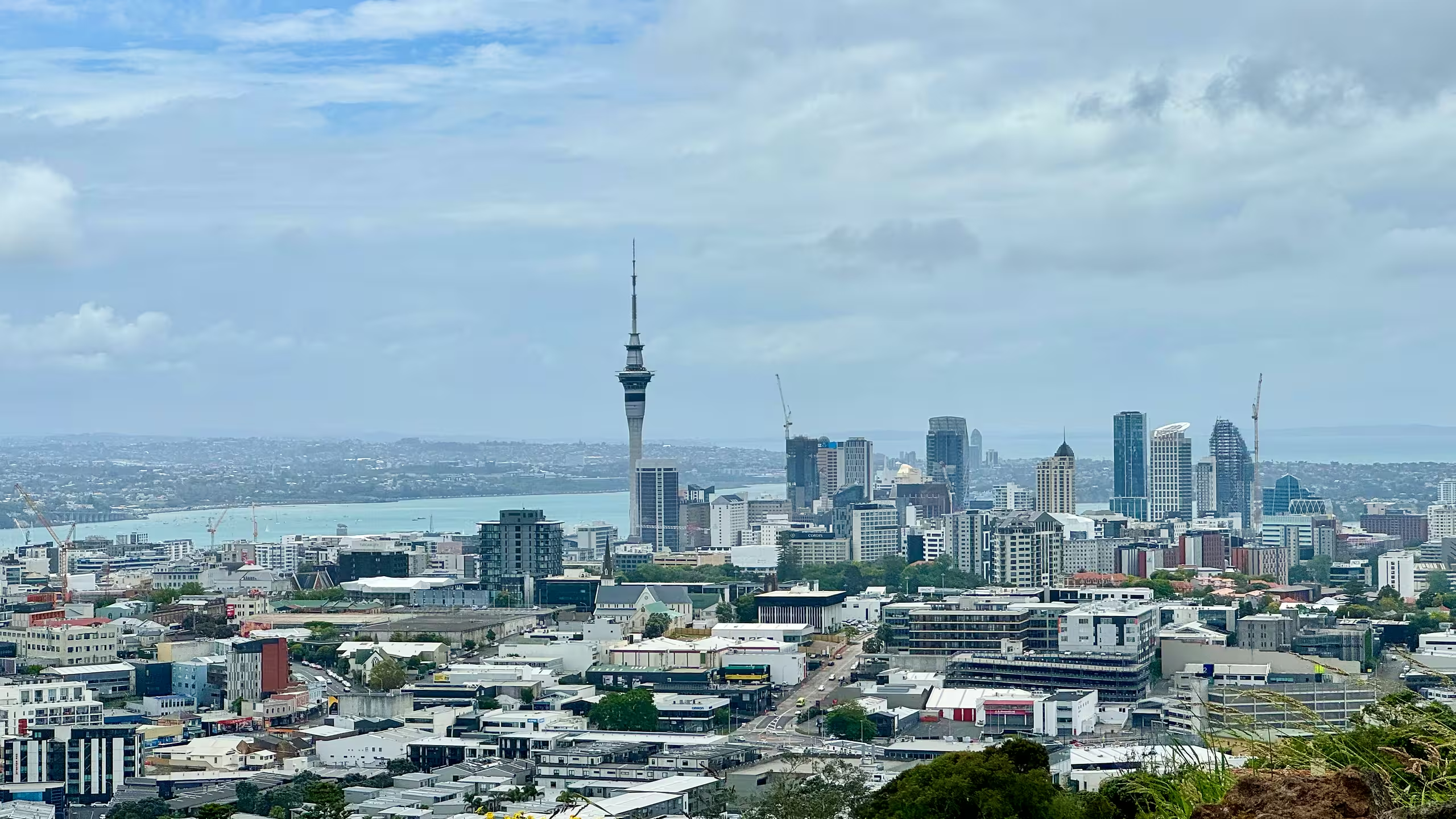
The opening chapter of our New Zealand expedition: disconnecting from work, crossing the Pacific, arriving in Auckland, and finding our first native birds.
Into the Land of Waterfalls

Driving into Fiordland, boarding Milford Sound, kayaking beneath waterfalls, and discovering one of the most cinematic landscapes on Earth.
At the Edge of New Zealand

Leaving Milford Sound, crossing Fiordland, surviving Foveaux Strait, and arriving on Stewart Island and immediately wishing we had more time.
Where the Birds Forgot to Be Afraid

A pure birding day on predator-free Ulva Island with Kākā, robins, saddlebacks, Mohua, jellyfish, an octopus, and one unforgettable forest.
The Reset That Wasn't

A simple travel day turns into mountain views, six surprise lifers, Black Swans, and a spontaneous start to Wellington, New Zealand.
Zealandia After Dark

A twilight walk through Zealandia reveals why New Zealand's wildlife evolved unlike anywhere else on Earth.
A Day to Breathe in Wellington

A slower Wellington day becomes grocery-store snacks, summer gardens, Zealandia trails, an awkward birding lesson, and fish and chips above the harbor.
One More Island Before Middle-earth

A last-minute Kapiti Island ferry adds Whitehead, Weka, coastal birding, and one final Wellington farewell before Wētā Workshop and a flight to Auckland.
Where Middle-earth Came Alive

Glowworms beneath Waitomo, a first look across the Shire, two lifers in Hobbiton, and an opening-week visit inside a fully furnished hobbit hole.
The Perfect Farewell

Our final day in New Zealand brings Tiritiri Matangi’s incredible birds, Auckland’s Sky Tower, and the perfect ending to an unforgettable adventure.