
How to Start Birding
How I got started noticing birds — and how you can too.
Table of Contents
Birding Starts With Noticing
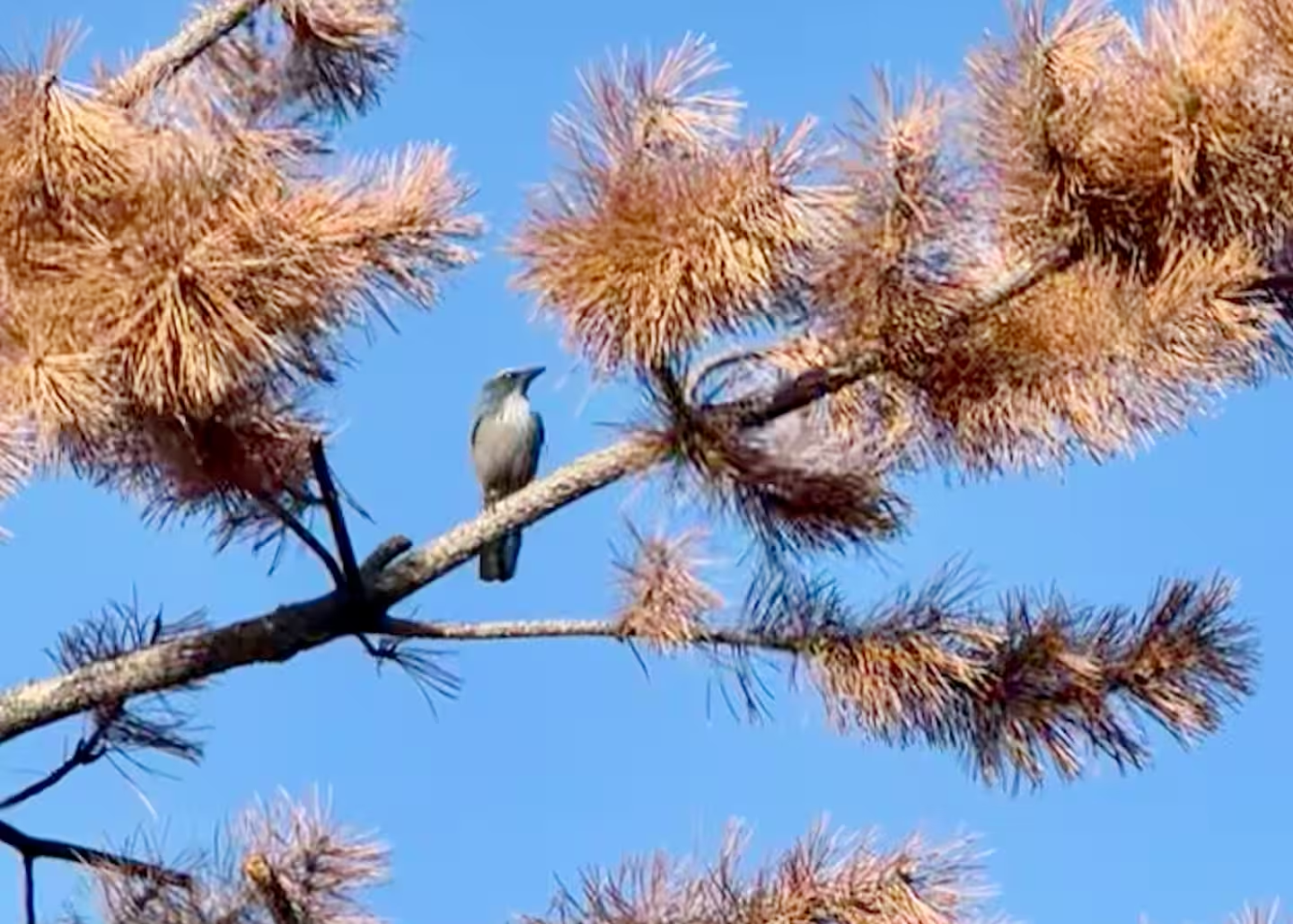
If you’re new here, this guide will help you take your first step. For me, birding became one of the easiest and most rewarding ways to reconnect with the world around me. I didn’t grow up as a birder, and I definitely didn’t set out to become one. It began in early spring of 2022, after we moved to the edge of Mapleton, where our backyard backed up to Hobble Creek and suddenly felt alive. One day my wife casually said, “We should find out what kind of birds are in our backyard.” I downloaded the Merlin Bird ID app, took a terrible iPhone photo of a Woodhouse’s Scrub-Jay, and was amazed when it still identified the bird. When I tried audio mode and watched it decode all the sounds happening around me, something clicked. That simple question, paired with the right tool, sparked a curiosity that quickly turned into a lifelong passion.
Quick Start Steps
Start Noticing Birds
Look and listen for movement in trees, skies, and water. Observation is your first superpower.
Pick a Place
Start at home, your local park, or a nearby trail. Birds are everywhere, even in cities.
Use Simple Tools
A pair of binoculars and the Merlin app can instantly boost your experience.
Why Birding Is for Everyone
Before birding, I was — and still am — a tech nerd. I preferred screens, code, and video games over the outdoors, and camping trips felt more like something to endure than enjoy. Birding changed that in a way I never expected. Now, I genuinely look forward to being outside. I can sit quietly for hours, watching and listening, completely content. Birding didn’t turn me into a different person — it simply gave me a new way to experience the world that fits who I already am.
Where to Start Birding
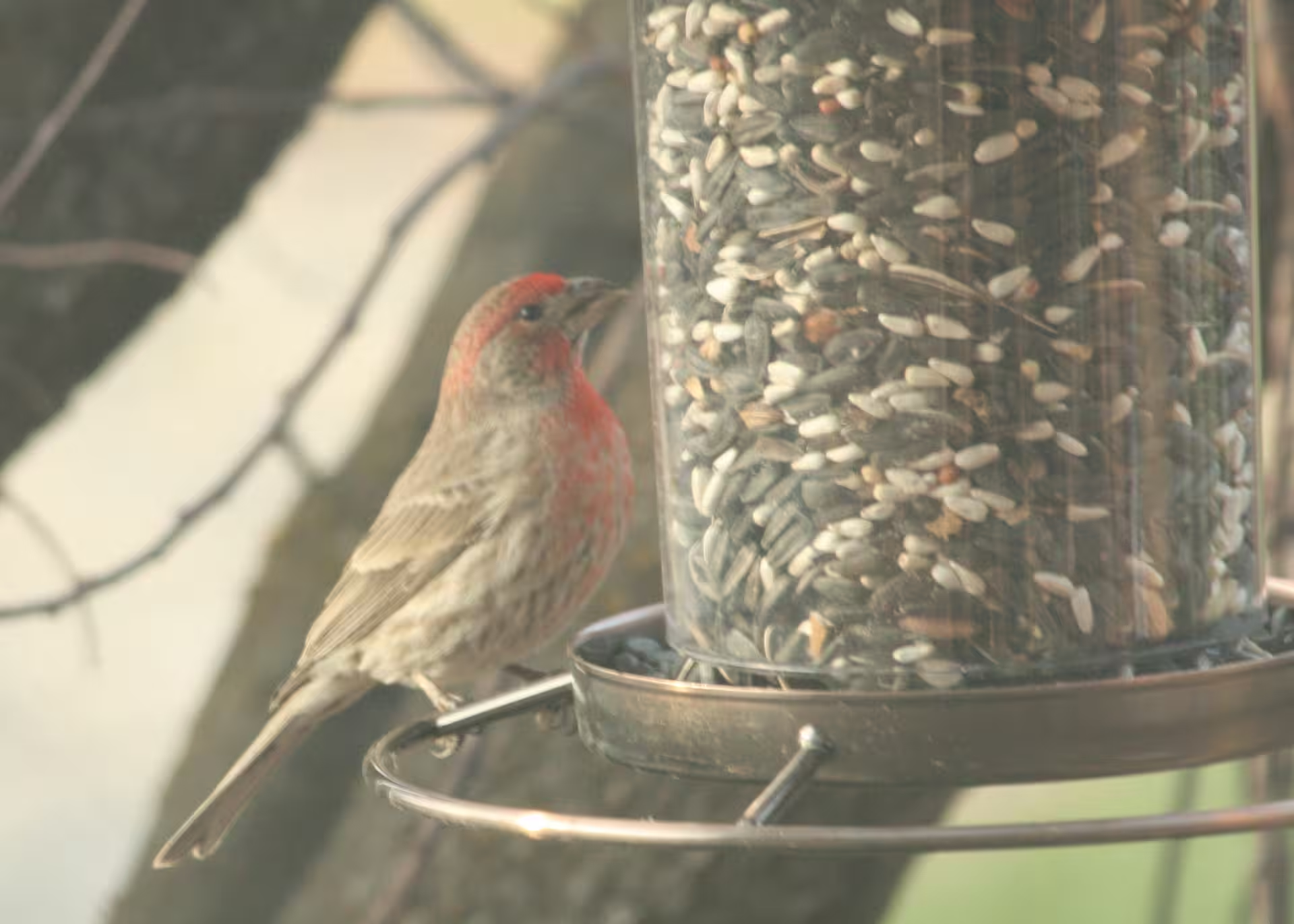
I started simply: a Utah field guide by Stan Tekiela, a feeder in the yard, and Merlin on my phone. I still remember the first House Finch that showed up and my wife saying, "Go tell your friends." But birds move fast, and even with guides and apps, I struggled to feel confident.
That’s when I picked up my wife’s old Canon Rebel and started using photography as a way to slow things down. Freezing moments let me study details I’d missed in real time. A few weeks later, while visiting Jensen Nature Park in Syracuse, Utah, I watched a small falcon hover motionless over a field — my first American Kestrel. That moment of awe sealed it. A few months later, I upgraded to the Canon R7 with the RF100–400mm lens, and I haven’t looked back.
Best Tools for Beginner Birders
Merlin Bird ID is the one tool I recommend to everyone. Audio ID alone lets you start birding without binoculars, a camera, or any prior knowledge. For me, photography became the next step — a way to freeze moments and learn at my own pace. Binoculars came later, and I love how they let me simply sit back and watch behavior unfold.
None of these are required. They’re just different ways to engage, and you’ll naturally find what fits you.

There’s No Wrong Way to Bird
I’ve done plenty "wrong" along the way — and for me, that’s part of the fun. I’ve come to believe there’s no single right way to bird. Everyone learns at their own pace and notices different things. I’m colorblind, so I get colors wrong all the time, but that just pushes me to listen more carefully and pay attention to details beyond color. Birding works best when it’s playful, social, and forgiving.
While few things beat the excitement of a lifer — especially your first owl — some of my favorite birding moments are the simplest ones. Chickadees, in particular, won me over. They’re cheerful, curious, and surprisingly responsive. Once I learned how well they respond to simple callbacks, I realized I could invite them into the moment. They’ll come right over, check you out, and say hello.
Birding gives me an escape from screens, schedules, and manufactured entertainment. It pulls me into something older and richer — watching birds fly, hunt, sing, and survive. The variety, drama, and beauty are endless, and no two days are ever the same. Once you start noticing, it’s hard to stop — and that’s a gift.