Birding Apps & Tools
The tools that enhanced my birding experience without getting in the way
Table of Contents
Tools don’t make you a birder — they remove friction
I didn’t get into birding because I wanted more screen time. If anything, birding pulled me away from screens and back into the world around me. What surprised me was how much the right tools helped that happen instead of getting in the way.
This page expands on the short Apps section from the FeatherQuest book. Not a giant list. Not a tech manual. Just an honest look at the few tools I actually use, why they matter, and how they quietly accelerated my learning without replacing the experience of being outside.
If you only take one thing from this guide, it’s this: these tools don’t replace noticing — they reward it.
What I open first, every single time
When I step into the field, I do two things immediately: I start Merlin’s Sound ID, and I start a checklist in eBird. Every time. No exceptions.
Sound ID helps me understand what’s happening around me right now. eBird quietly keeps track of where I am, when I’m there, and what I’m seeing. Together, they give me awareness without demanding attention.

Photo ID and step-by-step ID come later, and only when I need them. Most of the time, I’m listening first.
Part of that is personal. I’m colorblind, so subtle field marks and color differences don’t always jump out at me the way they do for other birders. Sound cuts right through that. Over time, my ears have tuned in differently — often I notice something new by sound while I’m walking or talking, then turn to Merlin to help confirm it. In a lot of situations, my ears catch things before the app ever can.
Merlin Bird ID — the tool that hooked me
Merlin Bird ID is one of the most important tools I have. For anyone starting birding, it’s a lifesaver. Even now, it’s the app I use the most in the field.
Merlin gives you three main ways to identify birds: Step-by-step ID, Photo ID, and Sound ID. All three work — but Sound ID is the one that changed everything for me.
The first day I downloaded Merlin, I was impressed. A few weeks later, in spring, I walked outside and turned on Sound ID and realized just how many birds were surrounding my house. That was the moment I was fully hooked.

Step-by-step ID: when you got a look but no proof
Step-by-step ID is perfect when you didn’t get audio or a photo but you got a decent look. You answer a few questions — where you are, when you saw it, the rough size, colors, and habitat — and Merlin narrows the list.
What surprised me early on is how powerful season and location are. Birds follow patterns. Even if you’re a little off on size or color, Merlin can still point you in the right direction.
I mostly use this after the fact — helping someone figure out what they saw, or when I didn’t have a camera handy.
Photo ID: freezing the moment helped me learn
Photo ID works best with clean photos, but it doesn’t need perfection. My birding journey literally started with a bad iPhone photo of a Woodhouse’s Scrub-Jay in my backyard. Merlin still nailed it.
When Merlin gives multiple options, I treat it as a shortlist, not a verdict. Similar species require extra care, and that’s where looking closely — or letting it go — matters.
If I’m in the field and really want an answer, I’ll sometimes connect my camera via Wi-Fi, pull the photo onto my phone, and run Photo ID. Otherwise, I’m usually fine waiting.
Sound ID: my favorite tool in the field
Sound ID is what I use constantly. It’s not just about identification — it’s about awareness. Sometimes you think you’re hearing one bird, and Merlin shows you five.
Two habits make Sound ID work better: stop walking and stop talking. Give it a clean moment to listen. If I’m doing yardwork or grilling, I’ll sometimes set my phone outside for ten minutes and see what it hears.
Merlin isn’t perfect. It will hallucinate sometimes. I use Sound ID as direction, not truth. I listen to the suggested songs, compare what I’m hearing, and decide for myself.
When I count an audio-only bird — and when I don’t
I count audio-only birds when the sound is crystal clear and I can personally distinguish it — or when I’ve clearly documented that species in the region before.
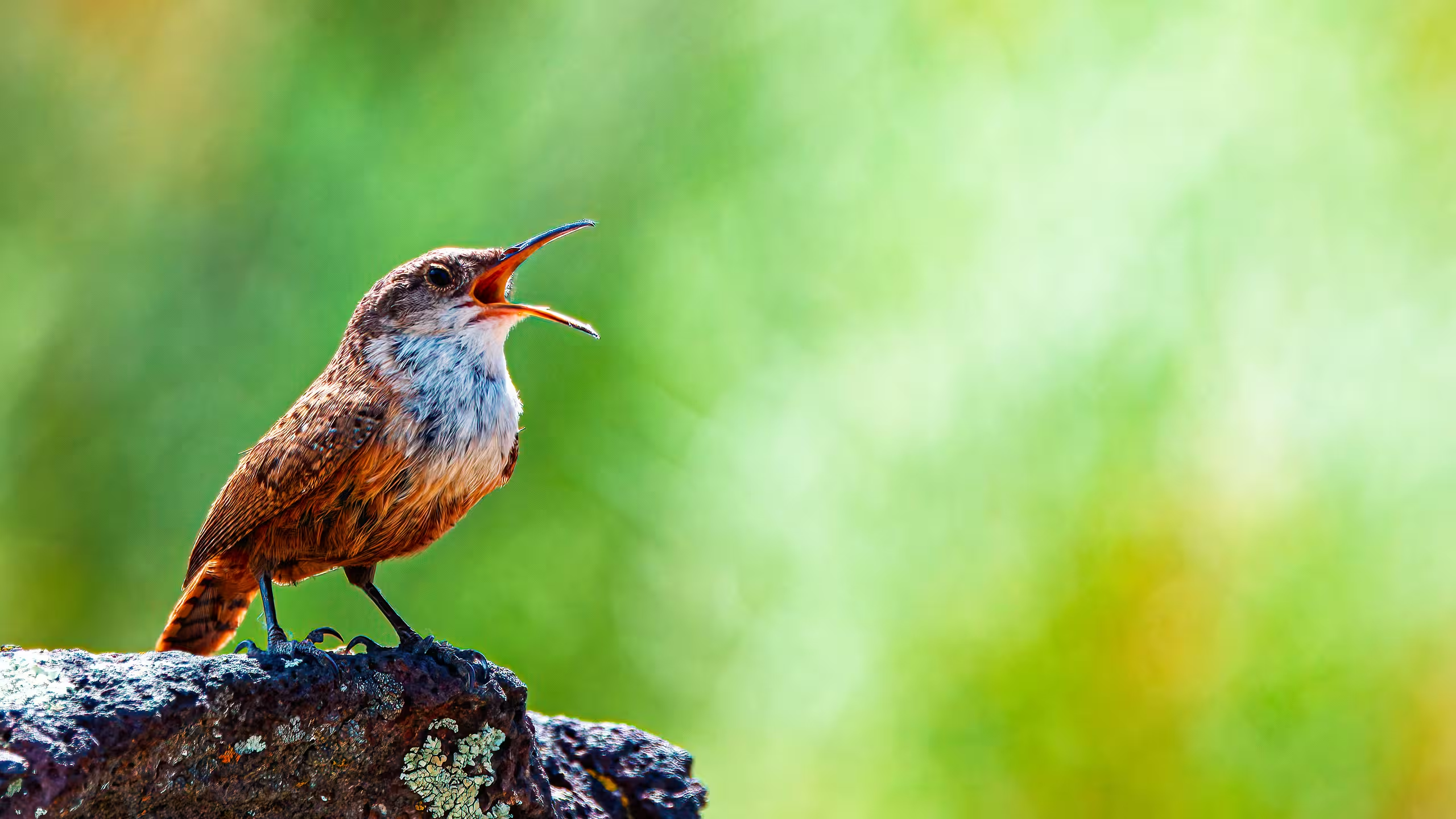
Canyon Wrens were one of the first birds I confidently counted by sound. That cascading song bouncing off rock is unmistakable — even when the bird stays completely hidden. Long before I ever photographed one, I knew exactly what I was hearing.
In New Zealand, outside Zealandia, I listened as kiwis screamed in the dark. Merlin picked them up instantly. The sound was unmistakable, and I heard it myself. I counted it — even though not seeing a kiwi left a hole in my heart and a strong desire to return someday.
Virginia Rails are another example. They’re notoriously hard to see in dense reeds, but their pig-like squeals are unmistakable. I’ve counted them based on sound alone because I know exactly what I’m hearing.
What I don’t count: passive recordings I didn’t hear myself, random one-offs I can’t match, or probable birds I can’t verify. If I can’t confidently identify it or get it to call back, I let it go. Being conservative keeps birding honest — and more meaningful.
Download offline bird packs (seriously)
Downloading offline bird packs is one of the most overlooked steps. It makes Merlin dramatically more useful, especially when traveling or birding without reliable service.
Once packs are installed, the Explore tab becomes a real learning tool. I love seeing seasonal timelines and tapping into range maps to understand where birds migrate from and to. It quietly teaches patterns over time.
eBird — where birding becomes a timeline
If Merlin helps you identify birds, eBird helps you remember them. It’s the best tool I know for logging sightings with real location and date tracking, discovering hotspots, and seeing what’s been reported recently.
I’m a data nerd, so eBird came into my workflow fairly early. Merlin was more than enough to start, but eBird really shines once you can confidently identify what you’re seeing and want to keep a simple record.
Before visiting a new area, I’ll often scan recent eBird reports to understand what’s being seen, where activity is concentrated, and what habitats are worth exploring. It helps turn an unfamiliar place into a more intentional visit.
Now it’s second nature. I usually remember to start an eBird checklist before I even tell my watch to start logging a walk or hike. And the bonus? Your sightings help real research and conservation.
ChatGPT — a thinking partner, not a verdict
I’ve also started using ChatGPT as a supplemental tool, especially for tricky photo-based questions. I treat it the same way I treat Merlin Sound ID — helpful for brainstorming, not something I blindly trust.
What makes it useful is context. I can describe behavior, size, habitat, and what felt off about a bird, and then compare its suggestions against what I actually saw. In some cases, it’s more flexible than step-by-step ID.
I also use ChatGPT alongside eBird when scouting new places to bird. Looking at recent sightings, habitat, and season, then asking better questions helps me decide where to spend time — not just what I might see.
Here are a few example questions I actually ask when I’m thinking through an ID or scouting a new place:
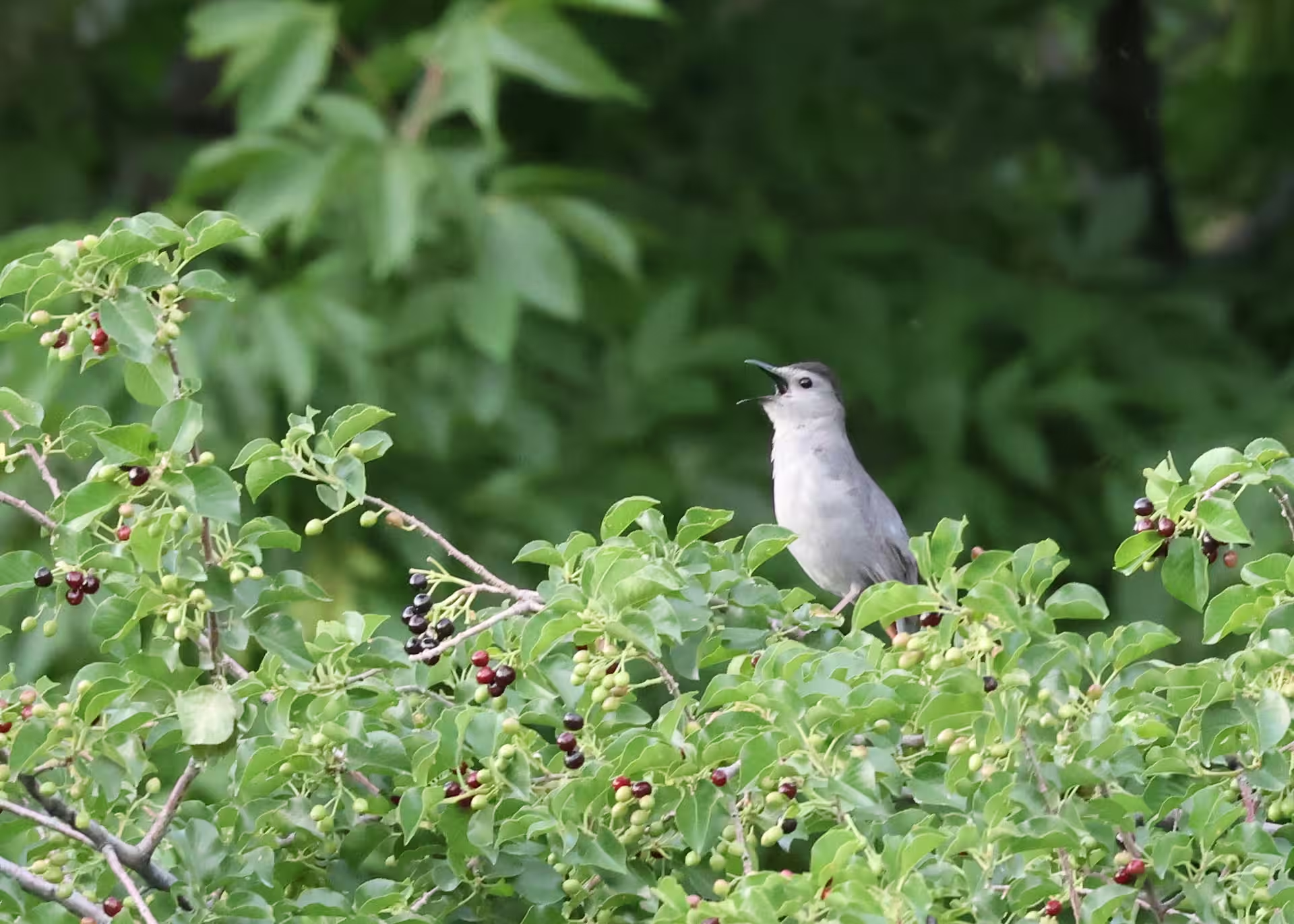
- I heard a bird with a raspy, cat-like call in dense brush near water at dusk — what species should I be thinking about?
- What birds are commonly reported in this area in late spring, and which habitats should I focus on first?
- This bird felt sparrow-sized but moved more like a wren — what should I compare it against?
- Given recent eBird reports here, what are the most likely birds making short chip calls right now?
- What birds are often heard before they’re seen in this habitat and season?
App Resources
Merlin Bird ID
My go-to for learning birds in real time — especially Sound ID. Download the packs, let it listen, and use it as direction (not truth).
eBird
Where birding becomes a timeline. Checklists, hotspots, recent sightings, and a record of where you’ve been — plus your data helps real conservation.
ChatGPT
A thinking partner for tricky IDs and planning. I use it to ask better questions — not to get final answers.
The goal is still the same
At the end of the day, these tools don’t replace birding — they support it. They help me listen better, notice patterns sooner, and remember moments I’d otherwise forget.
If one of these tools clicks for you, great. If not, that’s fine too. The goal is still the same: get outside, slow down, and notice what’s already there.